
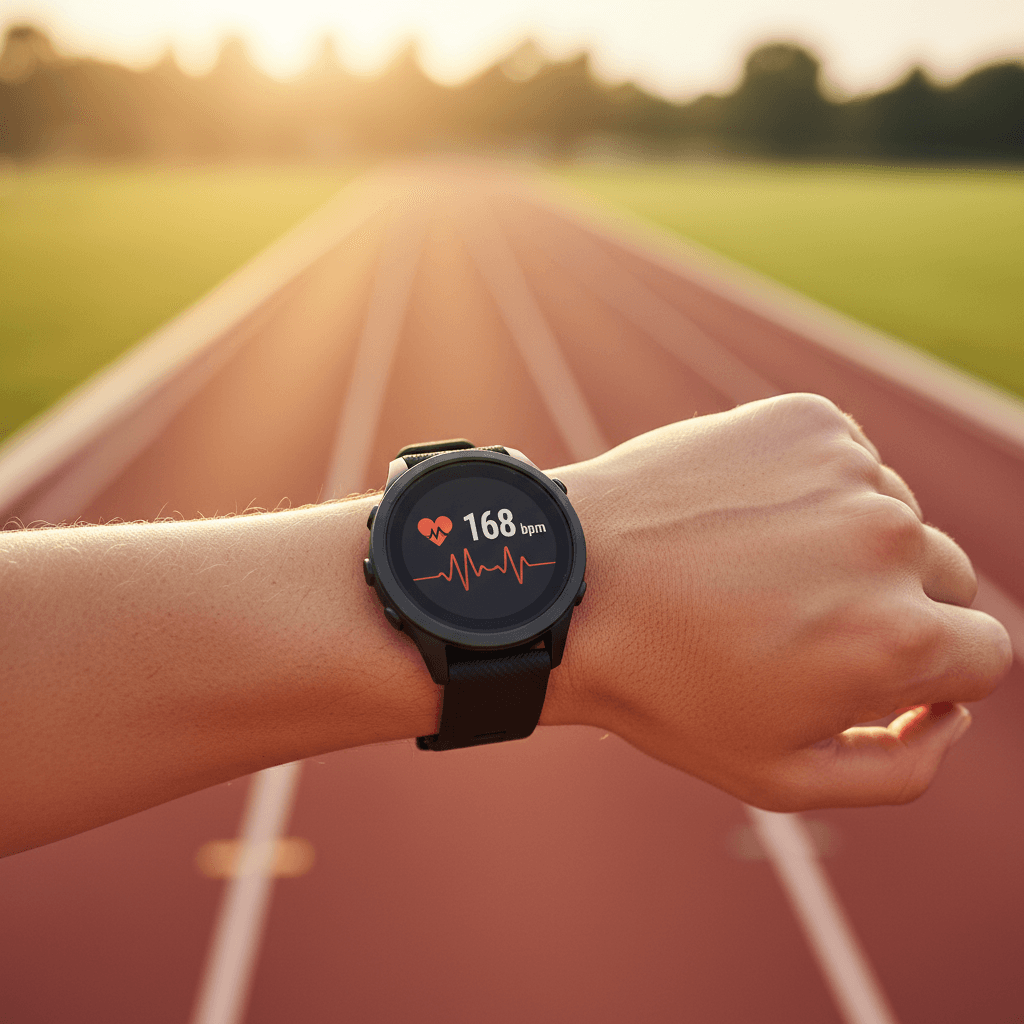
Heart Rate vs Pace: How Elite Marathon Runners Train
Last updated: April 1, 2026
Key Takeaways
- Elite marathon runners use both heart rate zones and pace, but in different contexts.
- In races, they drive by pace.
- At low training intensities, they use heart rate.
- For recreational runners training 4-8h/week, a 70/30 or 60/40 ratio works better than the elite 80/20 split.
You've been training with a GPS watch for a few years, bouncing between pace and heart rate targets without a clear rule for which to prioritize. It's a question every serious recreational runner faces, and the answer from elite marathon science is more nuanced than most training guides suggest.
Recent research on elite marathon performance gives a clear answer: they use both, but in different contexts. And what they do in races is very different from what they do in training.
What Elites Do in Races
A study on the physiological demands of running at 2-hour marathon race pace, published in the Journal of Applied Physiology, shows that elite marathoners sustain 86-90% of their VO2max at race pace. That's a fraction of VO2max most recreational runners couldn't hold for 10 minutes.
In races, elites drive by pace. They know their target pace to the second, and that's the number they watch. Heart rate is secondary during a race, because it naturally rises over the course of the distance (cardiac drift) even when pace stays constant. An elite targeting 2:05 might be at 170 bpm early and 185 bpm in the final 5 km. And that's expected and planned for.
What Elites Do in Training
Outside of quality sessions, elite marathoners train very slowly. The polarized model, roughly 80% of total volume at low intensity and 20% at high intensity, is documented across elite endurance athletes in multiple disciplines.
At low intensities, they often use heart rate as the reference, because pace is less reliable: heat, accumulated fatigue, elevation changes, and recovery days all alter pace for the same perceived effort. Heart rate is a more stable effort signal in those conditions.
A recent PMC study on cardiac drift in elite marathon runners confirms that the best marathon performers learn to calibrate their race pace against their heart rate at the 25 km mark, roughly 60% of the race, as a stabilization reference for the final 17 km.
What This Means for Recreational Runners
Elites train 12-20 hours per week. An 80/20 split on those volumes means 10-16 hours of easy work. On a 5-hour training week, 80% low intensity is 4 hours of easy running and almost no quality work.
For recreational runners training 4-8 hours per week, a 70/30 or 60/40 ratio (moderate to high intensity) generally produces better results than a strict copy of the elite polarized model. That model is built for high volumes.
The practical rule that holds at all levels: at low intensity, use heart rate as your primary reference. At marathon pace or above, use pace as your primary reference. Both metrics are useful. They just don't answer the same questions.
Also read: Berlin Marathon 2026: Date, Course, and Training Guide
Frequently Asked Questions
Do elite runners use heart rate or pace during races?
In races, elites drive by pace. Heart rate naturally rises over the course of a marathon (cardiac drift) even at stable pace, so it's not a reliable race-day signal. An elite can go from 170 to 185 bpm during a marathon at constant pace.
Does the 80/20 model work for recreational runners?
Not directly. The polarized model (80% low intensity, 20% high) is built for athletes training 12-20 hours per week. For runners at 4-8h/week, a 70/30 or 60/40 ratio generally produces better results by limiting time spent only at low intensity.
When should you use heart rate vs pace in training?
At low intensity, heart rate is the better reference because heat, fatigue, and elevation all alter pace for the same effort. At marathon pace or above, pace becomes the primary reference because HR drifts naturally under effort.
What percentage of VO2 max do elite marathoners sustain?
Elites sustain 86-90% of their VO2 max at marathon race pace, according to a Journal of Applied Physiology study. That's a fraction most recreational runners couldn't hold for more than 10 minutes.