
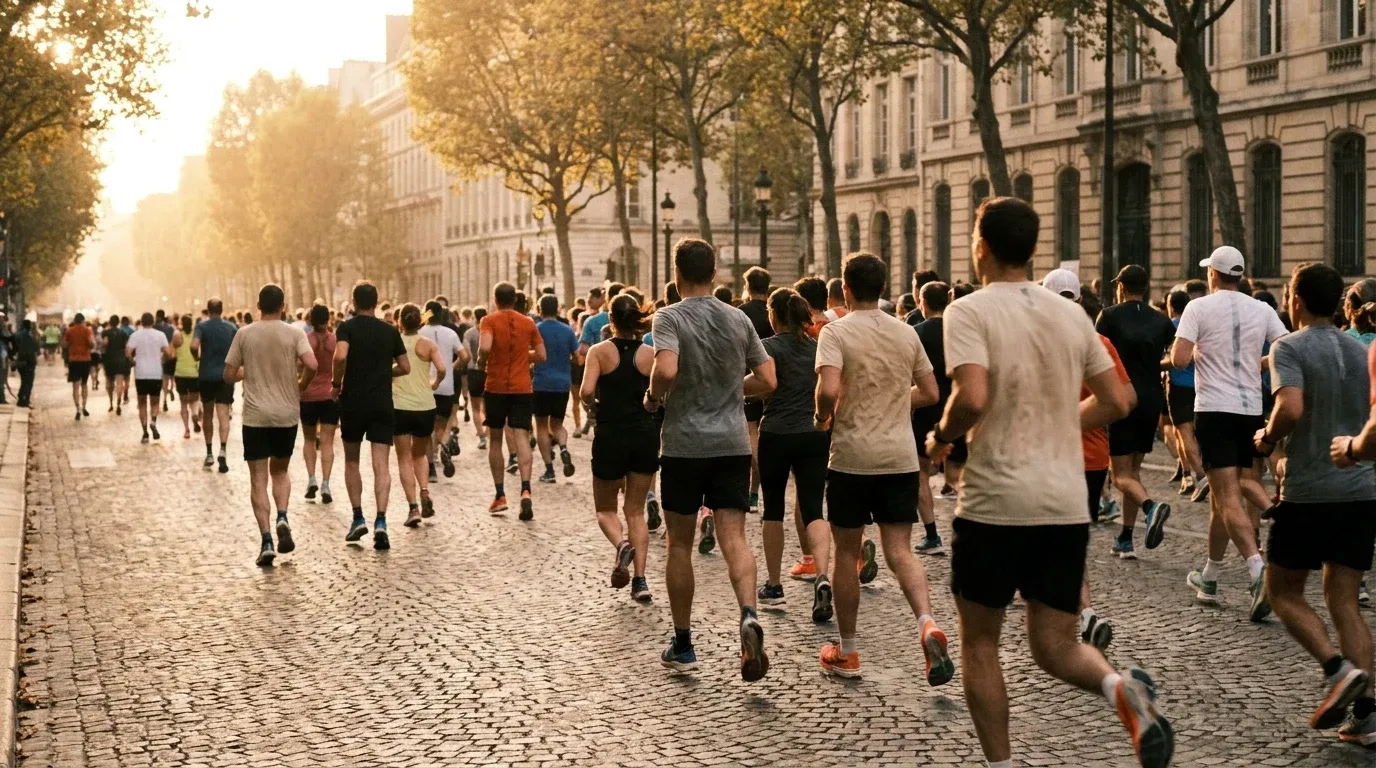
On October 5, 2026, the streets of Geneva filled with 27,500 runners from across Europe and beyond. It was one of the largest editions in the event's history, and the turnout wasn't an accident. It was the result of years of deliberate choices about course design, community engagement, and what a city marathon can actually mean to the people who live and train in it.
That number matters. In a year when discretionary spending is under pressure and race entry fees keep climbing, getting 27,500 people to commit to a single event on a single Sunday is a signal worth paying attention to.
A Snapshot of European Mass-Participation Running
The Geneva Marathon doesn't exist in isolation. It sits inside a broader European running boom that has been accelerating for the better part of a decade. Major city marathons across the continent have consistently posted record or near-record participation figures in 2025 and 2026, even as other live events have struggled to maintain pandemic-era enthusiasm.
What's driving it? Several overlapping forces. Running remains one of the lowest-barrier endurance sports on the planet. You don't need a club membership, expensive equipment, or access to a particular facility. The social layer has also deepened considerably, with running clubs and community groups multiplying in cities of every size. And the post-2020 health awareness wave hasn't fully subsided. People who started running to manage stress or anxiety haven't stopped.
Geneva reflects all of that. Switzerland has a strong running culture at the recreational level, and the marathon has positioned itself as a destination race for international participants as well, drawing runners from over 100 countries in recent editions. That international mix adds a layer of prestige without making the event feel exclusive.
What Geneva Gets Right About Course Design
The Geneva course is one of its strongest assets. Running along Lake Geneva for significant stretches, it offers views that are difficult to replicate in most urban marathon settings. The course is largely flat to mildly rolling, which makes it accessible to first-time marathoners while still offering a legitimate performance environment for runners chasing personal bests.
That balance is harder to strike than it looks. Courses that are too flat can feel monotonous. Courses with significant elevation can deter casual participants. Geneva threads that needle well, and runner satisfaction surveys from past editions consistently cite the route as a primary reason for repeat participation.
The city itself is compact and visually cohesive, which means spectator access is genuinely good throughout. Supporters don't have to travel far to see runners at multiple points on the course, and that density of crowd support makes a measurable difference to mid-pack runners who are working hard through the final 10 kilometers.
Multi-Distance Format: The Strategic Anchor
One of the clearest factors in Geneva's consistent growth is its multi-distance format. The 2026 edition included the full marathon, a half marathon, a 10K, and shorter options designed for families and younger participants. That structure is not unusual in European running events, but Geneva executes it with a level of coordination that keeps the festival feel intact across all distances.
The practical effect is significant. When a family can show up together, with one member running the full marathon, another completing the 10K, and kids doing a shorter fun run, the event stops being a niche athletic contest and becomes a shared experience. That's what drives repeat registration and word-of-mouth growth.
It also creates a natural pipeline. Runners who complete the 10K or half marathon in one year often return to attempt a longer distance the next. Geneva's year-over-year registration data reflects that pattern, with a consistent percentage of each year's full marathon field made up of participants who ran shorter distances in previous editions.
If you're thinking about building your fall racing calendar around events like this, there are several autumn 2026 road races worth signing up for right now that follow a similar philosophy of accessibility and community scale.
The Festival Atmosphere as Infrastructure
Calling something a "festival atmosphere" can sound like marketing language, but in Geneva's case it describes something real and intentional. The race village is operational for multiple days, hosting gear expos, nutrition talks, recovery stations, and live entertainment. Registration and packet pickup are spread out to avoid the congestion that plagues many large events.
Post-race infrastructure is taken seriously. Finish line medical support, food and hydration options, and a structured recovery zone are all sized appropriately for 27,500 finishers. These logistical details matter more than they're often credited. A race that handles its finish line poorly creates lasting negative impressions, even if the course itself was excellent.
Geneva has also invested in its volunteer program over the years. The 2026 edition deployed over 2,500 volunteers across the course and event areas, a ratio that keeps wait times manageable and athlete support consistent. Volunteer quality is one of the harder metrics to scale as events grow, and Geneva has maintained it.
Training Smart for a Race at This Scale
If you're planning to run Geneva in a future edition, or any large city marathon, how you train in the weeks leading up to race day matters as much as the months of base building that precede it. Staying consistent through autumn, specifically, is a challenge that many recreational runners underestimate.
The shift in daylight, temperature, and schedule that comes with the fall season disrupts training routines in ways that are easy to dismiss until they've already set you back. Keeping your running fitness all the way through fall requires a deliberate approach to maintaining volume and intensity when conditions and motivation fluctuate.
Strength work is also part of the equation, particularly for runners in their late 30s and older. The evidence on this is consistent: adding even a modest amount of resistance training improves running economy, reduces injury risk, and supports tissue resilience in a way that mileage alone doesn't. If you're not sure where to start, the minimum effective dose of strength training after 40 is a practical framework that doesn't require adding hours to your week.
Nutrition Before and During a Mass-Participation Event
Racing in a field of 27,500 means navigating crowded aid stations, unpredictable pacing dynamics in the early kilometers, and the kind of pre-race logistics that can disrupt normal eating and hydration routines. Getting your nutrition right in the 48 hours before a race of this size is as important as your taper.
Fueling on race day at a large event also requires some planning. Aid stations at mass-participation marathons can be chaotic in the early waves. Knowing what's available on course, where the stations are, and whether you're supplementing with your own gels or relying on event provisions prevents the kind of mid-race energy crisis that undoes months of training.
The principles that apply at altitude also offer useful general lessons about fueling under physiological stress. Understanding how to fuel your runs at altitude reinforces why carbohydrate timing and hydration strategy matter even at sea level when your body is working near its limits.
What This Means for the Broader Running Landscape
Geneva 2026 is a data point, but it's a meaningful one. It demonstrates that a mid-sized European city, not London, not Berlin, not Paris, can sustain a world-class mass-participation event by being genuinely community-focused rather than spectacle-focused.
The events that grow year over year tend to share a set of characteristics: accessible formats, logistical competence, strong volunteer infrastructure, and a course that rewards both competitive and recreational runners. Geneva checks all of those boxes, and its 2026 turnout suggests that the formula is working.
The broader trend is also encouraging for anyone who cares about running as a public health phenomenon. Mass-participation road racing isn't a niche. In Europe, it's become one of the primary ways that urban populations engage with physical activity at a community scale. That has implications that reach well beyond sport, touching public health, urban planning, and the social infrastructure of cities.
The running boom isn't slowing down. Events like Geneva are part of the reason why. If you're looking at the landscape of where the sport is heading, it's worth paying attention not just to elite performance but to what 27,500 ordinary people choosing to show up on a Sunday morning in October actually means.