
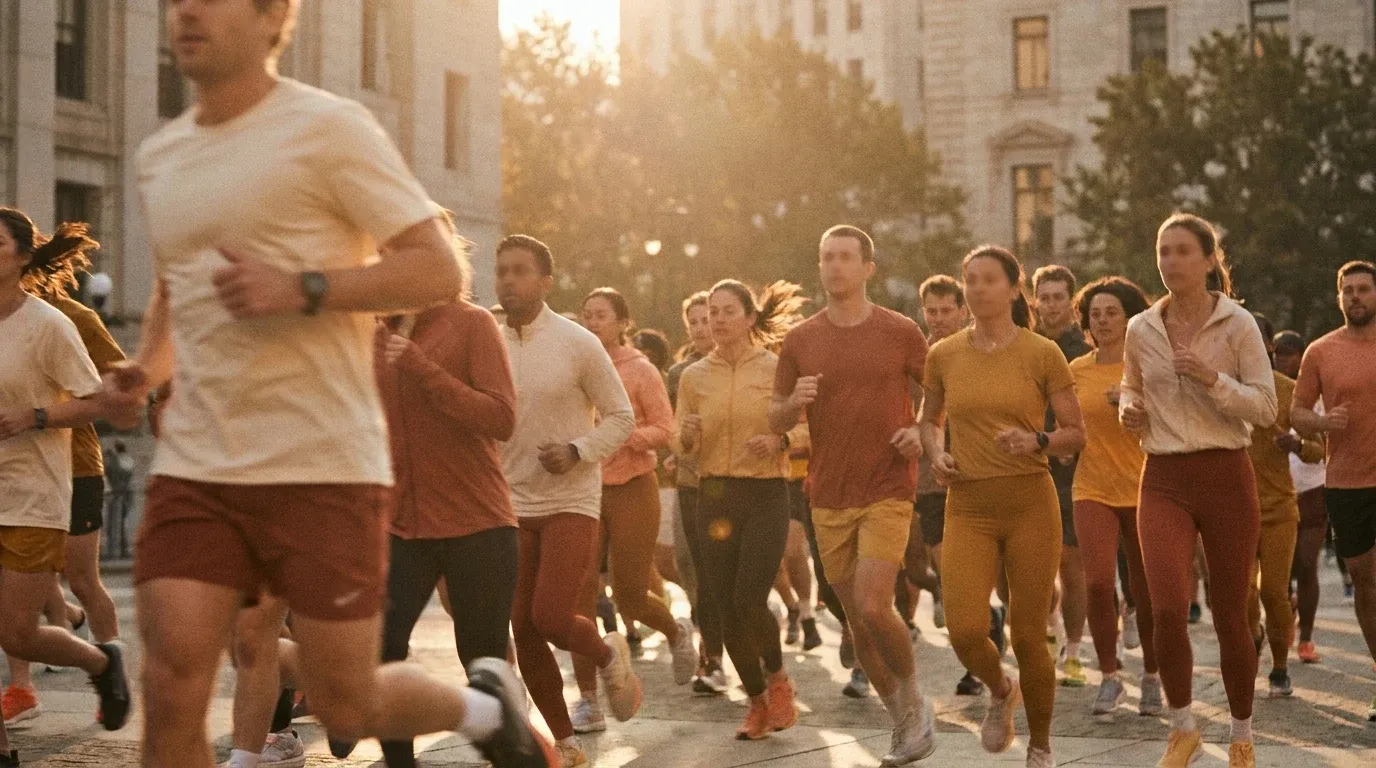
If you needed proof that running isn't slowing down, look at the doors of the Life fitness expo in 2026. Sold out. Every ticket, every session, every keynote slot. And if you walk the floor, one theme comes up again and again: running is the sport pulling people in from every direction, every background, every fitness level.
This isn't a blip. The data, the demographics, and the mood at events like Life all point to the same thing. The global running boom is maturing, not fading. Here's what's actually behind it, and what it means if you're thinking about joining or stepping up your own training.
Life 2026: A Sold-Out Signal
The Life fitness expo has long served as a barometer for where the fitness industry is heading. In 2026, running dominated the agenda in a way that surprised even longtime attendees. Brands, coaches, and gear companies centered their booths and talks around road racing, trail running, and track performance. Registration closed weeks before the doors opened.
Industry insiders at the expo were direct about what's driving attendance. Running is accessible in a way that few other sports can match. You don't need a gym membership, a coach on day one, or expensive equipment to start. A pair of decent shoes and a sidewalk will do. That simplicity is proving to be one of the most powerful recruitment tools in sport.
The expo also reflected a broader shift in how fitness brands are positioning themselves. Recovery tools, nutrition products, and training apps were all framed around the runner's journey, not the generic "active lifestyle" messaging that dominated a decade ago. Running has become the anchor identity for a huge segment of the fitness market.
Global Participation Is Climbing Across Every Format
Road running remains the dominant entry point, but 2026 has seen meaningful growth across trail and track formats too. Global race registrations are up across major markets, and event waitlists, once rare outside of majors like London or Boston, are now common at mid-sized regional races.
Trail running in particular has seen a surge. Events that might have drawn a few hundred participants five years ago are now fielding thousands. The ultra weekend recap from September 26 captured this shift in real time, with field sizes and spectator turnout at levels that organizers hadn't projected until 2028.
Track events are also seeing renewed interest, driven partly by the growing popularity of structured speed work among recreational runners. Parkrun-style formats and community track nights have lowered the psychological barrier to showing up on a track for the first time, something that used to feel like territory reserved for competitive athletes.
Internationally, races like Paris-Versailles 2026 drew record fields and significant global attention, illustrating how storied point-to-point courses are pulling runners who want more than a city loop. The appetite for iconic, experience-driven events is growing fast.
What's Actually Fueling the Boom
Three factors keep coming up when you talk to coaches, race directors, and runners themselves: community, social visibility, and cost of entry.
Community first. Running clubs have transformed from niche social groups into genuine cultural hubs. In cities across the US, UK, Canada, and Australia, Wednesday evening club runs and Saturday long runs are packed. The social layer around running. the coffee after the run, the group chat, the shared training goals. has become as important as the miles themselves for many participants.
Social media visibility. Platforms like Strava, Instagram, and TikTok have made running performance visible in a way it never was before. Seeing a friend post a 5K personal best or a trail race finish photo creates a pull that traditional advertising never could. Running is shareable. It photographs well. It produces milestones that feel worth celebrating publicly, and that loop keeps drawing new people in.
Lower barriers compared to other endurance sports. Triathlon, cycling, and HYROX-style formats all require significant gear investment and technical learning. A quality pair of running shoes sits between $120 and $180 in the US market. Entry-level race fees for a local 10K run $25 to $50. That affordability removes one of the biggest friction points for potential participants, especially younger runners and those coming from less financially flexible backgrounds.
Women's Participation and the Demographic Shift
Multiple stakeholders at Life 2026 flagged women's participation as the single most significant trend reshaping the sport. In major US road races, women now represent over 50 percent of finishers in many half marathon fields. That's a structural shift, not a seasonal one.
The growth isn't limited to one age group either. Women in their 30s, 40s, and 50s are entering the sport in large numbers, often citing community connection and mental health benefits as primary motivators. This demographic is also more likely to invest in nutrition, recovery, and coaching. Understanding how protein needs shift across life stages matters here, especially for women navigating perimenopause while maintaining or building a training load. Your protein needs change with life stage, and getting that right can be the difference between consistent training and chronic fatigue.
Younger demographics are moving in too. Runners aged 18 to 30 are showing up at race starts in numbers that reverse what had been a decade-long concern about youth disengagement from endurance sport. Gen Z runners tend to prioritize community events, shorter distances to start, and aesthetics around the sport, gear, routes, post-run rituals. Brands at Life 2026 were clearly paying attention to this cohort.
What the Growth Means for Everyday Runners
More participants is good for the sport overall. Fuller fields create better race atmospheres, more funding flows into event infrastructure, and the industry produces better gear at more competitive price points. But a growing sport also brings risks that individual runners need to stay ahead of.
Injury rates tend to spike when large numbers of new runners increase mileage too quickly. The classic pattern is familiar: enthusiastic start, rapid buildup, overuse injury, dropout. Strength training remains one of the most effective injury prevention tools available, yet it's consistently underutilized in the running community. Why most people still skip resistance training is worth understanding if you want to run consistently for years, not just a season.
Pain management is another area where runners need honest information. Research consistently shows that exercise relieves both acute and chronic pain, but that doesn't mean running through every signal your body sends. Knowing when to push and when to back off, especially during race season, requires more self-awareness than most training plans teach explicitly.
For runners eyeing longer distances or races in unfamiliar conditions, environmental factors deserve attention too. Air quality on race day is an underappreciated variable. Air pollution can measurably slow your marathon time, and knowing how to assess and respond to AQI before a major effort is a practical skill, not an edge case concern.
The Industry Is Listening
The sold-out status of Life 2026 isn't just a headline. It reflects a fitness industry recalibrating around running as a primary growth driver. Expect to see more running-specific content, coaching certifications, nutrition products, and event formats rolling out over the next 12 to 24 months as brands chase the audience that's already here.
For you as a runner, that means more resources, more community options, and more events to choose from. It also means more noise to filter. Not every product, plan, or program that gets attached to the running boom will be worth your time or money. The fundamentals, consistent mileage, strength work, adequate recovery, honest nutrition, remain the same regardless of what's trending on any given expo floor.
The boom is real. The participation numbers are real. And the opportunity to be part of a genuinely global, growing sport has never been more open. Whether you're lining up for your first 5K or building toward an ultra, the infrastructure around you is better than it's ever been. Use it wisely.