
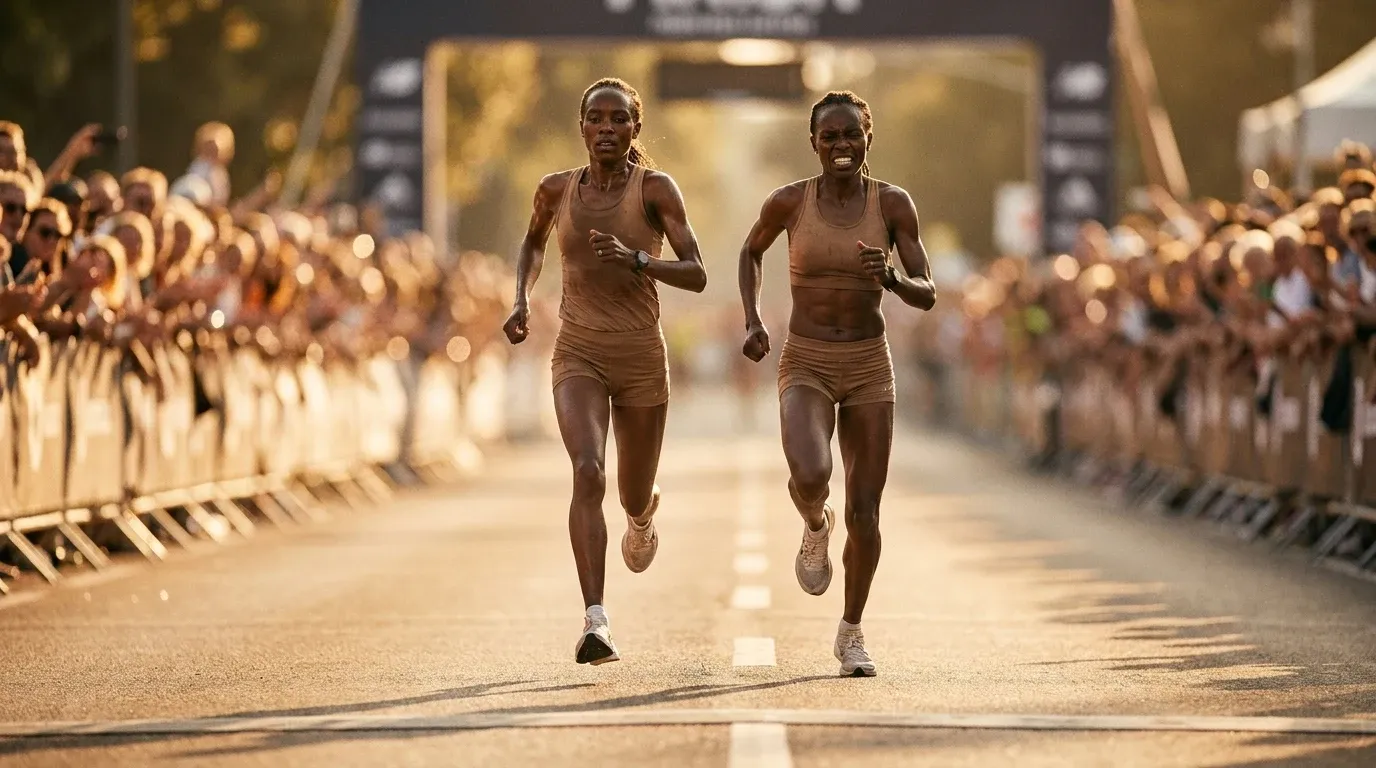
The women's field at the 2026 TCS New York City Marathon is shaping up to be one of the most compelling in recent memory. Two names sit at the top of every conversation: Hellen Obiri, the defending back-to-back champion, and Sifan Hassan, the Olympic marathon gold medalist who arrives with the fastest personal best in the field. If you follow elite distance running, this is the matchup you've been waiting for.
Obiri Returns to Defend Her Crown
Hellen Obiri has made New York her home. The Kenyan star claimed her first NYC Marathon title in 2023, then came back in 2025 to win again while setting a course record on the iconic five-borough route. That kind of dominance on a technically demanding course doesn't happen by accident. Obiri has shown a rare ability to control the race tactically, surge at will in the final miles, and hold her form when the field starts to crack on the Queensboro Bridge.
Her confirmed return for 2026 signals one thing clearly: she's not done. Winning a third NYC title would place her in genuinely rare company and cement her legacy as one of the great marathon performers of her era. She arrives not as a survivor of previous victories but as an athlete who looked stronger in 2025 than she did in 2023. That trajectory matters.
For runners currently building toward fall races of their own, the discipline Obiri brings to her base training is worth studying. Her approach to the transition from track-style speed work into full marathon preparation is methodical and patient. If you're navigating a similar shift this summer, a structured plan like the one outlined in Summer Base to Fall Marathon: Make the Switch Now can help you apply comparable principles at your own level.
Hassan's Personal Best Changes the Equation
Sifan Hassan enters NYC 2026 carrying a credential that no one in the women's field can match: the fastest marathon personal best on the start list. The Dutch superstar, who claimed Olympic marathon gold in Paris 2024, has demonstrated she can run at a pace that simply doesn't exist in most athletes' legs. Her PB places her in a category of runner who doesn't just compete. She redefines what's possible on the day.
Hassan's relationship with New York will be worth watching closely. She's a racer who has shown she can adapt her enormous aerobic engine to different course profiles and conditions. The NYC course, with its rolling terrain and five distinct borough personalities, rewards patience and tactical intelligence as much as raw speed. Hassan has both. The question isn't whether she's fit enough to win. It's whether the race unfolds in a way that lets her raw pace advantage come to bear in the final 10 kilometers.
What makes this matchup so fascinating is that both athletes represent genuinely different archetypes. Obiri is the tactician. Hassan is the thoroughbred. When those two approaches collide over 26.2 miles in late November, the result is unpredictable in the best possible way.
Why This Head-to-Head Is the Story of the Fall Season
The fall marathon calendar is stacking up with elite talent across Berlin, Chicago, and London's late entries, but Obiri vs Hassan has the clearest narrative structure of any women's matchup this season. Both athletes are coming off landmark performances. Both have legitimate claims to the title of best women's marathoner in the world right now. And they're meeting on a course that neither can simply overpower with fitness alone.
It's worth noting that the elite marathon ecosystem has never been more competitive at the top. The Paris 2024 cycle pushed a generation of distance runners into the marathon earlier than expected, and several of them have hit the ground running. The women's fields at fall majors in 2026 reflect that depth. NYC, in particular, has built a reputation for assembling rosters that produce genuine racing rather than time trials. That culture suits a showdown like this one perfectly.
The growing global appetite for elite road racing is also visible well beyond the six World Marathon Majors. Local and regional events are drawing record fields and increasing media attention. The participation surge documented at events like those covered in Saguenay Marathon Sets a New Participation Record reflects a broader explosion of interest in the marathon distance at every level of the sport.
The Course Itself as a Factor
Central Park's finish isn't just scenic. It's punishing. The final two miles of the NYC Marathon include a series of rolling climbs through the park that have broken races wide open in both directions. Athletes who've gone out conservatively suddenly find legs that others don't have. Athletes who've pushed too hard on the Verrazzano or through Brooklyn pay the price here.
Obiri's 2025 course record was built on a controlled first half and a devastating second half surge. She ran the back end of the race faster than the front, which is the gold standard for marathon execution. If Hassan tries to force the pace early, she risks handing Obiri exactly the race the Kenyan wants. If Hassan sits and waits, she's essentially betting on her kick against a woman who broke the course record.
There's no clean tactical answer here, and that's what makes it great racing.
What Elite Nutrition Looks Like at This Level
One area where both athletes' support teams will be working hard between now and race day is fueling strategy. At the elite marathon level, carbohydrate delivery, hydration timing, and recovery nutrition are as carefully engineered as training loads. The old approach of simple sugar products at every aid station has been increasingly challenged by research into how the gut responds under race stress.
For endurance athletes at any level, understanding the limits of a sugar-dominant approach is worth your time. The evidence reviewed in Ultra-Trail Fueling: The Case Against All-Sugar Nutrition raises questions that apply across road and trail formats alike. The principles don't stop at ultramarathon distance. They're relevant any time you're running hard for more than two hours.
Recovery nutrition between hard training blocks is equally important for athletes preparing for fall marathons. If you're evaluating supplement strategies for absorption efficiency during heavy training, the analysis in Liposomal Supplements: Real Absorption Upgrade or Just Hype? offers a grounded look at what the science actually supports versus what's marketing copy.
The Wider Field Still Matters
While Obiri and Hassan are the headliners, the 2026 NYC women's field is expected to include several other athletes capable of disrupting the narrative. The marathon has a way of humbling favorites and elevating athletes who've done the quiet work. A woman currently ranked fourth or fifth on the start list could easily find herself leading the race through the Bronx if the front pack makes a collective tactical miscalculation.
That uncertainty is the sport's greatest asset. You can model fitness, predict pacing, and analyze splits from every previous performance, but the marathon on race day remains genuinely open. Weather, foot traffic, gel timing, a tight quad on mile 18. Any of it can shift the order completely.
Following the build-up through the summer and fall, including press conferences, time trial performances, and tune-up race results, will tell you a great deal about which athletes are peaking at the right moment. Both Obiri and Hassan are experienced enough to manage their form through a long season, but elite sport at this level leaves small margins for error.
Why You Should Clear Your Schedule for November
The NYC Marathon has delivered some of the most dramatic women's finishes in the history of road racing. The 2026 edition, with Obiri defending and Hassan hunting, has all the ingredients to belong in that conversation.
If you're a runner yourself, watching how the best athletes in the world execute a race of this complexity is one of the best forms of education the sport offers. The pacing, the positioning, the moments when one athlete tests another with a small surge to measure response. It's tactical chess played at five-minute-per-mile pace.
Mark November 1, 2026 on your calendar. The women's race alone is worth the alarm.