
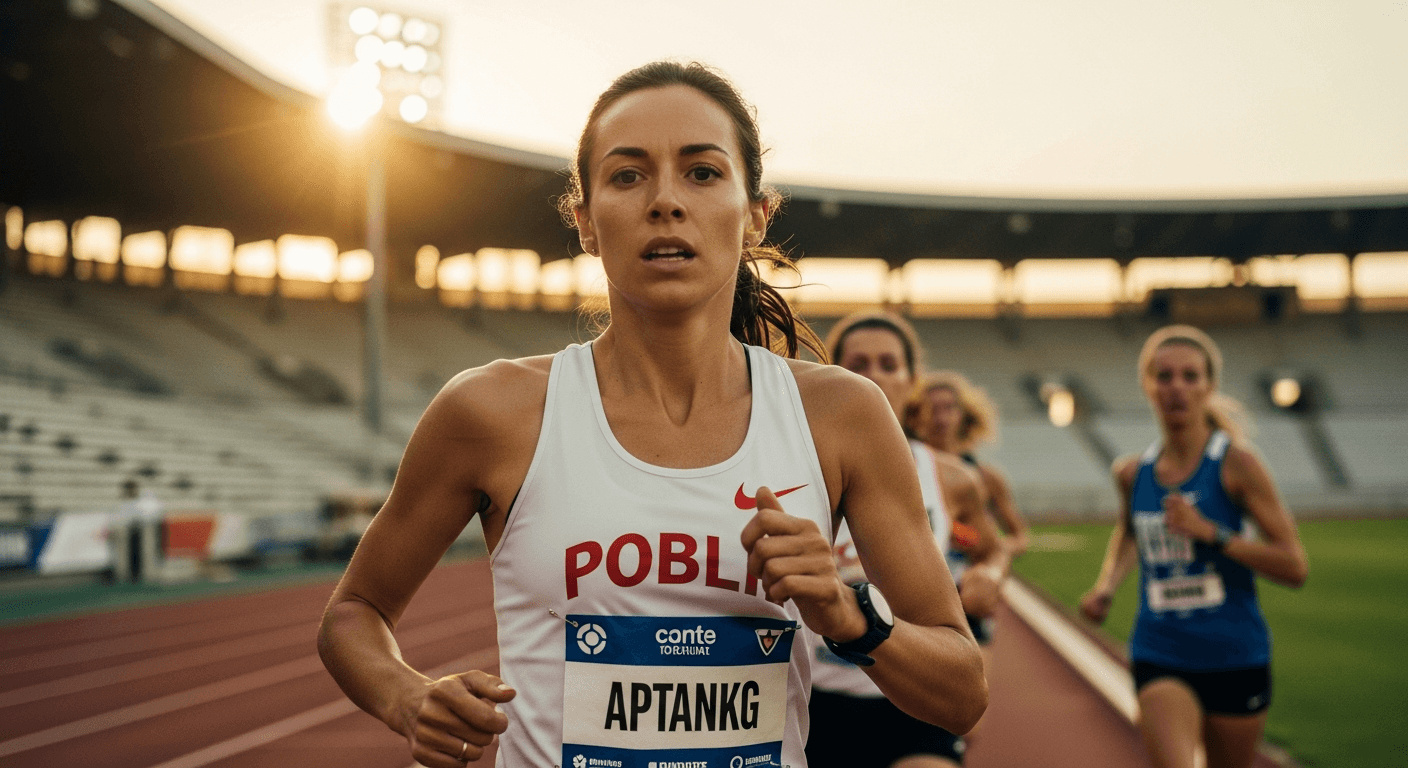
Parker Valby ran 14:49.41 on Friday night to win the 5K at the Sound event, setting a personal best that lands her firmly among the fastest American women ever in the event. It's a performance that demands attention, not just as a number on a results page, but as a statement about where women's distance running in the United States is heading right now.
This wasn't a time trial or a rabbit-assisted solo effort. Valby ran competitively, won the race, and crossed the line with a mark that would have been considered exceptional in any era of the sport. In the context of the 2026 track season, it's a signal worth taking seriously.
Breaking Down the 14:49
To understand what 14:49.41 actually means, you need some context. The American record in the women's 5K sits at 14:36.61, set by Shelby Houlihan in 2020. The all-time world record is 14:00.21, held by Gudaf Tsegay. Valby's new personal best puts her inside the conversation for the fastest American women in history, a list that includes names like Sifan Hassan's American rivals and a generation of collegiate standouts who turned professional.
Sub-14:50 is a threshold that separates good professional runners from genuinely elite ones. Breaking that barrier on an open track, in a competitive field, at this point in the season tells you something real about Valby's current fitness and her ability to execute under pressure.
Her splits would have required consistent pace discipline across roughly 12.5 laps. That kind of metabolic control, maintaining speed while managing lactate accumulation, is what separates athletes who can train fast from athletes who can race fast. Valby, clearly, can do both.
Her Trajectory: From NCAA Star to Professional Record-Setter
If you followed collegiate running over the past few years, Valby's name is already familiar. She was dominant at the University of Florida, collecting NCAA titles and turning heads with performances that consistently outpaced the expectations set for college athletes at the time. Her transition to professional competition was one of the more anticipated stories in American distance running.
That transition is never guaranteed to go smoothly. Many collegiate standouts find the jump to open competition, with different training loads, race calendars, and competitive fields, harder than expected. Valby has avoided that trap. She's not just survived the professional environment. She's thriving in it, and the 14:49 is the clearest evidence yet.
Her development pattern follows a track that running analysts have noted in a handful of American women over the past decade. Strong base mileage built during college, event-specific sharpening in early professional years, and then a breakthrough performance that resets expectations entirely. That's the arc Valby appears to be on, and it's compelling to watch.
The 2026 Track Season Context
Timing matters in athletics, and Valby's 14:49 comes at a moment when the 2026 track season is shaping up to be one of the most competitive in recent memory. Major championships are on the horizon, fields are deep, and athletes across the distance events are running faster than the historical averages for this point in the calendar year.
That last point isn't coincidental. Training science has advanced significantly. Athletes and coaches now have access to better physiological data, more nuanced recovery protocols, and an understanding of periodization that has pushed performance ceilings upward. If you're curious how aerobic stress at this level interacts with long-term cardiovascular health, What a Marathon Really Does to Your Heart offers a useful breakdown of what high-volume training does to the body over time.
For Valby specifically, running a personal best this early in the season while the major competitions are still ahead is a strong tactical position. It means she's not peaking too early, or if she is, her ceiling is higher than most anticipated. More likely, it suggests her training block has built exactly the kind of fitness that tends to carry through a full championship campaign.
The women's 5K and 10K fields at the major 2026 championships will be loaded. East African athletes continue to dominate world rankings, but the American women's distance group is deeper than it's been in years. Valby's performance adds her name to a short list of contenders who could genuinely challenge for medals on the global stage.
What Makes Her Running Technically Impressive
Watching Valby race, a few technical qualities stand out. Her stride efficiency at pace is notable, she doesn't waste energy in her upper body, and her cadence holds up as fatigue sets in during the final kilometer. That last point is where many otherwise talented runners lose time they shouldn't.
Cadence maintenance under fatigue is a skill, not just a physical attribute. It's something that can be trained, and if you want to understand how runners work on this specifically, Running Cadence: How to Actually Improve It covers the practical mechanics in detail. For elite athletes like Valby, that kind of technical consistency at sub-15-minute pace is what separates a good race from a great one.
Her finish, specifically her ability to sustain pace through the final 400 meters rather than visibly tying up, is also worth noting. The 5K punishes athletes who go out too hard and rewards those who can negative-split or hold even pace late. Valby's final lap suggests she had enough left to push when it counted, which is a mental and physical quality that translates across race distances.
What This Means for American Women's Distance Running
American distance running has had a complicated decade. Doping suspensions hit the women's side particularly hard, creating gaps in the record books and a period of uncertainty about who the true standard-bearers were. What's emerged since is a younger generation of athletes building careers on credibility, consistent performance, and transparent training cultures.
Valby fits squarely into that generation. Her performances aren't outliers built on a single extraordinary day. They're part of a pattern of progressive improvement that earns trust from fans and analysts who've learned to be skeptical. That matters for the sport's health as much as the times themselves.
It's also worth noting that American women's distance running is increasingly diversified by event. Athletes who might once have defaulted to the marathon are staying on the track longer, building the kind of speed that translates across distances. If you're interested in how women's physiology interacts with endurance demands at the extreme end of the spectrum, Why Women May Have the Edge in Ultramarathons explores the science behind durability and fatigue resistance in ways that apply broadly across distance events.
Looking Ahead: Championships and Beyond
The immediate question after a performance like this is simple: what's next? For Valby, the 2026 championship calendar presents real opportunities. A sub-14:50 personal best makes her a legitimate finalist at any global championship, and depending on how the season develops, potentially a medal contender.
The key variable now is how her team manages the next few months. Championship running requires a different kind of preparation than chasing personal bests on fast tracks at early-season invitationals. Heats, semifinals, and finals compress recovery windows. Tactical racing in championship rounds demands patience that pure time-trial fitness doesn't always teach.
But those are problems worth having. Running 14:49 at this stage of the season puts Valby in the strongest possible position heading into the championship stretch. Her coaches will have more options, not fewer, when it comes to shaping her competition schedule.
There's also the longer-term picture. Valby is still young enough that this personal best may not represent her ceiling. Distance runners often continue improving into their late twenties and early thirties, particularly those who've built their aerobic base carefully rather than burning through it chasing early results. The 14:49 looks like a milestone, not a finish line.
Why You Should Be Watching This Season
If you haven't been paying close attention to the women's 5K this year, Valby's performance is a good reason to start. The event is producing some of the most competitive racing in track and field right now, with times compressing across the entire field and performances regularly exceeding pre-season projections.
The 2026 track season is shaping up to be one worth following closely, whether you're a lifelong running fan or someone who drifts toward the sport during championship years. Parker Valby's 14:49.41 is one of the early markers of just how good this season could get. Keep watching.