
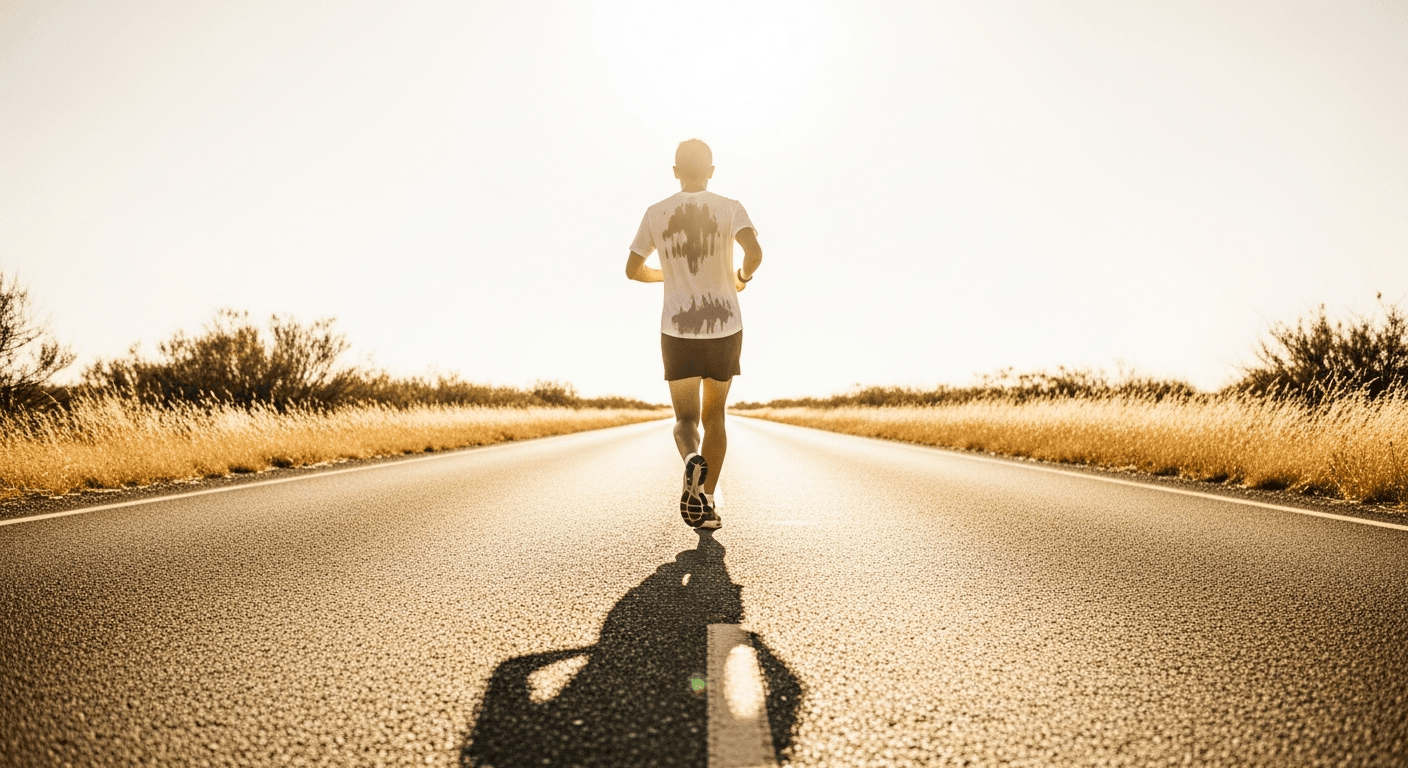
June is often when recreational runners hit their first heat wall. Times slow by 30-90 seconds per kilometer, heart rate spikes for the same perceived effort, and recovery takes longer. Many interpret this as a loss of fitness.
It's not a fitness loss. It's physiology. Once you understand the mechanism, summer becomes a training opportunity — not an obstacle.
Key Points
- Heat increases HR by 10-15 bpm at the same pace — expect 30-90 sec/km slower than normal
- Heat acclimatization takes 10-14 days. After that, your body actually adapts.
- Run by heart rate, not pace, in summer
- Best window: before 7am or after 8pm
- Hydration: 500ml water 30-60 min before running, 150-200ml every 15-20 min during
Why Heat Slows Performance
When ambient temperature rises, your body faces two simultaneous demands: produce muscular power and regulate body temperature. Both compete for cardiovascular resources.
In heat, more blood is directed to the skin for sweating and cooling. Less blood perfuses the working muscles. Heart rate increases to compensate — and the result is higher cardiovascular intensity at the same pace.
Concretely: a 5:30/km run at 68°F produces HR 155 bpm. The same pace at 88°F may produce 165-170 bpm. You haven't lost fitness — you're working harder cardiovascularly for the same speed.
Heat Acclimatization: A Real Advantage
Good news: the body adapts. After 10-14 days of regular heat exposure (even 30-45 minute runs), several adaptations occur:
- Increased blood volume: plasma volume increases 5-10%, improving oxygen transport capacity AND heat regulation
- Earlier sweat onset: the body starts sweating at a lower core temperature, cooling more efficiently
- Lower HR at a given effort: after acclimatization, HR returns toward baseline levels at the same pace
- Better cardiac output distribution: the heart better manages blood distribution between muscles and skin
These adaptations are real, measurable — and they persist for about 2 weeks after returning to cooler temperatures. Runners training for a fall marathon who train in summer heat often perform better in fall races for this reason.
Practical Adjustments
1. Run by Heart Rate, Not Pace
In summer, let pace adjust to heart rate rather than forcing a target pace. If your easy runs are normally at HR 140-150, run at that HR — even if it means running 1 min/km slower than usual.
2. Choose the Right Time Windows
Heat index peaks between noon and 4pm. To avoid the toughest conditions:
- Optimal: before 7am or after 8pm in summer
- Acceptable: 7-9am or 6-8pm
- Avoid: 10am-5pm in full sun above 86°F (30°C)
3. Hydration Is Non-Negotiable
Fluid losses during a heat run can reach 1-2 liters per hour depending on temperature and intensity. Even a 2% body weight water deficit reduces performance by 5-8%.
Recommended protocol:
- 500ml water 30-60 minutes before running
- 150-200ml every 15-20 minutes during the run
- For runs over 60 minutes: add electrolytes (sodium, potassium, magnesium) to replace sweat losses
- After the run: weigh yourself. Every 0.5 lbs lost = 8oz of fluid to recover
4. Temporarily Adjust Volume
The first weeks of heat are not the time to increase training volume. Maintain your usual mileage but reduce quality session intensity. Resume progression once acclimatization is in place.
Sources: Armstrong LE et al. — Heat acclimatization to improve athletic performance in warm environments. Strength and Conditioning Journal, 2012 | Cheuvront SN & Haymes EM — Thermoregulation and marathon running. Sports Medicine, 2001