
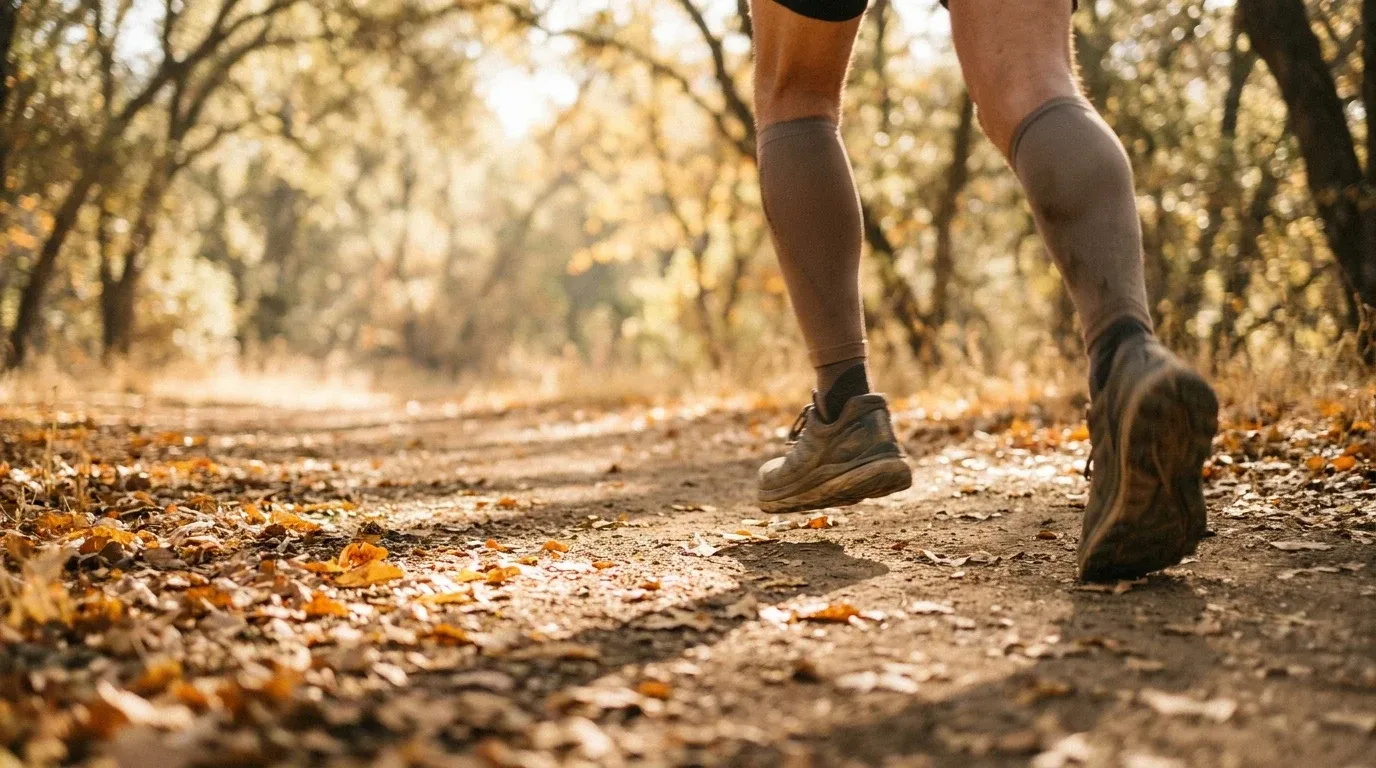
October has quietly become one of the most important months on the trail running calendar. The heat of summer is gone, the body is race-hardened from months of training, and the timing is right for a season-defining effort. The Sonoma Fall Classic lands squarely in that window, and in 2026 it's shaping up to be one of the most well-rounded trail events of the year.
Whether you've never left a paved road before or you've logged serious vert all summer, this event is built to meet you where you are. Here's what you need to know before you register.
What the Sonoma Fall Classic Actually Is
The Sonoma Fall Classic is a trail festival built around multiple race distances, a feature that has become the gold standard for events serious about growing participation. Shorter options in the 5K to 10K range bring in newer trail runners and runners making the transition from road racing. Mid-distances around the half marathon mark appeal to the large middle tier of the sport. And longer distances, typically 25K and beyond, give experienced runners a genuine late-season test.
That multi-distance structure matters more than it might seem. Trail running participation has grown steadily over the past three years, driven in part by events that lower the barrier to entry without diluting the experience for competitive runners. The Sonoma Fall Classic is designed with that balance in mind.
Registration fees vary by distance, as they do across most comparable US trail events. Expect shorter distances to run in the $65 to $95 range and longer distances in the $110 to $160 range, depending on early-bird timing. Prices are in line with similar October trail festivals on the West Coast calendar.
The Festival Model and Why It Works
Race day at the Sonoma Fall Classic isn't just about the finish line. The event is built around a festival footprint that includes a post-race village, local food and beverage vendors, live music, and the kind of communal energy that makes trail running feel like a scene rather than just a sport.
That community-first model reflects a broader shift in how trail events are being designed and marketed in 2026. Organizers have learned that runners, especially those new to trails, are more likely to register when the event feels like a full experience rather than a point-to-point race with a t-shirt at the end. The Sonoma Fall Classic leans into that directly.
For spectators and non-running travel companions, the festival structure also solves a real problem. It gives people something to do beyond waiting at the finish line, which makes the trip more viable for runners who would otherwise feel guilty about dragging a partner across the country for a four-hour solo effort in the woods.
This community orientation also has genuine fitness upside. Research consistently shows that social accountability and group-based activity are among the strongest predictors of long-term exercise adherence. An event that feels like a community gathering rather than a solitary competitive test tends to bring people back the following year.
Sonoma Wine Country as a Race Setting
The course runs through the hills and open terrain of Sonoma County, one of the most visually distinctive landscapes in the United States. In October, the vineyards are mid-harvest, the light is low and golden, and the foliage along the ridgelines shifts toward amber and rust. It's a setting that photographs well and runs even better.
From a course design standpoint, Sonoma's topography offers a useful mix. Expect rolling elevation rather than sustained brutal climbing, which makes longer distances more accessible to runners who haven't specifically trained for high-vert events. The trails are generally well-maintained and clearly marked, which is relevant for anyone running trails for the first time in a race context.
The wine country backdrop also makes the Sonoma Fall Classic an easy sell as a full travel weekend. Sonoma and neighboring Napa offer strong options for accommodation, dining, and post-race recovery at a range of price points. A solo runner can build a weekend around the race for a reasonable budget. A couple or small group can extend it into a four or five-day trip without much effort.
If you're thinking about how to structure a trip around this kind of event, your fall destination marathon travel checklist covers the logistics in useful detail, from booking timing to gear transport strategies. Much of that advice applies directly to a trail festival format like this one.
October Timing and the Season-Closing Logic
For runners who structured their training year around a summer peak, October is the ideal window for a season-closing goal. You've built the base, absorbed the mileage, and the body has adapted. What's left is converting that fitness into a result before the year winds down and the instinct to ease off takes over.
The Sonoma Fall Classic fits that logic almost perfectly. It's late enough that you're not sacrificing a summer event to taper for it, but early enough in October that weather is reliably cooperative on the West Coast. Temperatures in Sonoma County in October tend to sit in the 55 to 70°F range during race hours, which is close to ideal for trail efforts across most distances.
For runners who've been consistent through the summer, this is also a moment worth protecting. Training consistency matters more than intensity, and a well-timed October race gives that consistency a meaningful payoff. It also creates a natural transition point into the off-season without the demoralizing feeling of just stopping.
If you started running earlier in the year partly for the long-term health benefits, the timing works in your favor there too. Research published in 2025 found that sustained aerobic exercise over a twelve-month period produced measurable reductions in biological aging markers. An October event gives you a reason to stay the course through the full year rather than letting the program drift after summer.
Who Should Register
The Sonoma Fall Classic works well for several distinct runner profiles. Here's a straightforward breakdown:
- Road runners curious about trails: The shorter distances and well-marked course make this one of the lower-risk entries into trail racing. The festival atmosphere means you're not showing up to a scene that feels exclusionary or hyper-technical.
- Intermediate trail runners: The mid-distance options offer a genuine test without requiring the kind of vert-specific training that makes some trail races inaccessible to runners who live in flat or low-elevation areas.
- Experienced trail runners looking for a season closer: The longer distances and competitive field depth make this a legitimate goal race. October timing gives you a full summer to build toward it.
- Runners motivated by the travel component: If the race itself is the anchor and Sonoma wine country is the context, this event justifies the trip on both counts. The destination logic is strong here.
If you're still deciding whether a destination race format makes sense for your goals, how to pick your first destination marathon without the regret lays out the key questions worth asking before you commit to a travel race. The framework applies whether you're running a road marathon or a trail festival.
Fueling and Training Considerations
Trail racing introduces fueling demands that differ meaningfully from road racing. The slower pace and longer time on feet at longer distances mean you'll likely need more calories per hour than you're used to. If you're new to trail fueling strategy, start experimenting in training well before October.
The evidence on carbohydrate intake for endurance events has sharpened considerably in recent years. The research comparing 60g versus 120g of carbs per hour for endurance fueling is worth reviewing before you finalize your race nutrition plan, particularly if you're targeting a longer distance at the Sonoma Fall Classic. Getting this right in training rather than on race day is one of the more controllable variables in your performance.
From a training standpoint, the most useful thing most runners can do between now and October is accumulate consistent time on trails. That means elevation where you can find it, technical terrain when it's available, and easy mileage on dirt when it's not. Specificity matters, but so does patience with the process.
How to Plan Your Trip
Sonoma County is well-connected by air through San Francisco International Airport (SFO) and Oakland International Airport (OAK), both roughly an hour's drive from the race area depending on traffic. Charles M. Schulz Sonoma County Airport (STS) in Santa Rosa is a smaller option with limited direct routes but no highway transit stress.
Accommodation options range from standard hotel chains in Santa Rosa and Petaluma to boutique wine country inns and vacation rentals closer to the vineyards. Book early. October is harvest season, and rooms fill quickly across Sonoma County regardless of what's happening on the trail network.
Plan to arrive at least a day before race day to handle packet pickup, settle into the altitude and terrain, and avoid the specific stress of traveling on race morning. Build a buffer day after the race if your schedule allows. Post-race recovery in wine country is, objectively, not a hardship.
The Sonoma Fall Classic is the kind of event that earns a place on the calendar not because it's the biggest or the most technically demanding, but because it gets the formula right. Good trails, a setting worth traveling for, distances that serve the full spectrum of the sport, and an atmosphere that makes finishing feel like something worth celebrating with the people around you. That's a strong argument for October.