
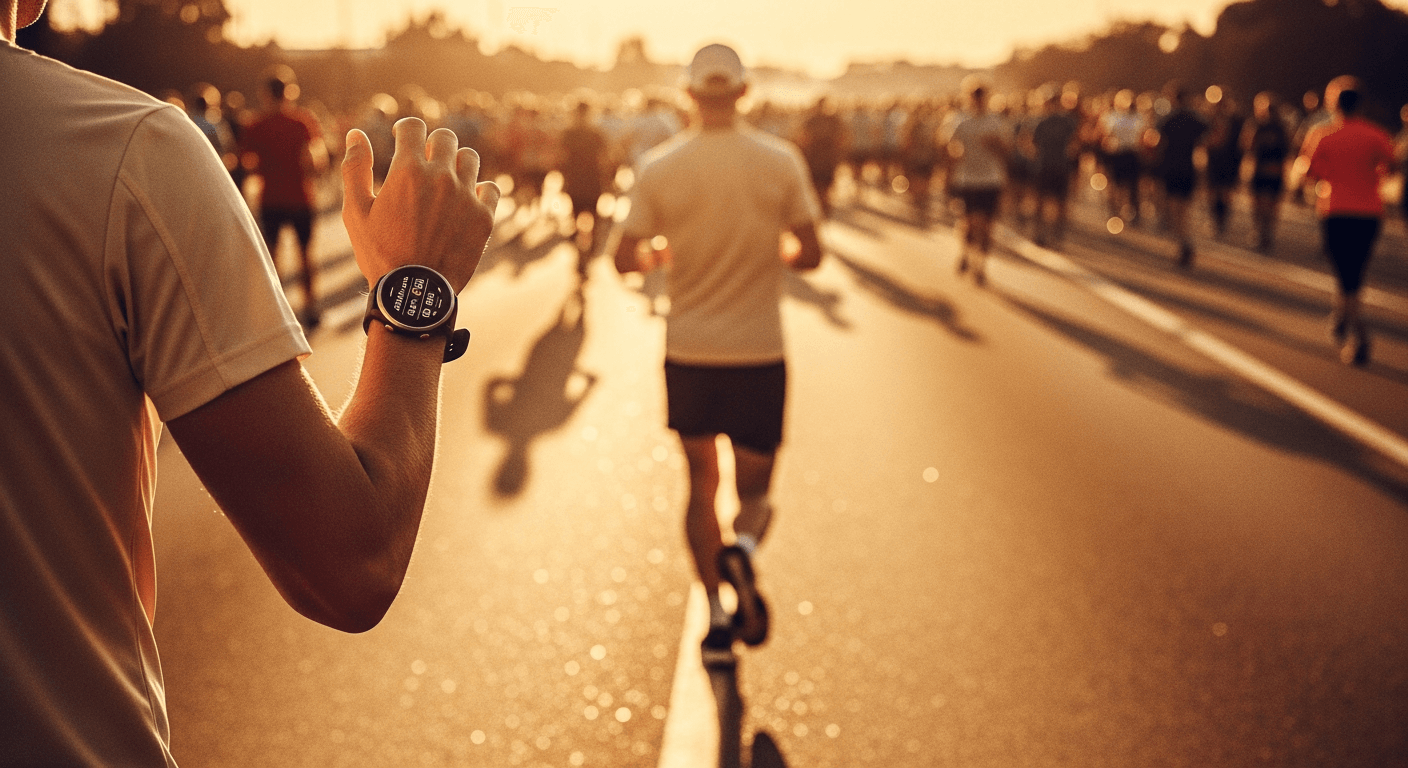
On June 4, 2025, millions of runners around the world will lace up for Global Running Day. This year, though, there's more at stake than a casual jog or a personal milestone. Strava and Runna are teaming up to attempt something that's never been done before: breaking the world record for the most 5K activities logged on a single platform in a single day.
It's an audacious goal, and the kind of campaign that only makes sense in 2025, when a running app can mobilize more people than most road races ever could.
What the Challenge Actually Is
The concept is straightforward. On Global Running Day, Strava and Runna are asking runners to complete any 5K, log it on Strava, and add the Runna-branded challenge to their activity. That's it. You don't need to run fast. You don't need to race. You just need to cover 5 kilometers and record it.
The current record for the most 5K activities logged on a single platform in one day doesn't have a widely published benchmark, which means the bar is being set in real time. What matters is scale: the more people who participate, the higher the number climbs, and the more significant the achievement becomes.
Runna, the AI-powered training plan app that has grown rapidly among recreational runners since its launch, is using this moment to introduce itself to Strava's enormous global user base. Strava, meanwhile, gets to turn Global Running Day into something with genuine stakes. Both brands benefit from what happens when you give runners a reason to show up beyond personal motivation.
Why It's Built for Everyone
One of the more interesting things about this campaign is who it's designed for. A 5K world record attempt typically conjures images of elite runners chasing sub-13-minute times on a track. This one doesn't work that way.
The challenge is explicitly open to every runner, at every pace. A first-time runner covering 5K in 45 minutes counts exactly the same as someone running it in 20. A walker who covers the distance counts too. The record isn't about speed. It's about volume, and that means inclusivity is built directly into the structure of the attempt.
That's a meaningful shift. Running has spent years trying to broaden its appeal beyond the subset of people who train seriously or race competitively. Research consistently shows that the health benefits of regular running don't require elite performance. Studies on cardiovascular outcomes suggest that even modest, consistent aerobic effort produces significant protective effects, a finding explored in depth in research on the exact fitness dose that protects your heart. You don't have to be fast to benefit, and you don't have to be fast to matter in this record attempt either.
For newer runners or those who started later in life, this kind of low-barrier participation event can be exactly the nudge that builds long-term habit. Research on fitness decline and late starters has shown that people who begin structured exercise later still achieve substantial gains, and community-driven events like this one are often what gets them started.
The Numbers Behind the Ambition
Strava reported more than 135 million registered users as of 2024, with activity uploads running into the hundreds of millions each year. On Global Running Day in previous years, the platform has seen some of its highest single-day activity spikes of the calendar year.
Runna has been growing fast in that same period, crossing significant download milestones and building a reputation for personalized, adaptive training plans that work whether you're preparing for your first 5K or your fifth marathon. Its integration with Strava means that participating in this challenge requires minimal friction. If you're already using either app, you're already most of the way there.
The specific record target hasn't been publicly announced as a hard number, but the campaign's framing suggests the goal is to push well past any previous benchmark for a single-day mass participation running event on a digital platform. Even a fraction of Strava's active user base participating would produce a number that would be difficult to challenge.
Running Apps Are Becoming Community Engines
There's a bigger story underneath this campaign. For most of their existence, running apps were tools. You tracked a run, reviewed your splits, maybe compared yourself to a segment leaderboard. The interaction was primarily between you and your own data.
That model has been shifting. Strava has leaned hard into challenges, clubs, and social features that turn solitary runs into shared experiences. Runna has built community touchpoints around its coaching plans. Together, this collaboration signals something more deliberate: the idea that a running app can function as an organizing platform, capable of directing collective action around a shared goal.
That's not a small thing. Road races spend months on logistics, permits, and infrastructure to get a few thousand runners to the same place at the same time. A digital challenge like this one can reach millions of people across dozens of time zones without a single finish line arch or timing chip. The coordination happens through the app, the motivation comes from the record attempt, and the community is the product.
It fits into a broader moment in fitness culture where participation events are replacing spectatorship as the default mode of engagement. Events like HYROX's expansion into new markets like Argentina show how fitness communities are scaling globally through structured, accessible formats. Strava and Runna are doing something similar, just without the venue.
How to Join the Record Attempt
If you want to participate, here's what you need to do:
- Make sure you have a Strava account. Free or paid both work. If you don't have one, signing up takes a few minutes.
- Download the Runna app and connect it to your Strava profile to be counted in the official challenge tracking.
- Run, walk, or jog 5K on June 4. Use any route you want. Treadmill, track, road, trail, it all counts as long as the distance hits 5K.
- Log the activity on Strava with the challenge tag. Make sure your privacy settings allow the activity to be counted toward community challenges.
- Share it. The more people who know about the attempt, the better the numbers will be. The challenge spreads person to person faster than any advertising campaign could.
There's no registration fee. There's no qualifying standard. You don't need to be part of a club or a team. The entire point is that anyone can participate, and the record only happens if enough people do.
Why This Moment Matters for Running Culture
Global Running Day has always been more of a symbolic event than a practical one. It's a day to celebrate running, encourage people to get outside, and post about it on social media. It means something, but it hasn't historically had measurable stakes attached to it.
Adding a genuine world record attempt changes the dynamic. Now Global Running Day has a number attached to it. There's something to chase. There's a reason to tell your non-running friends about it, because the record only happens if enough people show up. That social pressure is a design feature, not an accident.
For the running industry, which has been watching participation numbers fluctuate post-pandemic, events that lower barriers and create collective motivation are genuinely valuable. Running in the heat of early June can be a real deterrent for some, but a 5K is manageable in most conditions, especially if you go early. The challenge doesn't demand peak performance. It demands presence.
That might be the most important thing about what Strava and Runna are attempting here. It's not a race. It's not a competition. It's a demonstration that running is a thing people do together, even when they're doing it alone.
You have until midnight on June 4 to add your 5K to the count. The record won't set itself.