
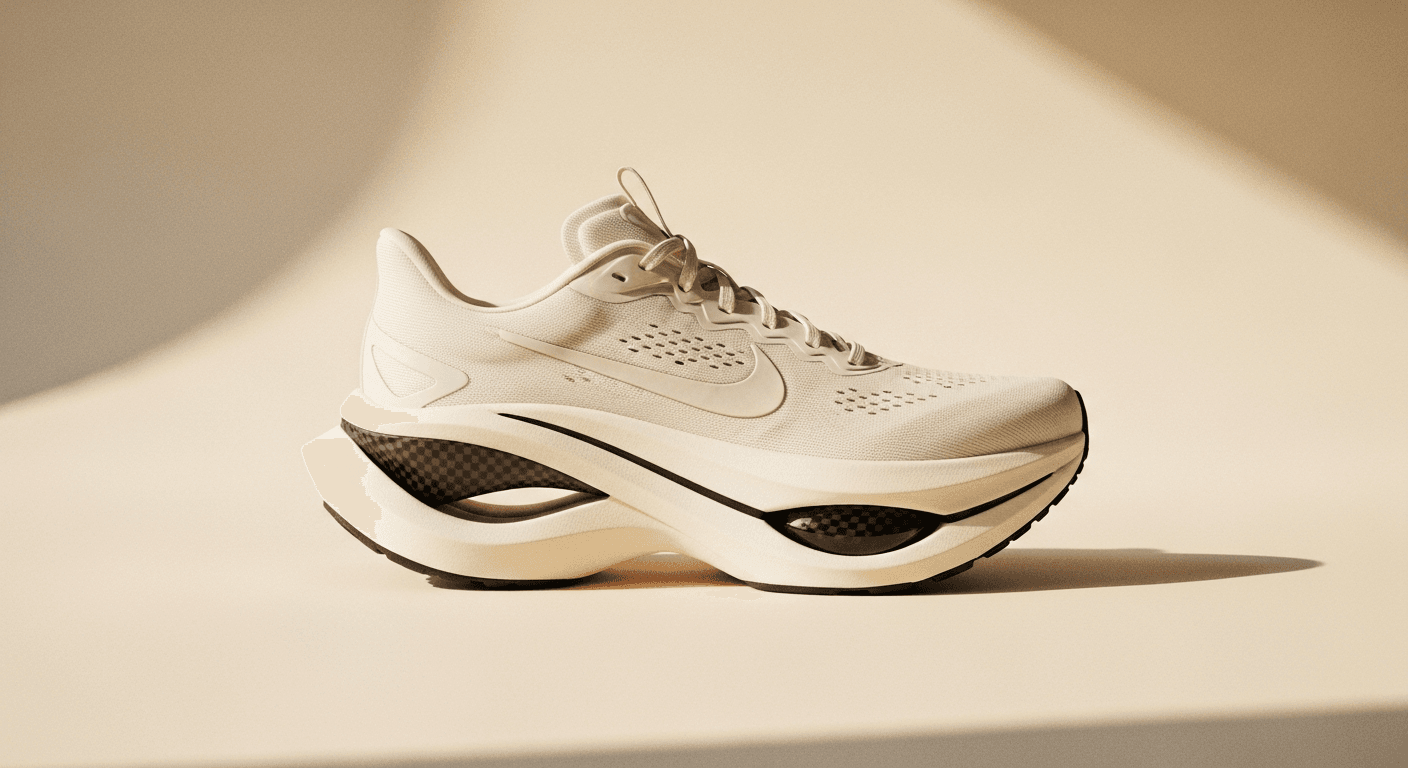
Carbon-plated super shoes have reshaped distance running over the past several years. World records have fallen. Course records have been shattered. Amateur runners have set personal bests they never thought possible. The technology works, and the data has always been clear on that front.
What has been less clear, until recently, is what that speed actually costs your body. A new study from Mass General Brigham researchers has put a number on the trade-off, and it's one every runner needs to understand before lacing up their next race day pair.
What the Research Actually Found
The Mass General Brigham team tested elite distance runners across multiple shoe types, including traditional trainers, plated racing shoes, and standard racing flats. Using motion capture and force measurement tools, they tracked subtle but measurable changes in how runners moved when wearing super shoes compared to other footwear.
The findings weren't about catastrophic mechanical failures or obvious breakdowns in form. That's what makes them particularly interesting. The stride alterations were small enough that most runners wouldn't notice them in real time. Shifts in foot strike pattern, changes in load distribution along the lower leg, and altered stress on specific bones were all documented.
Those changes are clinically meaningful. The specific stride alterations identified are directly linked to elevated bone stress injury risk, the kind that produces stress fractures in the metatarsals, tibia, and navicular bones. These are injuries that sideline runners for weeks or months, and in some cases longer.
The key insight here is that the shoes don't just add a spring to your step. They change the mechanics of how force moves through your body with every stride. For elite runners already operating near their physiological ceiling, that redistribution of load is a real concern.
Why Faster Doesn't Automatically Mean Better
The running world has largely treated super shoes as an unqualified upgrade. Faster times, reduced perceived effort, better economy. The marketing has been consistent, and the performance data has backed it up. Studies consistently show carbon-plated shoes improve running economy by anywhere from 4% to 8% depending on the runner and the shoe model.
That efficiency gain is real. But the Mass General Brigham study forces a more honest conversation about what efficiency is being measured and what it's ignoring.
A shoe that makes you faster by redirecting energy through your foot in a novel way is also training your body to absorb impact differently. Over a short race or an occasional effort, that may not accumulate into anything problematic. Over weeks and months of training, or across a full marathon build where you're logging significant mileage in race-day footwear, those mechanical changes add up.
This challenge isn't unique to running. Athletes across disciplines are constantly navigating the gap between what improves performance metrics and what supports long-term durability. Roncevic's 9-Move Strength Session He Never Skips illustrates exactly this point. The sessions that build resilience over time aren't always the ones that feel fastest or most productive in the moment.
Who Is Most at Risk
The study focused on elite distance runners, but the implications extend well beyond that population. In fact, there are strong reasons to think recreational runners face a higher risk profile when making the same switch.
Elite runners have typically spent years developing the neuromuscular control and bone density that come from high-volume, well-structured training. Their bodies have adapted to absorbing substantial loads. Even so, the research shows they're not immune to the mechanical effects of super shoes.
Recreational runners, who may have less structural conditioning but are still racing marathons and half marathons in the latest carbon-plated models, are working with a thinner margin. A 4% improvement in running economy is compelling whether you're chasing a 2:05 or a 3:45. But the bone stress risk doesn't scale with fitness level in a forgiving direction.
Runners who have a history of bone stress injuries, low bone density, or who are increasing mileage rapidly are in a particularly sensitive position. Adding a shoe that mechanically alters load distribution on top of those existing risk factors is a combination worth taking seriously.
The Transition Problem
One factor the research highlights is the role of transition. Switching to super shoes after training in traditional footwear introduces a mechanical shift your body hasn't had time to adapt to. The bones, tendons, and muscles that absorb running load need time to remodel and strengthen in response to new stress patterns.
Doing the bulk of your training in one type of shoe and then racing in another is a common practice. It preserves the life of expensive racing shoes and avoids unnecessary wear during easy miles. But it also means your body is absorbing a new mechanical pattern at the exact moment when intensity and volume are highest, during races and hard training sessions.
This is compounded by the fact that many runners are also under-fueled or under-recovered during peak training blocks. The relationship between nutritional status and bone health is well established, and Vitamin D and Immunity: What Athletes Need to Know outlines how deficiencies in key nutrients can compromise bone resilience even before mechanical stress enters the picture.
What the Running Community Has Been Slow to Acknowledge
The broader conversation about running safety has focused heavily on acute risks, things like heat illness and race-day emergencies. The coverage surrounding Is Ultra Running's Safety Culture Broken in 2026? reflects a sport grappling with visible, dramatic failures of athlete welfare. Bone stress injuries don't generate the same urgency, but they're far more common and collectively represent a significant burden on running populations worldwide.
Super shoes have been on the market long enough now that injury data is starting to emerge. Sports medicine clinics have noted increases in metatarsal and navicular stress fractures in recent years. Attributing that trend to any single cause is difficult, but the timing correlates with the widespread adoption of carbon-plated footwear across recreational and competitive running.
The running industry has been understandably slow to complicate its own success story. A technology that demonstrably improves performance is good for shoe sales, good for race times, and good for the sport's growth narrative. But the Mass General Brigham findings represent peer-reviewed evidence that a more complete picture is needed.
How to Make a Smarter Decision About Super Shoes
None of this means you should retire your carbon-plated shoes. The performance benefit is real, and for many runners the trade-off is worth making. But making that trade-off honestly requires understanding what you're actually choosing.
Here's a practical framework for thinking through your footwear strategy:
- Don't race in a shoe you haven't trained in. If you're going to race in super shoes, incorporate them into some of your harder training sessions so your body has time to adapt to the mechanical pattern.
- Rotate your footwear. Using multiple shoe types across your training week distributes mechanical stress more broadly and reduces the risk of overloading any single tissue pattern.
- Monitor your bone health markers. If you're a high-mileage runner, periodic bone density screening is worthwhile, particularly if you've had previous stress injuries or follow a restrictive diet.
- Support recovery proactively. The nutritional side of bone health and tissue recovery matters. Carbs and Hydration: The Exact Timing for Performance addresses the fueling side of the equation, which directly affects how well your body handles training load.
- Listen to early warning signals. Bone stress injuries typically produce localized pain that intensifies with load. Treating that as a signal to back off rather than push through is one of the most effective preventive strategies available.
- Consider your risk profile honestly. If you have a history of bone stress injuries, low energy availability, or are new to high-mileage training, the risk calculus is different for you than for a well-conditioned veteran runner.
The Bigger Picture for Performance Runners
Technology in sport has always created new trade-offs. The question is whether athletes and coaches are asking the right questions when they adopt it. Super shoes are one of the most significant performance interventions in the history of distance running, but they arrived with exceptional speed and without the longitudinal safety data that usually accompanies major equipment shifts in other sports.
The Mass General Brigham study is a step toward filling that gap. It doesn't say stop wearing super shoes. It says understand what they're doing to your mechanics and build a training approach that accounts for it.
For competitive runners who want to optimize every variable, that means treating footwear as a serious training decision rather than a default upgrade. The shoes can make you faster. Whether they make you a better, more durable runner over time depends on how thoughtfully you use them.
Speed is a means to an end. Staying healthy enough to keep running is the whole point.