
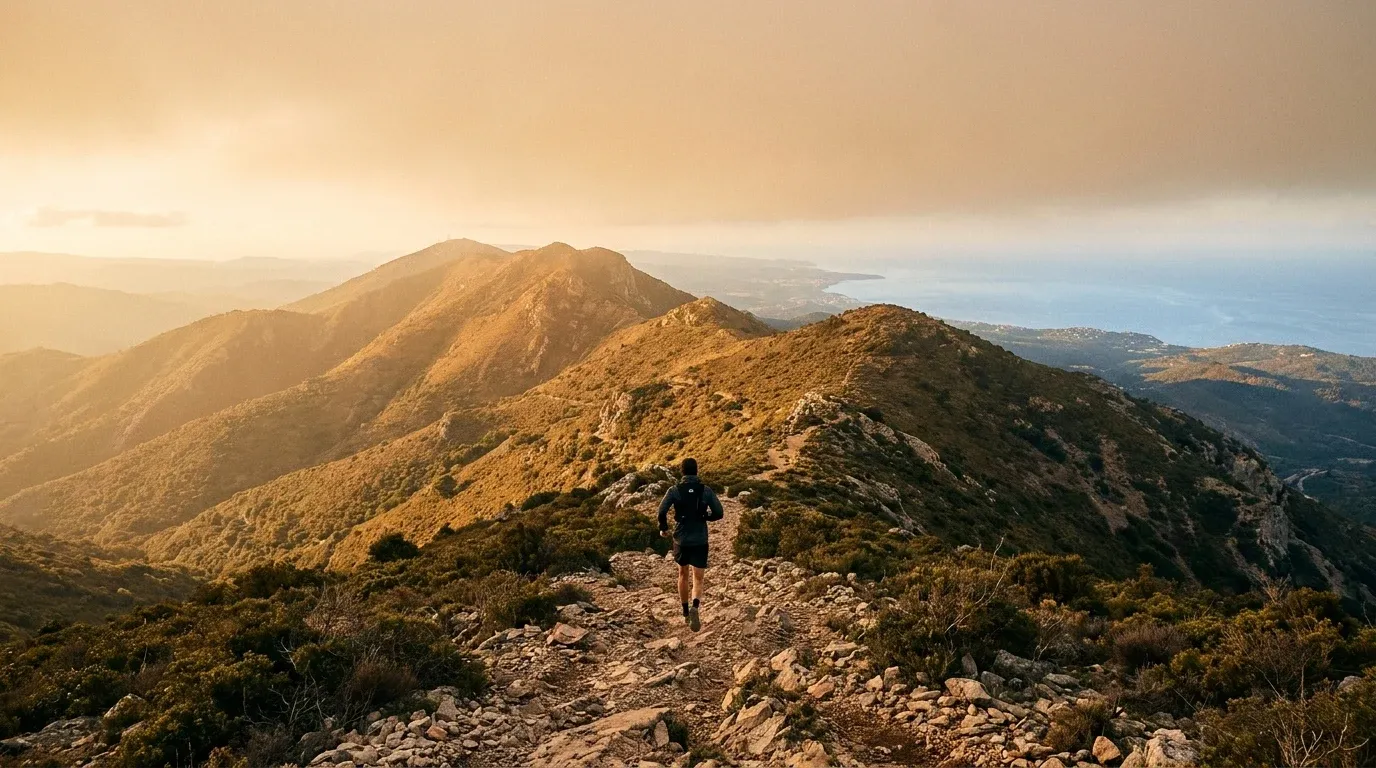
On October 11, 2026, a field of ultrarunners will leave Andorra la Vella on foot and not stop until they reach the Mediterranean Sea. That's 466 kilometers. Around 300 miles. Across mountains, ridgelines, and river valleys, all the way to the coast. The fifth edition of Trail Cat The Race is coming, and it's one of the most ambitious point-to-point ultra events on the European calendar.
If you haven't heard of it yet, you will. This race is exactly the kind of event that's driving the global surge in trail participation. Trail running now counts an estimated 17 million active participants worldwide, and events like Trail Cat are part of the reason why. They offer something road races simply can't: raw, unscripted distance through landscapes that feel genuinely remote.
What the Race Actually Is
Trail Cat The Race is a non-stop, self-supported ultra that crosses the full length of Catalonia, starting in its landlocked micro-state neighbor Andorra and finishing at the Mediterranean coast. The route cuts through the Pyrenees before descending through the interior and reaching the sea. It's not a loop. It's not an out-and-back. It's a one-way ticket from the mountains to the water, and that's a big part of its appeal.
The fifth edition follows the same core format that has defined the race since its first running. Participants navigate a set course with checkpoints, but there's no pausing the clock. You move when you want, rest when you need to, and manage your own resources between aid points. That structure places a premium on decision-making, not just fitness.
For context, 466 kilometers puts this race in genuinely rare company in Europe. Very few point-to-point events match that kind of distance. The format distinguishes it from loop-based ultras, which dominate the European calendar and tend to return runners to a central base. Here, every kilometer forward is a kilometer you can't take back.
Why Point-to-Point Ultras Are Gaining Ground
The ultra world has spent decades refining the loop format. Races like UTMB or the Hardrock 100 are loop events, and they're iconic for good reason. But a growing number of runners are seeking something different. The psychological dynamic of a point-to-point race is distinct. You're not circling back. You're progressing toward something visible, a finish line that exists in a different place than where you started.
That shift in format also changes how you prepare. Your training can't assume a return to base camp. You need to think about gear durability, not just weight. You need to plan nutrition differently across a course that evolves through multiple climate zones. Speaking of which, fueling a 466km effort is a different challenge entirely from a single-day marathon effort. Understanding how to fuel from start to finish is a strong foundation, but multi-day ultra nutrition requires a separate layer of planning on top of it.
Race formats like Trail Cat are also creating a new kind of ultra athlete. These aren't runners chasing podiums in a traditional sense. Many are experienced ultrarunners who've already completed 100-milers and want to see what happens when the distance doubles or triples. The question shifts from "how fast can I run this?" to "can I actually finish this?"
The Route: Andorra to the Sea
The course begins in Andorra la Vella, a small capital city nestled in the eastern Pyrenees at around 1,000 meters above sea level. From there, the route heads generally south and east through Catalonia, one of Spain's most geographically varied regions. The early stages are high and technical. The Pyrenean terrain demands careful foot placement and steady pacing. You're not going to make up time by running hard on day one.
As the route descends from the mountains, the landscape opens up. The mid-section of the race passes through forested ridgelines and rural interior zones before the terrain flattens and the coast becomes a genuine possibility rather than a distant idea. That final stretch, when you can sense the Mediterranean getting closer, is reportedly one of the more disorienting experiences in European ultra running. After days on the trail, the proximity of the sea feels almost surreal.
The cumulative elevation gain across the full course is substantial, though the overall trend is descending. That creates a specific fatigue pattern that experienced ultra runners know well. Long descents, particularly when your legs are already deep into a multi-day effort, can be more damaging than climbing. Your quad strength and your joint resilience matter as much as your aerobic base.
Who Enters a Race Like This
Trail Cat The Race doesn't draw beginners. Entry requirements typically reflect the race's difficulty, and the self-supported nature filters the field further. Most participants arrive with significant ultra experience, often including at least one 100-mile or 100km finish. The field is intentionally small, which is part of what gives the event its character.
Nationalities are genuinely international, with runners from across Europe, North America, and beyond. The fifth edition is expected to maintain that global spread. The fact that the race starts in Andorra, a place most people have never visited, adds a logistical adventure before the running even begins. You're traveling to a landlocked country in the Pyrenees to start a journey that ends at the sea. That's a compelling premise on its own.
Preparation typically spans months of consistent volume, including back-to-back long runs, extended overnight efforts, and focused attention on recovery. Structured recovery planning becomes especially relevant in the final weeks before a race of this length, when the temptation to add volume can undermine the freshness you actually need on the start line.
What This Race Says About the Ultra Boom
Trail Cat is one of many signals that the global ultra scene is maturing past the 100-mile benchmark. For years, the 100-miler was the gold standard. Now it's increasingly a stepping stone. Events at 200, 300, and even 500 miles are filling up. The appetite for genuine suffering, it turns out, doesn't have a clear ceiling.
The nutrition side of ultra preparation has evolved alongside this growth. Athletes entering long-format events pay close attention to what they're putting in their bodies in the months before race day, not just during the event itself. The sports nutrition boom is real, but what athletes actually need is often simpler than the supplement industry suggests. Real food, adequate protein, and consistent energy intake carry most of the weight. Supplements can fill specific gaps, but they don't replace fundamentals.
The infrastructure around ultra events is also professionalizing. Better tracking technology, more sophisticated cutoff management, and increased attention to runner welfare have made long-distance events safer and more accessible to a wider pool of qualified athletes. Trail Cat has benefited from this trend across its five editions.
How to Follow and Enter
If you're considering the 2026 edition, the window to apply is worth researching early. Races of this caliber with small fields tend to fill quickly, and qualification documentation takes time to compile. Entry costs vary based on registration timing but reflect the logistical complexity of supporting runners across 466 kilometers of terrain. Expect to budget in the range of $400 to $700 USD for entry, with additional costs for travel to Andorra, gear, and pre-race logistics.
For those not yet ready to race but interested in following the event, live tracking is available during the race window. The multi-day format means the leaderboard shifts constantly. Runners who look strong on day one sometimes disappear by day three. The race rewards consistency over brilliance, and watching that dynamic unfold in real time is compelling even if you're following from home.
Whether you're targeting Trail Cat The Race yourself or simply tracking the evolution of European ultra running, October 11, 2026 is a date worth marking. The fifth edition of this race represents exactly what happens when the sport stops asking "how fast?" and starts asking "how far?"