
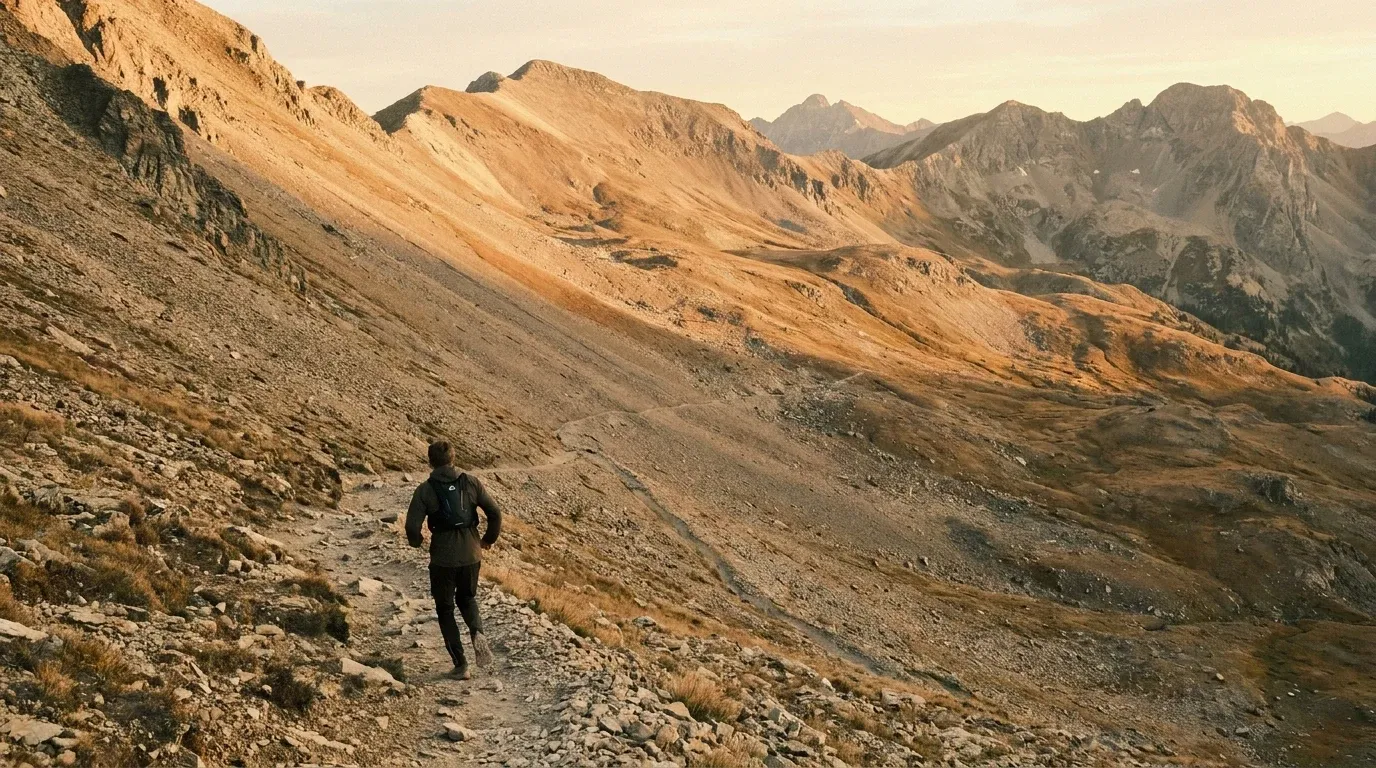
Every August, Chamonix becomes the center of the trail running universe. UTMB Week draws elite athletes, passionate crews, and hundreds of thousands of global viewers into a week of racing that spans multiple distances, nationalities, and storylines. This year's edition delivered all of it, including some of the hardest moments the sport can produce.
Two names dominated the conversation away from the finish line: Ruth Croft and Jeff Browning. One withdrew before she could finish. The other was airlifted off a mountain. Both situations pulled back the curtain on what racing at altitude, across hundreds of kilometers, actually demands from the human body.
Ruth Croft Steps Back From UTMB 2026
Ruth Croft is one of the most consistent performers in women's trail running. The New Zealand runner has built a résumé that places her among the sport's elite, which is exactly why her withdrawal from UTMB 2026 landed so hard for fans tracking the race in real time.
The specifics of her withdrawal, whether injury, illness, or a strategic call to protect her long-term health, reflect a reality that every ultra runner eventually faces. No amount of preparation fully neutralizes the unpredictability of a 100-mile mountain race. The altitude, the technical terrain, the cumulative sleep deprivation: these aren't variables you can train away entirely.
Croft's exit removed one of the top women's contenders from the field and reshaped the race dynamics in the upper echelon. For spectators following live tracking across multiple races simultaneously, it was a jarring update mid-race. For the athletes still on course, it served as a reminder of what's at stake with every hour logged in the mountains.
What's often overlooked in withdrawal coverage is what the decision actually requires. Choosing to stop, especially at a race of this magnitude after months of preparation, is not a failure. It's a judgment call that experienced athletes make when the risk-to-reward calculation shifts in a direction that no podium finish is worth.
Jeff Browning's Helicopter Evacuation From TDS
If Croft's withdrawal was a storyline, Jeff Browning's helicopter evacuation from TDS was a hard stop. Browning, a veteran American ultra runner known for his consistency across some of the sport's most demanding races, required emergency evacuation during the TDS (Sur les Traces des Ducs de Savoie), a 145-kilometer race that forms part of the broader UTMB Week program.
Helicopter evacuations at mountain ultras are more common than most spectators realize. UTMB Week operates across terrain that includes glaciers, exposed ridgelines, and elevation changes that push participants to their physiological limits. The race organization maintains a medical infrastructure specifically built for this environment, including stationed medics at aid stations, coordination with alpine rescue services, and helicopter access across the course.
Browning's situation put that infrastructure to work in full view of a global audience. The fact that he received rapid evacuation is a testament to how seriously UTMB's medical teams treat in-race emergencies. These aren't ad hoc operations. They're coordinated systems built from years of managing high-consequence events in remote alpine terrain.
For athletes considering racing at this level, the evacuation protocol isn't just background information. It's part of what makes elite-level mountain racing survivable when things go wrong. Understanding that these systems exist should be part of your race preparation, not something you discover mid-crisis.
What Emergency Response at UTMB Actually Looks Like
UTMB's medical team operates at a scale that few races in any discipline can match. Across the full week of events, the organization deploys hundreds of volunteers and medical professionals, positions emergency response teams along technical segments of the course, and maintains active communication with regional helicopter rescue services.
Helicopters are stationed or on-call specifically for the race period. Response times in alpine terrain depend on weather windows, but the coordination between race organization and rescue services is designed to minimize delays. Aid stations at high-altitude checkpoints carry oxygen, defibrillators, and the capacity to stabilize athletes before ground or air transport.
This level of infrastructure doesn't exist by accident. It reflects both the severity of the terrain and the years of experience UTMB's organizers have accumulated managing mass-participation mountain events. For context, the number of medical interventions across a full week of racing, including TDS, CCC, OCC, and the flagship UTMB race, runs into the hundreds, even in years without high-profile evacuations.
If you're racing UTMB Week at any distance, the pre-race medical briefings aren't optional reading. They're a practical guide to what the organization can and cannot do for you, and where your own judgment has to take over.
The Live Tracking Factor: How Real-Time Attention Shapes the Race
One thing that sets UTMB Week apart from nearly every other endurance event is the scale of its live coverage infrastructure. Tens of thousands of viewers watch live tracking at any given hour during the races. The UTMB Live platform aggregates GPS data, checkpoint times, and video feeds into a viewing experience that turns a multi-day mountain race into appointment television.
When Browning's tracker stopped moving and the helicopter evacuation became known, the information moved through running communities almost instantly. Social feeds, podcasts, and fan forums lit up. This is the environment modern ultra racing exists in, where every withdrawal, every emergency, and every record attempt is processed in real time by a global audience.
That visibility cuts both ways. It raises the profile of the sport and brings in new fans who might otherwise never have engaged with trail running. It also places additional psychological pressure on athletes who know their struggles are being watched live. The decision to withdraw, for athletes like Croft with large followings, carries a public dimension that runners from previous generations never had to navigate.
The broader trail running calendar reflects this growing audience appetite. The Fall 2026 Marathon Season: The Races Every Runner Should Know spans everything from road marathons to mountain ultras, and the audience tracking them continues to grow year over year. UTMB Week sits at the top of that ecosystem in terms of global reach and live engagement.
What Athletes and Crews Need to Know
If you're targeting UTMB Week in any future edition, whether as a runner, pacer, or crew member, several practical points follow directly from this year's events.
- Know the medical protocols before race day. UTMB publishes its medical and safety guidelines well in advance. Read them. Understand the checkpoint cutoffs, the rescue contact points, and the criteria for mandatory withdrawal.
- Nutrition failure accelerates everything else. A significant portion of DNFs and medical interventions in ultra running trace back to fueling errors in the early hours of the race. The case for getting this right is well-documented. Ultra-Trail Fueling: The Case Against All-Sugar Nutrition breaks down why relying exclusively on simple sugars through 100+ miles creates problems that compound over time.
- Crews need situational awareness, not just cheerleading. Your crew's job includes watching for signs of cognitive impairment, physical deterioration, and the kind of irrational determination that leads athletes to continue racing when they shouldn't. Brief your crew on what to look for and give them the authority to push back.
- Altitude affects everyone differently. TDS and UTMB both involve significant time above 2,500 meters. If you're traveling from sea level, build altitude acclimatization into your pre-race schedule, not just your training.
- Recovery supplementation matters more than most runners acknowledge. The micronutrient demands of multi-day mountain racing are substantial. Magnesium Forms: Which Type Actually Works for You? covers a mineral that's directly relevant to muscle function and sleep quality during race week.
The Larger Picture for Trail Running
Croft's withdrawal and Browning's evacuation aren't anomalies. They're part of a sport that asks more of its participants than almost any other athletic discipline. That's not a criticism of the sport. It's a description of what makes UTMB Week singular.
The growth trajectory of trail running is real and accelerating. Events from shorter road races to ultramarathons are breaking records, as seen when the Saguenay Marathon set a new participation record earlier this year, reflecting a broader surge in running culture that extends from local events all the way up to the mountains above Chamonix.
That growth means more athletes are arriving at races like UTMB with less mountain experience than previous generations of entrants. The qualification system helps filter for experience, but it can't fully account for the variables that define a race week: weather, personal health on race day, and the accumulated decisions that determine whether you make it to the finish or not.
The real lesson from UTMB Week 2026 isn't that the race is dangerous. It's that racing at this level demands a comprehensive approach to preparation, self-awareness, and the willingness to make hard calls in hard moments. Croft made one of those calls. Browning's body made one for him. Both outcomes are part of the sport, and understanding them honestly is the starting point for anyone who wants to race in these mountains.