
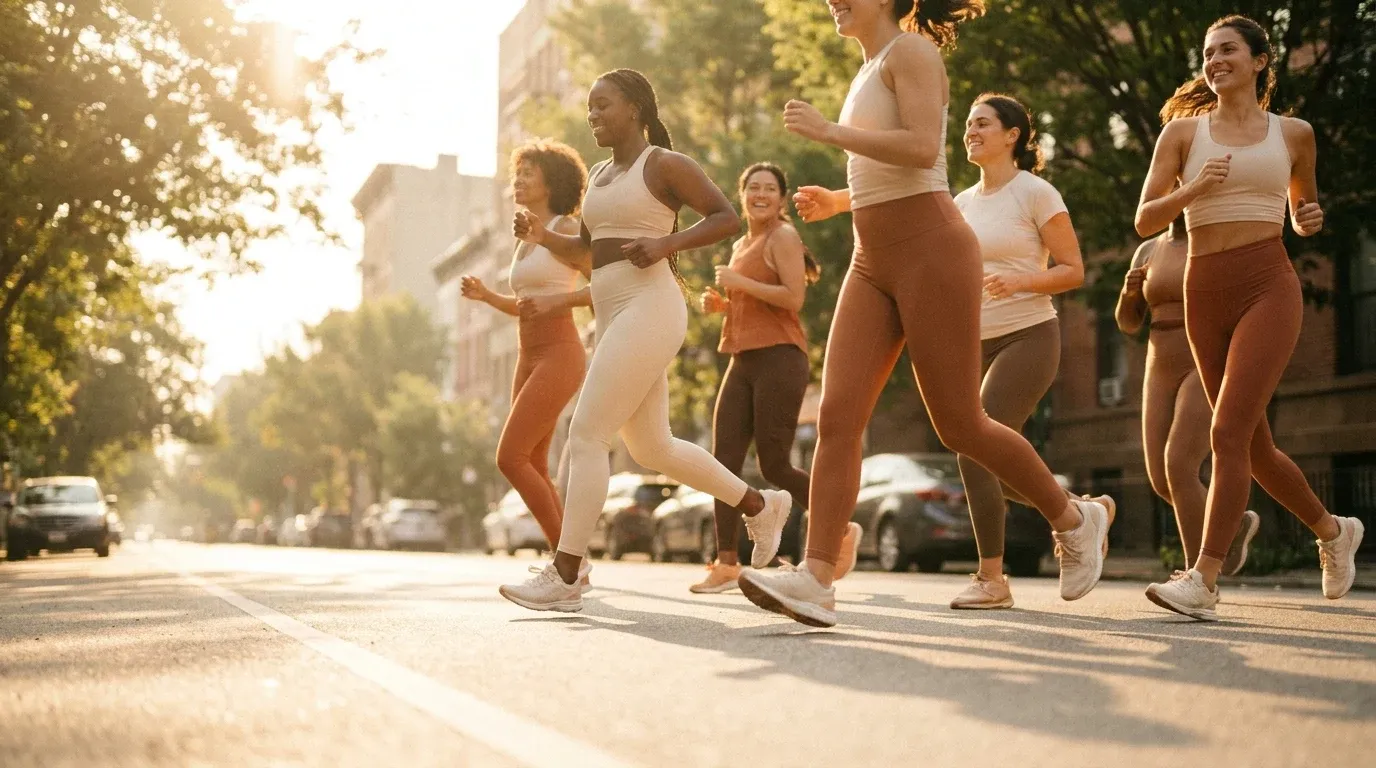
When the Odysséa race series returns to French cities in 2026, it's not just filling starting corrals. It's selling them out faster than ever. Founded to raise awareness around breast cancer, Odysséa has become one of Europe's most visible examples of a much larger global trend: women-only and women-centered running events are growing at a pace that mixed-field road races simply can't match right now.
The reasons go well beyond pink medals and charity tie-ins. What's driving this surge is something race directors have often underestimated: what women actually want from a race experience, and how rarely traditional formats deliver it.
The Numbers Don't Lie
Odysséa 2026 has recorded some of its highest-ever registration figures across participating cities, with several locations reporting waitlists for the first time. That pattern isn't isolated to France. Across Europe, North America, and Australia, women-only events are consistently outperforming participation projections. In the US, dedicated women's running events have seen year-on-year growth of between 12% and 18% since 2023, according to industry tracking data from endurance sports registration platforms.
What's particularly striking is who's showing up. Women-only events consistently report a higher proportion of first-time runners than equivalent mixed-field races. Some events are recording first-timer rates above 40%, compared to an industry average closer to 15 to 20% for open-field road races of similar distances. That's not a small gap. It suggests women-only formats aren't just retaining existing runners. They're actively recruiting people who might never have entered a race at all.
That entry-point role matters enormously for the long-term health of the sport. A runner who finishes her first 5K is a potential half marathoner within two years. Organizers who understand this are already positioning women-only events as the first rung on a longer athletic ladder.
Safety and Community Are the Real Drivers
Ask women why they chose a women-only event over a mixed field and the answers cluster around two themes. The first is community. The second is safety. Multiple race surveys conducted in 2025 and 2026 rank these two factors above everything else, including course quality, timing accuracy, and post-race amenities.
Community here means something specific. It's not just the presence of other women. It's a different social dynamic at the start line, on the course, and in the finish area. Women in these events report higher rates of spontaneous conversation with strangers, more encouragement between competitors, and a stronger sense of shared purpose. Several surveys describe the atmosphere as "supportive rather than competitive," even at events where competitive wave starts are available.
The safety dimension is less comfortable to discuss but equally real. A significant proportion of women who run outdoors regularly report modifying their routes, their hours, or their choices about running alone because of safety concerns. A race environment that removes that variable entirely. one where every participant, every volunteer, and often every marshal is a woman. changes the psychological experience of the event. Participants describe feeling able to focus entirely on their own performance without the low-level vigilance that often accompanies running in mixed or public spaces.
This isn't a niche concern. It's a structural feature of women's experience in public sport, and events that acknowledge it explicitly tend to build stronger loyalty and word-of-mouth than those that treat it as a non-issue.
The Format Is Evolving Fast
Women-only running used to mean charity 5Ks with tutus at the finish line. That's no longer the ceiling. The format has expanded significantly, and the events getting the most traction in 2026 are pushing into territory that would have seemed unlikely five years ago.
Half marathons with women-only fields are now common across major US and European cities. Women-only trail races are growing especially fast, tapping into an outdoor and adventure positioning that appeals to a younger demographic. Several destination events. weekend formats that combine a race with group travel, accommodation, and social programming. have sold out within hours of opening registration. If you've been watching the broader trend of ultramarathon racecations replacing beach holidays, you'll recognize the logic: the race is the reason to travel, and the social experience around it is the product.
Brands are following. Several major footwear and apparel companies have moved beyond general sponsorship of women-only events into co-designing them, shaping course design, training program tie-ins, and post-race experiences that align with their positioning. The commercial investment has raised production values and, in some cases, prize money structures that signal these events are taken seriously at an elite level too.
Entry fees have risen accordingly. Women-only half marathons in major US cities now typically run between $90 and $140, with destination weekend packages often priced between $350 and $600 including accommodation and programming. That's closer to boutique fitness pricing than traditional road racing, and participants are paying it without significant resistance.
What This Means for Training
One underreported effect of the women-only event boom is what it's doing to how women train. Events create structure. Having a race on the calendar. even a non-competitive 5K. gives a training block a purpose and an end date. For first-time runners especially, that external commitment drives consistency in a way that general fitness goals rarely do.
Coaches working with women preparing for their first events report that nutrition is one of the most common knowledge gaps. Many new runners underestimate how much fuel endurance training requires. If you're building toward a half marathon, understanding how many carbs endurance athletes actually need is a practical starting point, not an advanced topic. Underfueling during training is one of the most common reasons new runners plateau or drop out before race day.
Strength training is another area where event-driven motivation is changing behavior. Women preparing for their first race are more likely to add supplementary training than women exercising without a goal. Research on the longevity benefits of resistance training reinforces why this matters beyond race performance. Building strength alongside running reduces injury risk, supports bone density, and improves long-term health outcomes. For many women entering the sport in their 30s, 40s, or later, those benefits compound over time.
What Mixed-Field Races Can Actually Learn
The growth of women-only events contains a direct message for mixed-field race directors: your default format has a design problem, and women have been quietly opting out of it.
The lessons aren't complicated, but they do require taking women's feedback seriously rather than treating it as a niche concern. Here's what the data from women-only events points to:
- Social infrastructure matters as much as the course. Women-only events invest heavily in post-race community space, group warm-ups, and on-course interaction. Mixed events often treat these as afterthoughts. Adding structured social programming. group pace runs, pre-race meetups, post-race areas organized by pace group rather than open space. increases female participation and retention.
- Safety-conscious design isn't optional. Well-lit start areas, clear crowd management, visible female staff and marshals, and explicit communication about safety protocols all signal that an event has thought about its female participants' experience. Events that have added these elements report measurable increases in female registration.
- First-timer programming deserves its own lane. Women-only events are structured to welcome beginners without embarrassment. Mixed events often implicitly center the competitive runner. Creating a genuinely welcoming first-timer experience. with separate corrals, dedicated support, and non-competitive wave options. brings in the same demographic that women-only events are currently capturing.
- Representation in race leadership is visible. Female race directors, female medical staff, female emcees, and female brand ambassadors at mixed events correlate with higher female registration. Participants notice who's running the event, not just who's in it.
- Pace support should reflect the full field. Pace groups at many mixed events cluster around competitive times. Offering consistent pace support from 7-minute miles down to 15-minute miles. without implying the slower groups are less serious. changes who feels welcome to show up.
None of these changes require a separate women's-only field. They require a different orientation toward what the race experience is actually for. If you're a race director looking at flat or declining female registration numbers, the women-only event boom isn't your competition. It's your feedback.
A Moment Worth Watching
The Odysséa series is a useful lens on something bigger than one race calendar. It reflects a clear shift in what women want from running as a social and physical experience, and how far the traditional race industry has been from delivering it.
Women-only events are growing because they work. They bring in first-timers. They retain participants. They generate the kind of loyalty that translates into year-over-year registration and genuine community. Events like October trail races worth adding to your calendar are increasingly targeting women specifically for exactly these reasons.
If you're a woman who's been on the fence about entering a race, a women-only event is worth looking at seriously. Not because mixed events are off-limits, but because the format has been genuinely designed around your experience rather than adapted from a default that wasn't built with you in mind. That's a meaningful difference, and more runners are finding it every year.