
Most people buying CBD for muscle recovery are making the same mistake at the checkout. They're reaching for a topical cream or balm because it feels intuitive. Sore muscle, rub something on it. That logic makes sense. The science, however, points in a different direction.
A peer-reviewed scientific review published on September 10, 2026 looked specifically at how CBD interacts with exercise-induced muscle damage and delayed-onset muscle soreness, commonly known as DOMS. The findings are detailed enough to change how you shop, and clear enough to give you a practical framework you can use starting today.
What the September 2026 Review Actually Found
The review confirmed that CBD does reduce DOMS and measurable muscle damage markers, but with a critical caveat: timing and delivery format determine almost everything. The window where CBD showed the most meaningful effect was the 48 to 72 hours after intense exercise. That's when inflammatory cascades peak and when your body is doing most of its repair work.
This matters because many users take CBD immediately post-workout, treating it like a protein shake. The data doesn't support that approach. You're better served by consistent dosing that carries bioactive levels of CBD into that 48 to 72 hour recovery window, rather than a single large dose taken within the first hour of finishing your session.
For context on what that intense exercise actually does to your body at a cellular level, the breakdown of blood markers after high-intensity efforts is worth understanding. What Happens in Your Blood After a Hard Sprint Set walks through exactly that process, and it helps explain why the inflammatory response that CBD appears to modulate is so significant in the first place.
Oral Beats Topical. Here's Why That's Not Obvious
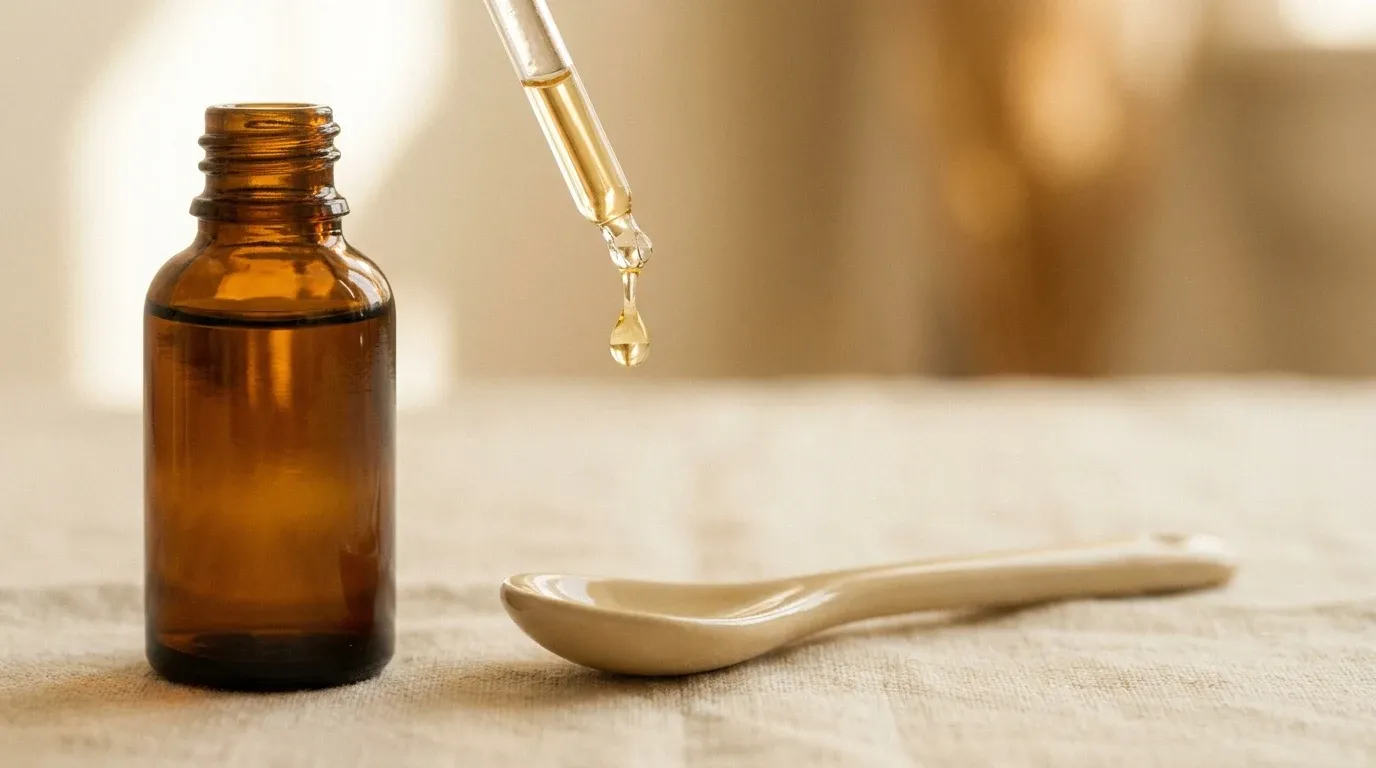
The review's most actionable finding for consumers is the delivery format comparison. Oral CBD preparations, including oils, tinctures, and capsules, showed significantly greater recovery benefits than topical applications like creams, gels, and balms.
This surprises people. It shouldn't, once you understand the pharmacology. Topical CBD does not meaningfully penetrate the layers of tissue required to reach muscle fibers or to enter systemic circulation. It may address localized skin-level discomfort, but it's not reaching the inflammatory markers that the review was tracking. When researchers measured creatine kinase levels and other muscle damage indicators, topical formats produced no statistically meaningful reduction.
Oral CBD, by contrast, enters the bloodstream, crosses into systemic circulation, and reaches the tissues where exercise-induced damage actually occurs. Oils and tinctures absorb faster under the tongue. Capsules take longer to peak but tend to maintain more consistent blood levels over time. Both outperformed topical in this context.
The practical implication is straightforward. If you're spending money on a CBD balm and expecting it to speed up your recovery from a hard training block, you're likely wasting that money. A $40 to $60 bottle of a reputable oral CBD oil will do more for your post-workout inflammation than a $35 topical cream, based on what the current evidence supports.
Sleep Is the Hidden Mechanism
One of the most underappreciated findings in the review isn't about muscle damage at all. It's about sleep. CBD's well-documented ability to improve sleep quality creates an indirect but significant recovery pathway that most people in the fitness space haven't fully connected to their training outcomes.
Here's the mechanism. Deep, slow-wave sleep is when your body releases the highest concentrations of growth hormone and carries out the majority of its muscle protein synthesis. It's also when circulating inflammatory markers, including interleukin-6 and C-reactive protein, tend to decline most rapidly. If CBD improves sleep architecture even modestly, the downstream effect on recovery is real and compounding across a training week.
This is especially relevant for athletes managing high training volumes or anyone dealing with sleep disruption from the stress of competition preparation. The relationship between sleep biology and physical recovery is tight enough that improving one almost always improves the other. For a deeper look at how sleep disruption affects biological repair processes, Anxiety Hijacks Teens' Sleep at a Biological Level explores how even mild sleep interference alters the body's recovery chemistry.
Practically speaking, taking oral CBD approximately 30 to 60 minutes before bed may serve a dual purpose. You're supporting sleep quality during the exact window when your body needs it most, while also maintaining systemic CBD levels that carry into the following morning's recovery phase.
CBD Will Not Make You Perform Better
The September 2026 review was direct on this point: there is no evidence that CBD improves athletic performance. No strength gains, no endurance improvements, no measurable power output increases. None of the performance markers reviewed showed a meaningful CBD effect.
This is worth stating clearly because the supplement industry has a long history of stretching recovery claims into performance claims. If you see a CBD product marketed as a pre-workout enhancer, the science doesn't back that up. CBD belongs in a recovery toolkit. It does not belong in a pre-workout stack.
This distinction also matters for how you structure your supplementation spending. If you're training seriously, the research-backed pre-workout interventions remain caffeine, creatine, and appropriate carbohydrate timing. Those have performance evidence behind them. CBD's value comes after the session is done, not before it starts.
This is consistent with a broader pattern in the research around exercise intensity. 3 Minutes of Hard Work Beats 90: New Study highlights how the actual performance stimulus comes from intensity, not supplementation, which reinforces why your recovery support tools and your performance tools need to be chosen separately and used for different purposes.
A Practical Buying and Usage Framework
Based on the September 2026 review and the current body of evidence, here's a clear framework for using CBD as part of a recovery protocol.
- Choose oral over topical. Oils and capsules are the formats with meaningful evidence behind them for systemic recovery. Topicals may have a role in localized skin comfort but should not be your primary recovery investment.
- Time it for the recovery window. Don't treat CBD like an immediate post-workout supplement. Plan for consistent dosing that covers the 48 to 72 hour window after hard sessions. Evening dosing also supports sleep quality.
- Use it for recovery, not performance. Pre-workout CBD is not supported by the current evidence. Reserve it for your recovery phase and evaluate it on those terms.
- Look for quality markers. Third-party lab testing, transparent sourcing, and clear CBD concentration labeling matter. A reliable oral CBD oil typically runs $40 to $80 for a 30-day supply at moderate daily doses. If a product is significantly cheaper, the concentration or quality is likely compromised.
- Pair it with sleep hygiene. CBD's sleep-improving effect is amplified when your broader sleep environment supports it. Temperature, darkness, and schedule consistency compound the benefit.
Where CBD Fits in a Modern Recovery Protocol
Recovery has become increasingly sophisticated as the evidence base around training adaptation has grown. It's no longer just about protein and rest days. Sleep optimization, inflammation management, and parasympathetic nervous system support are all recognized parts of how serious athletes and active people approach the time between sessions.
CBD fits into that landscape as a supplementary tool with a specific, evidence-supported application. It's not a replacement for nutrition, sleep, or intelligent training programming. But within a well-structured recovery approach, the September 2026 data suggests it has a real role.
If you're already working on the training side with intensity-based protocols, the recovery side deserves equal attention. CBD Helps You Recover But Won't Boost Your Performance covers the broader evidence picture across both recovery and performance claims, and is worth reading alongside this format-specific breakdown.
For those whose training includes strength work, which has become far more mainstream across a wide range of fitness goals in 2026, recovery quality is often the limiting factor in how quickly you can progress. Strength Training Isn't Just for Gym Rats Anymore puts that shift in context, and it explains why recovery tools that actually work are attracting more attention from a much broader population of exercisers than they used to.
The Bottom Line
The September 2026 review doesn't make CBD a miracle. It makes it a more clearly defined tool. You know when it works best, the 48 to 72 hour post-exercise window. You know which format works best, oral, not topical. You know what it won't do, which is improve your performance directly. And you know the secondary mechanism that makes it particularly worth taking in the evening, sleep quality and its downstream effect on muscle repair.
That's enough to make a confident, informed purchase decision and to build it into your routine in a way that actually gives it a fair chance to work. Most people who've dismissed CBD haven't given oral formats a sustained trial during the right recovery window. That's where the evidence sits. That's where you should start.