
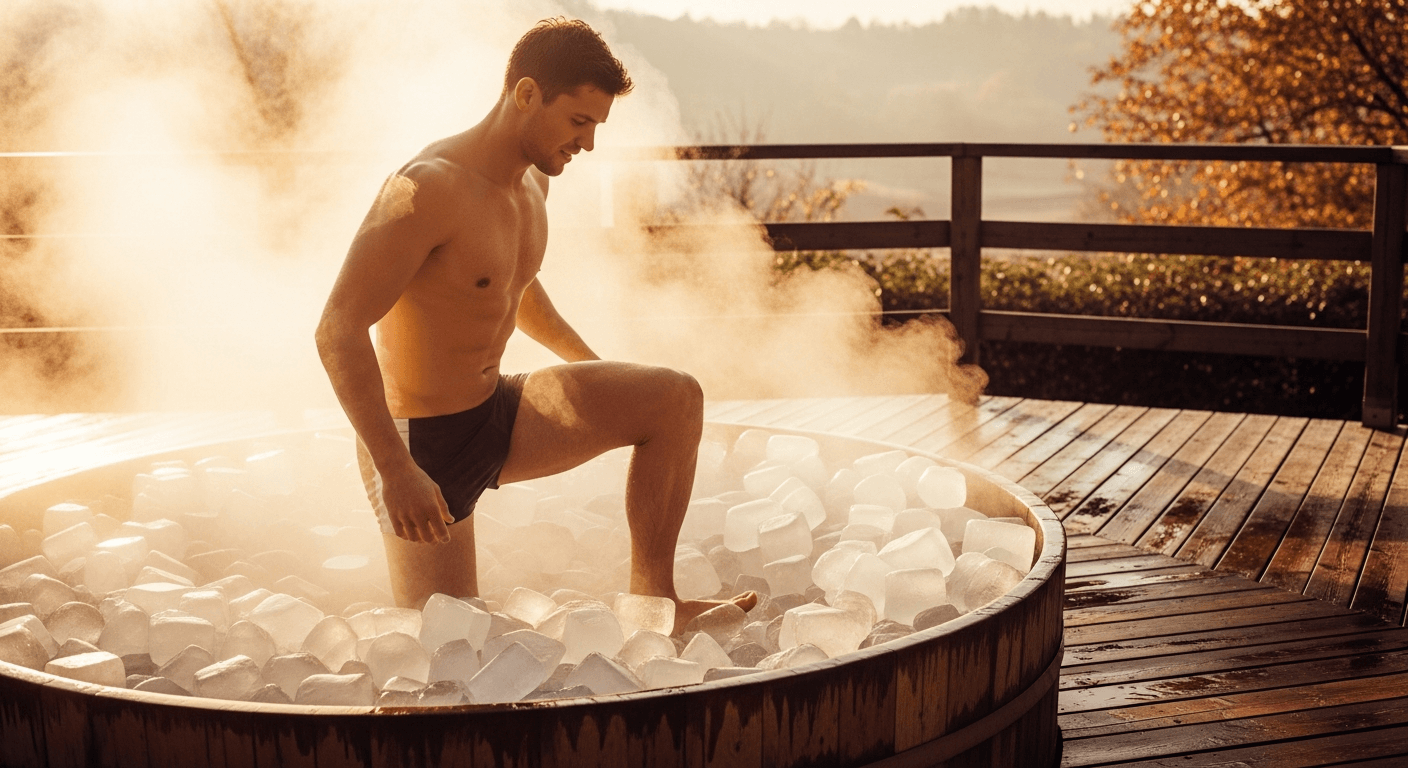
The Recovery Signal: Cold Water Immersion and Recovery, What the Meta-Analyses Actually Show
Ice baths have become one of the most visible recovery practices on social media. From professional athletes to wellness influencers, everyone seems to be plunging into 8-degree water. But the scientific consensus on cold water immersion is actually more nuanced, and more useful, than most content on the topic suggests.
Three meta-analyses published between 2024 and 2025 cut through the noise. They converge on one main recommendation, one important limitation, and a critical timing window most people ignore.
Key Takeaways
- The optimal CWI protocol is 10-15 minutes at 5-10°C for muscle recovery (Frontiers in Physiology 2025 network meta-analysis).
- Psychological benefits (wellbeing, mood, perceived recovery) are statistically significant (PLOS One 2025).
- CWI immediately after strength training reduces muscle protein synthesis and blunts hypertrophy (Journal of Physiology/Wiley 2024).
- Waiting 6-8 hours after a strength session mitigates most of the hypertrophy-blunting effect.
The Protocol That Works Best
A network meta-analysis published in Frontiers in Physiology compared different cold water immersion protocols for their effectiveness on muscle recovery. The analysis measured two primary markers: blood creatine kinase (a marker of muscle damage) and neuromuscular performance in the hours following exercise.
Result: the protocol with the best outcomes is medium duration, 10 to 15 minutes, at a cold but not extreme temperature, between 5 and 10 degrees Celsius. Very short immersions (under 5 minutes) produce limited benefits. Very cold immersions (below 5 degrees) don't improve results and increase discomfort and risk.
For recovery after an endurance workout, a match, or competition with back-to-back sessions, this 10-15 min at 5-10 degrees protocol has the strongest evidence base.
The Psychological Benefits Are Real
A meta-analysis published in PLOS One in 2025 analyzed CWI effects on wellbeing, mood, and subjective recovery. The perceived benefits (sense of recovery, energy, mood) are well-documented and statistically significant.
These psychological effects aren't placebo to be dismissed. The reduction in inflammatory markers after cold immersion has real effects on perceived wellbeing and delayed onset muscle soreness (DOMS). If you have back-to-back sessions (Saturday and Sunday competition, double training days) CWI helps you recover faster subjectively, which translates to better performance in the next session.
The Critical Limitation: Strength Training
This is where the data diverges from common practice. A meta-analysis published in the Journal of Physiology (Wiley, 2024) examined specifically the effect of CWI on strength training adaptations. Conclusion: cold water immersion after a strength session reduces muscle protein synthesis and blunts the anabolic signaling triggered by training.
In practice, if you're doing strength training with a hypertrophy goal and you plunge into a cold bath directly after, you're reducing part of the adaptation you just triggered. The post-exercise inflammation you're trying to extinguish with cold water is also the signal that activates muscle protein synthesis.
This finding doesn't say cold baths are bad for strength athletes. It says timing matters.
The Timing Window: Wait 6-8 Hours
Data on the kinetics of anabolic signaling suggests that most of the post-exercise protein synthesis activation happens in the first 4-6 hours. Waiting 6-8 hours before cold immersion after a strength session lets this process run without interference.
If you train in the morning and take a cold bath in the evening, or use CWI only on rest days, you get the recovery benefits without compromising the adaptations from your strength training.
The Practical Rule That Covers It All
CWI is an excellent recovery tool for endurance athletes, competitors with back-to-back sessions, and any situation where recovery speed matters more than maximum adaptation. It's counterproductive immediately after strength training if hypertrophy is the primary goal. In that case, wait it out or schedule cold baths on days without heavy strength work.
Also read: Loneliness, Social Connection, and Exercise: What 2026 Research Shows