
Sleep apnea affects an estimated 1 billion people worldwide, yet the majority remain undiagnosed. If you've been told you snore loudly, wake up exhausted, or stop breathing in your sleep, your doctor has likely mentioned testing. The question is which kind. In 2026, you have more options than ever, and choosing the right one upfront can save you weeks of waiting and hundreds of dollars.
This guide breaks down the two main diagnostic paths: the home sleep apnea test (HSAT) and the in-lab polysomnography (PSG). Both are legitimate medical procedures. But they're not interchangeable, and picking the wrong one first can delay treatment and complicate your insurance coverage.
What Each Test Actually Measures
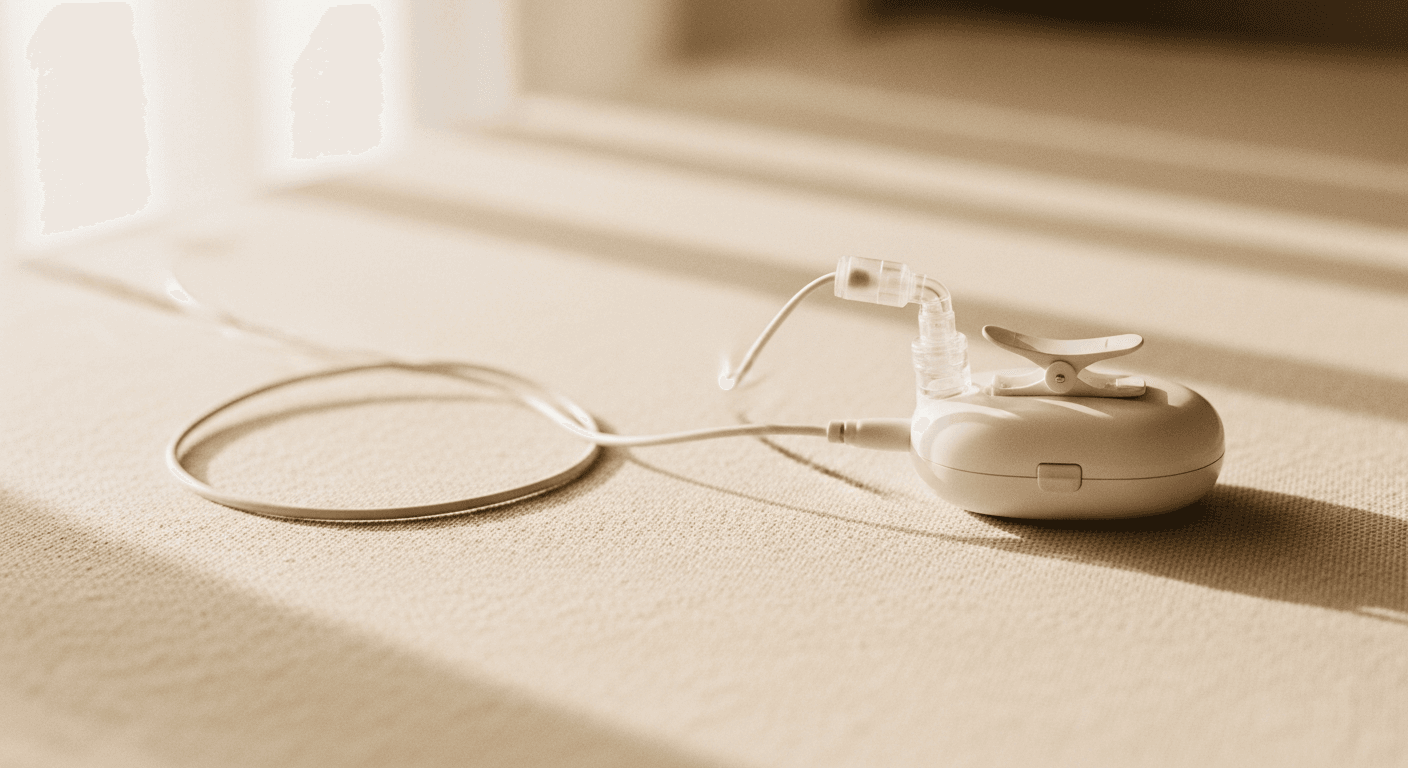
A home sleep apnea test is a portable device you use in your own bedroom, typically for one to three nights. Depending on the device, it tracks airflow, breathing effort, blood oxygen levels, and heart rate. Most modern HSATs use FDA-cleared sensors and generate data that a sleep physician interprets remotely. You pick it up from a clinic or receive it by mail, follow the setup instructions, and return it the next day.
An in-lab polysomnography is a comprehensive overnight study conducted at a sleep center. Technicians attach electrodes to your scalp, face, chest, and legs. The test monitors brain waves (EEG), eye movements, muscle activity, heart rhythm, oxygen saturation, and breathing patterns simultaneously. It captures a fuller biological picture than any home device currently can.
That distinction matters, but it doesn't mean the lab study is always the better choice. For most people, it isn't.
Who Should Start With a Home Sleep Apnea Test
Clinical guidelines from the American Academy of Sleep Medicine support HSATs as the appropriate first step for adults who have a high likelihood of moderate-to-severe obstructive sleep apnea and no significant comorbidities. If you're a generally healthy adult with classic symptoms like loud snoring, witnessed breathing pauses, and daytime sleepiness, a home test is not a compromise. It's the clinically validated first-line option.
HSATs are also considerably more accessible. A home test typically costs between $150 and $300 out of pocket, or it may be fully covered under your insurance plan. Compare that to an in-lab study, which can run $1,000 to $3,500 depending on your location and facility, before insurance applies. Even with coverage, your cost-sharing can be substantial if you go straight to the lab without meeting prior authorization criteria.
Beyond cost, there's a practical advantage. Home tests are available faster, often within days of a referral. Lab studies at accredited sleep centers can involve a wait of several weeks in many US cities. If you're dealing with poor sleep that's affecting your mood, focus, or physical recovery, that delay has real consequences. And as research increasingly links disrupted sleep to long-term health outcomes, understanding how much sleep you actually need and whether you're getting quality rest becomes genuinely urgent.
Accuracy is another common concern. Studies show that for uncomplicated obstructive sleep apnea, HSATs have a sensitivity and specificity comparable to in-lab studies in appropriately selected patients. A 2023 meta-analysis found that modern Type III and Type IV home devices correctly identified moderate-to-severe OSA in over 85% of cases when used in the right population.
Who Needs an In-Lab Study
In-lab polysomnography is not obsolete. For certain clinical situations, it's irreplaceable.
You're likely to need a lab study if:
- Your doctor suspects central sleep apnea rather than obstructive. Central apnea involves the brain failing to send the right signals to breathing muscles, and a home device can't reliably distinguish it from obstructive patterns.
- You have significant heart or lung disease, neuromuscular disorders, or obesity hypoventilation syndrome. These conditions require more detailed monitoring than portable devices provide.
- Your home test result was inconclusive or negative, but your symptoms are strong and your clinical picture suggests something is still being missed.
- Your doctor suspects another sleep disorder alongside apnea, such as narcolepsy, REM sleep behavior disorder, or periodic limb movement disorder. These require EEG data that home tests don't capture.
- You've already been treated for sleep apnea and need a titration study to calibrate CPAP pressure settings in complex cases.
The lab study is also the right call when a patient can't realistically manage the home device setup independently, which is more common than people expect, particularly among older adults or those with significant cognitive or physical limitations.
What's Changing in 2026: Medicare and Prior Authorization
If you're on Medicare, the regulatory landscape shifted this year in ways that directly affect how you access sleep testing. Under updated Medicare Part B rules taking effect in 2026, certain in-lab polysomnography procedures now require prior authorization before Medicare will cover them. This is part of a broader CMS initiative to reduce unnecessary utilization of high-cost diagnostic procedures.
In practical terms, this means that if you or a covered family member goes straight to an in-lab study without documented clinical justification, Medicare may deny coverage after the fact. The prior authorization process requires your physician to submit documentation showing why a home test is insufficient in your specific case.
This policy shift aligns with longstanding clinical guidance that HSATs should be the starting point for suspected uncomplicated OSA. But it also raises the stakes for getting the sequencing right. Starting with a home test when appropriate isn't just faster and cheaper. In 2026, it may be the necessary prerequisite for insurance-covered lab access if you need it later.
Private insurers have been moving in a similar direction for several years. Many major plans already require a failed or inconclusive home test before they'll authorize an in-lab study for straightforward OSA presentations. Check your plan's current requirements before booking either test.
How to Have a Productive Conversation With Your Doctor
The most common mistake people make is showing up to a sleep medicine appointment expecting the doctor to make the entire decision without any input. You're allowed to ask direct questions, and doing so leads to better outcomes.
Ask your physician: "Based on my symptoms and health history, am I a candidate for a home sleep test first?" If the answer is yes and you have no complex comorbidities, that's your path. If the answer involves concerns about other sleep disorders or cardiac or pulmonary issues, the lab study makes sense and you'll have the clinical justification needed for prior authorization.
Also ask whether your doctor works with a specific home testing vendor or whether you have a choice. Device quality varies. Type III home devices, which measure at least four channels including airflow and effort, are generally preferred over simpler single-channel oximetry devices for diagnostic accuracy.
Sleep quality doesn't exist in isolation. Chronic stress, recovery deficits, and lifestyle factors all interact with how well your body consolidates sleep. If you're already working on the lifestyle side, including stress management strategies like those outlined in the 4 A's of stress management framework, getting an accurate sleep apnea diagnosis is the clinical layer that can complete the picture.
After the Test: What Happens Next
A positive home test result, meaning the data shows an apnea-hypopnea index (AHI) above a clinical threshold, typically leads directly to a treatment recommendation. For most people, that means a CPAP trial. Some physicians will initiate an auto-titrating CPAP (APAP) based on home test data alone, skipping a separate titration study entirely.
A negative or borderline result with persistent symptoms sends you to the next step: either a repeat home study or an in-lab polysomnography with full monitoring. This is a normal part of the diagnostic pathway, not a failure.
If you're diagnosed and begin treatment, consistent physical activity supports better sleep architecture and CPAP adherence. Research suggests that people who maintain regular exercise programs show improved subjective sleep quality even before CPAP reaches full effect. Recovery-focused habits that reduce systemic inflammation and nervous system load can amplify what your treatment is already doing. And for those tracking overall health metrics, personalized nutrition approaches are increasingly being explored alongside sleep treatment as part of a broader longevity framework.
The Bottom Line
For most healthy adults with suspected obstructive sleep apnea, a home sleep apnea test is the right first move. It's faster, significantly less expensive, and clinically accurate for the right candidate. In-lab polysomnography remains essential for complex presentations, inconclusive home results, and suspected disorders that require brain wave monitoring.
In 2026, the administrative environment reinforces what the clinical evidence already supports: start with the home test when appropriate, document your pathway carefully, and understand your insurer's requirements before you book. Getting the sequencing right isn't just good medical practice. It's also the fastest route to a diagnosis and, from there, to actually sleeping well again.