
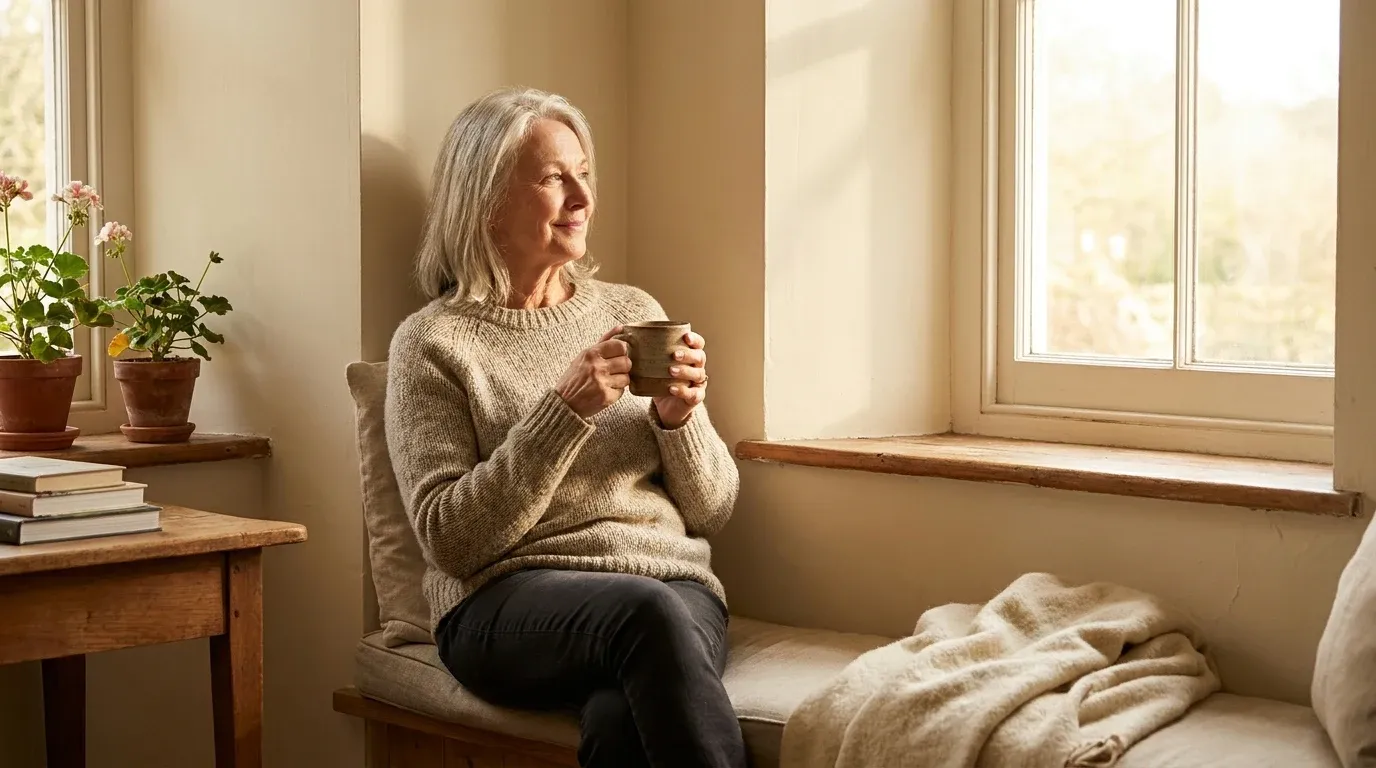
The common assumption is that stress gets harder to manage as you age. More health concerns, more loss, more uncertainty. But a growing body of research tells a different story, and it's one worth paying attention to no matter how old you are right now.
Studies consistently show that older adults, particularly those in their 60s and 70s, report lower levels of everyday stress and handle the stress they do experience more effectively than younger cohorts. This isn't denial or reduced emotional sensitivity. It's the result of decades of lived experience producing genuinely better coping strategies.
What the Research Actually Shows
Large-scale longitudinal studies tracking emotional wellbeing across the lifespan have found what researchers call a "positivity effect" in older adults. Compared to younger adults, older people are more likely to direct attention toward positive stimuli, regulate negative emotions faster, and recover from stressful events more quickly.
One well-cited framework, socioemotional selectivity theory, proposes that as people age and their sense of future time becomes more limited, they naturally prioritize emotionally meaningful goals and interactions. This shifts how they allocate attention and energy, reducing exposure to unnecessary stress sources and increasing satisfaction with daily life.
Daily diary studies, where participants report stress and mood multiple times per day over weeks, show that older adults experience fewer interpersonal stressors and react less intensely to the ones they do encounter. Reactivity, not just frequency, drops significantly with age. And reactivity is where a lot of cumulative damage happens in younger adults.
The Three Strategies Older Adults Use Naturally
What's particularly useful about this research isn't just that older adults cope better. It's how they do it. Three specific strategies appear repeatedly in the literature, and all three can be deliberately practiced at any age.
Reappraisal. Older adults are more likely to reframe a stressful situation by shifting how they interpret it, rather than trying to suppress the emotion or avoid the situation entirely. They ask: what else could this mean? Is this actually as threatening as it feels? Reappraisal doesn't minimize problems; it creates cognitive distance from the automatic stress response.
Selectivity. With age, people become more intentional about where they invest time and emotional energy. They say no more readily, exit draining relationships with less guilt, and focus on fewer but more meaningful commitments. This reduces the total load of stressors rather than just trying to handle more of them.
Acceptance. Older adults show greater tolerance for uncertainty and unresolvable problems. Rather than ruminating over things outside their control, they are more likely to acknowledge the situation and redirect attention elsewhere. This isn't resignation. It's a practical recognition that not every problem warrants a solution.
These aren't personality traits that automatically arrive with age. They're skills developed through experience. Which means you don't have to wait decades to start building them.
What This Means for Stress Programs
The stress management industry in the US is worth over $17 billion annually and growing. The dominant approaches. breathing exercises, progressive muscle relaxation, mindfulness apps, and fitness-based interventions. all have solid evidence behind them. But the research on older adult resilience points to a gap in how most programs are structured.
Perspective-based techniques, specifically reappraisal training, values clarification, and acceptance-based approaches, tend to be underemphasized compared to physiological tools like breathwork or movement. Yet in long-term follow-up studies, cognitive reappraisal predicts sustained stress reduction more reliably than relaxation techniques alone.
This doesn't mean breathwork isn't valuable. Research consistently shows that combining mindfulness with physical activity produces stronger outcomes than either alone. If you're looking to build a more complete stress toolkit, mindfulness paired with exercise is one of the most evidence-backed stress reduction combinations available. The point is that adding a cognitive layer, learning to reframe and let go, significantly extends the benefit.
Corporate wellness programs and clinical stress interventions would do well to integrate these perspective-based strategies more explicitly. They're low-cost, scalable, and the evidence for their effectiveness across age groups is strong.
The Physical Activity Factor
Here's where the fitness piece becomes critical. Among older adults, those who stay physically active show the strongest stress resilience profiles across nearly every metric: emotional reactivity, recovery speed, sleep quality, and self-reported wellbeing.
Exercise does several things simultaneously that matter for stress. It reduces baseline cortisol over time, improves sleep architecture, increases BDNF (a protein linked to mood regulation and cognitive flexibility), and creates consistent evidence that the body is capable and adaptable. That last point matters more than it might seem. A sense of physical agency, knowing your body can respond and recover, translates into psychological resilience in ways that are difficult to replicate through cognitive techniques alone.
For older adults specifically, resistance training appears to carry particular benefits. Strength training preserves muscle mass, supports metabolic health, and is strongly associated with lower rates of depression and anxiety in adults over 60. If you're building or maintaining a training routine later in life, combining resistance training with adequate nutrition after 50 creates a compounding effect on both physical and mental health.
The type of training matters less than consistency. Whether it's walking, swimming, resistance work, or lower-impact formats like Pilates, the key variable is regularity. Progressive challenge also plays a role. Gradually increasing the demand you place on your body over time, the principle behind progressive overload in strength training, keeps the adaptation signal active and appears to support the same cognitive flexibility that makes older adults better at managing stress.
Lessons Worth Borrowing Right Now
If you're in your 30s or 40s and feel like stress is running your life, the research on older adults offers something more useful than reassurance that it gets better. It offers a blueprint.
Start practicing reappraisal deliberately. When a stressful situation arises, slow down the automatic interpretation and ask whether there's another way to read it. This takes effort at first and becomes faster with practice. Cognitive behavioral therapy has formalized this process for decades. You don't need a therapist to start applying the basic principle.
Get more selective. Audit your commitments, your social obligations, and your media consumption. Older adults don't stumble into selectivity. They earn it through repeated experience of what matters and what doesn't. You can accelerate that process by being more intentional about where your attention goes before life forces the issue.
Work on acceptance as a skill. This doesn't mean becoming passive. It means distinguishing between problems that respond to action and those that don't. Rumination on unsolvable problems is one of the most reliable drivers of chronic stress. Building a deliberate evening routine can help you practice letting go of the day's unresolved stressors, creating a habit of mental closure that supports recovery overnight.
And stay physically active. Not just for the metabolic benefits or the aesthetics. For the resilience. The evidence is clear that older adults who exercise regularly handle stress better than those who don't. That relationship doesn't start at 60. It compounds over decades, which means the work you do now is building the foundation you'll rely on later.
Aging Isn't a Vulnerability. It's a Variable.
The narrative that aging makes people more fragile, more stressed, more emotionally depleted, is not well supported by the data. For most people in reasonably good health, aging brings emotional regulation skills that younger adults are still developing. The stress doesn't necessarily get smaller. The capacity to handle it grows.
That's not a passive process, though. The older adults who show the strongest resilience profiles tend to share specific habits: they move regularly, they've become deliberate about what they engage with emotionally, and they've built a practiced relationship with reappraisal and acceptance. These aren't traits. They're behaviors. And behaviors can be started at any age.
The research isn't saying youth is better at stress. It's saying experience builds something real. The question is whether you're willing to start building it now.