
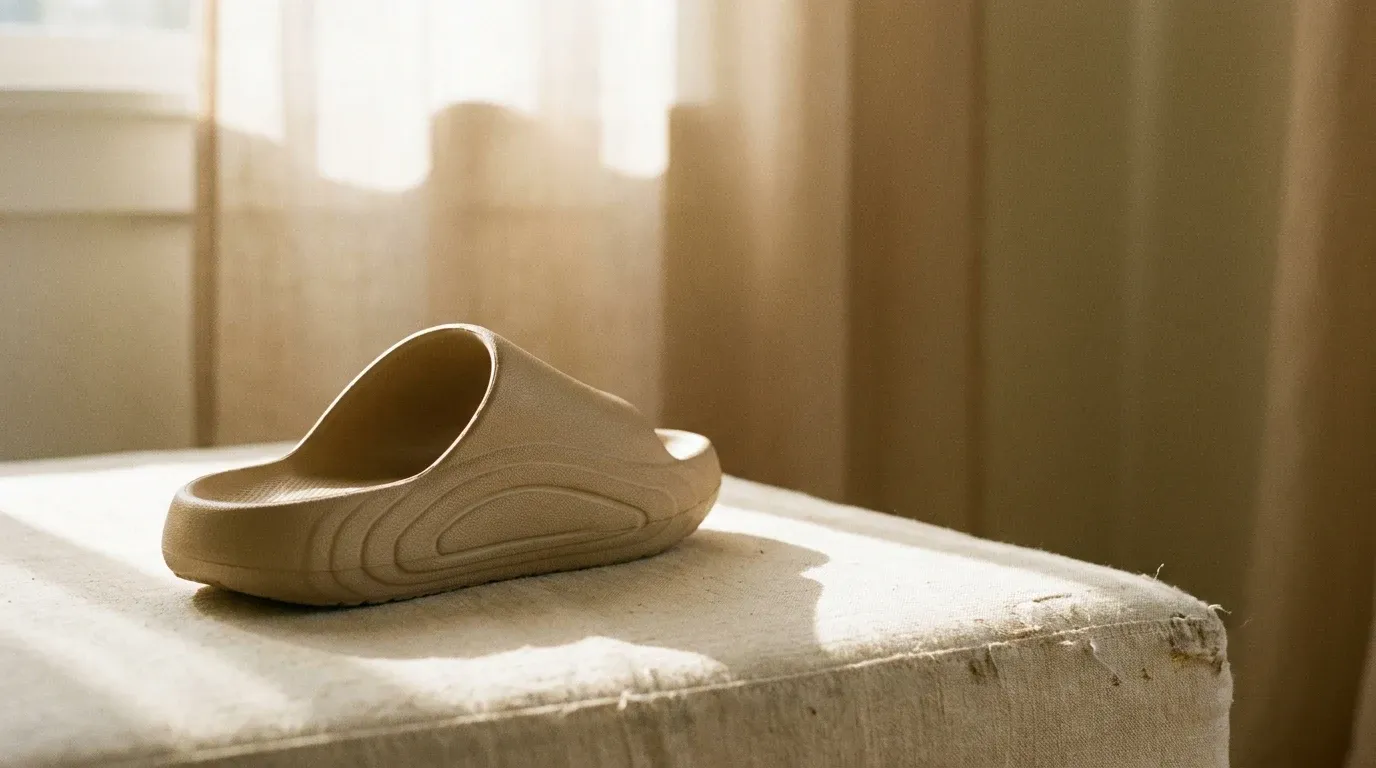
Walk through any gym locker room, scroll through any athletic brand's Instagram, or browse the recovery section of a running store, and you'll find the same promise: slip these on after a hard session and your feet will feel better faster. Recovery shoes have gone from niche athletic gear to a $1.5 billion global category. The marketing is confident. The science is considerably more complicated.
So what does the evidence actually say? And more importantly, what should you be looking for before spending anywhere from $30 to $200 on a pair?
What Recovery Shoes Are Actually Supposed to Do
The basic premise is straightforward. After exercise, long work shifts, or extended time on your feet, the soft tissue structures of the foot, including the plantar fascia, intrinsic muscles, and fat pads under the heel and forefoot, are fatigued and mildly inflamed. Recovery footwear is designed to offload those structures by distributing pressure more evenly, reducing ground reaction forces, and providing enough lateral support to prevent the foot from rolling into compensatory positions that create secondary strain.
This isn't exclusively an athlete problem. Nurses, teachers, warehouse workers, and anyone spending six-plus hours a day on hard flooring can experience the same cumulative foot fatigue. Recovery shoes were originally marketed to runners and cyclists, but the population that benefits most broadly is far wider than that.
The problem is that "recovery shoe" is a marketing category, not a clinical one. There's no standardized definition, no regulatory threshold for cushioning depth or material density, and no independent certification body. Brands can call anything a recovery shoe.
What Podiatrists Say Actually Matters
When you filter out the marketing language, podiatric specialists tend to narrow the criteria to three functional features.
- Cushioning depth and material density. Not all foam is equal. A thick midsole made from low-density EVA foam will compress fully under body weight and offer little sustained support. What matters is a combination of stack height (typically 30mm or more at the heel for meaningful offloading) and foam formulation that resists bottoming out. Polyurethane blends and proprietary closed-cell foams generally outperform standard EVA in this regard.
- Lateral stability. A highly cushioned shoe that allows the foot to rock side to side creates new problems. A wider, flared midsole base or a defined heel cup helps keep the foot in neutral alignment, which reduces strain on the Achilles tendon and the medial arch. This is especially relevant for people with mild overpronation.
- Outsole grip. Post-workout, your neuromuscular fatigue is real. Slippery outsoles on wet bathroom tile or gym floors are a genuine safety issue, not a comfort footnote. Textured rubber outsoles that extend to the heel and forefoot periphery are meaningfully safer than smooth EVA or injection-molded plastic.
Features like beveled toe boxes, ergonomic contouring, and antimicrobial linings are secondary at best. They're not useless, but they're not the variables that drive recovery benefit.
Slides vs. Clogs vs. Flip-Flops: They're Not Interchangeable
The three dominant styles in this category serve different purposes, and buying the wrong format for your situation is a common and avoidable mistake.
Slides are the most versatile recovery option for most people. A single wide strap across the forefoot keeps the shoe on without requiring toe gripping, which reduces digital flexor fatigue. The best slides have a contoured footbed, meaning the surface isn't flat but slightly cupped at the heel and raised at the arch. Look for adjustable straps if you have a higher instep or wider foot.
Clogs offer the most structured support of the three formats. An enclosed toe box and heel counter mean the foot is held in position rather than balanced on a platform. For people with plantar fasciitis, posterior tibial tendon issues, or significant arch drop, a recovery clog often provides more therapeutic value than a slide. The tradeoff is ventilation and ease of putting them on and off post-workout.
Flip-flops are the weakest recovery option in most cases. To keep a flip-flop on your foot, your toes must grip the thong strap, which continuously activates the flexor digitorum brevis and can actually increase muscle fatigue rather than reduce it. Some higher-end flip-flops use contoured beds with deep heel cups that mitigate this somewhat, but the format has a structural disadvantage that cushioning alone doesn't fix. If you're recovering from a run or a long shift, a flip-flop is a compromise, not a solution.
What a One-Month Real-World Test Found
Testing 11 pairs from 9 brands across all three style categories, worn by a mix of runners, healthcare workers, and people in physically demanding desk-adjacent jobs, revealed several consistent patterns.
First, performance varied significantly within the same style category. Two slides priced within $15 of each other performed very differently in terms of sustained cushioning. One maintained its loft after four weeks of daily wear; the other showed visible compression and reduced energy return within the first ten days. Foam quality, not price point, predicted this outcome.
Second, arch contour fit was the single biggest source of individual variation in comfort ratings. A pair rated highly by testers with neutral arches was rated poorly by those with high arches because the arch peak hit at the wrong anatomical point. There's no universally "best" arch profile. Fit is individual.
Third, and perhaps most counterintuitively, price did not reliably predict comfort or recovery benefit across the tested field. Two pairs priced above $150 landed in the bottom third of the comfort rankings. Two pairs priced below $60 ranked in the top four. The correlation between retail price and real-world performance was weak across this sample. That finding aligns with broader research on athletic footwear, which consistently shows that premium pricing reflects brand positioning and material costs, not necessarily functional outcome for the wearer.
This matters because recovery footwear is one area where the basics consistently outperform the expensive gadgetry. The same principle applies here: a well-constructed $55 slide with appropriate foam density and a heel cup will outperform a $180 pair with elaborate branding and proprietary technology that compresses flat.
Who Genuinely Benefits from Recovery Shoes
Recovery shoes aren't a gimmick, but they're not magic either. The people who see real, measurable benefit tend to fall into specific groups.
- Endurance athletes training at high volume. Runners logging 40-plus miles per week or cyclists doing multi-hour daily sessions accumulate enough repetitive load that structured post-workout offloading has a meaningful impact on tissue recovery. For this group, what you wear between training sessions matters. It's the same logic behind why nutrition strategies around training windows matter. If you're already dialing in how many carbs you need around endurance training, your footwear recovery protocol deserves the same attention.
- People with plantar fasciitis or chronic heel pain. Adequate arch support and heel cushioning during non-workout hours can reduce the tension load on the plantar fascia during its recovery phase, especially in the morning when symptoms are typically worst.
- Workers on hard floors for six or more hours daily. The cumulative impact of hard flooring on joint loading is significant. Recovery shoes used at home after a shift can reduce that total daily load on the knees and hips, not just the feet.
- People beginning a strength training program. If you're new to resistance training, your lower body is adapting to loads it hasn't experienced before. The support structure for those adaptations includes sleep, nutrition, and yes, how you treat your feet and lower limbs between sessions. The long-term benefits of consistent resistance training are substantial enough that protecting recovery quality in the early months is worth taking seriously.
If you're already sedentary and your feet feel fine at the end of the day, a recovery shoe is unlikely to produce a noticeable difference. The intervention works when there's meaningful stress to recover from.
What to Ignore When Shopping
A few features get disproportionate marketing attention without delivering proportionate benefit.
Antimicrobial linings can reduce odor but don't contribute to recovery. Massaging nubs or textures on the footbed surface are largely a sensory novelty. "Energy return" claims on slides are difficult to verify and largely irrelevant for passive recovery use. And high-profile collaborations or colorway releases tell you nothing about whether the shoe will actually support your foot.
What you should actually do before buying: identify your arch type (flat, neutral, or high), determine the primary context (post-workout, post-work shift, all-day casual), and try the shoe on at the end of the day when your foot is at its most fatigued and slightly swollen. That's the fit that matters, not how it feels fresh out of the box at 9 a.m.
The Bottom Line
Recovery shoes can deliver genuine benefit, but only if they're matched correctly to your foot, your activity level, and your use case. The category is cluttered with overpriced underperformers and underestimated budget options. The features that matter, cushioning quality, lateral stability, and outsole grip, are not the ones most brands lead with in their marketing.
If you're serious about recovery as a system, footwear is one piece of a larger picture that includes sleep, stress management, and movement quality. Chronic overwork and elevated stress have measurable effects on physical recovery, and no shoe corrects for a sleep deficit or sustained cortisol load. But for the specific job of reducing foot and lower limb fatigue, the right pair, chosen on the right criteria, is a tool worth having.