
Recovery has become its own industry. Ice baths, compression sleeves, antioxidant stacks, infrared saunas, massage guns. If you train seriously, you've probably tried several of these. And the assumption behind all of them is the same: the faster you feel better, the better your results will be.
New research is challenging that assumption directly. It turns out that some of the most popular post-workout recovery strategies don't just fail to accelerate adaptation. They actively reduce it. Understanding why requires a short look at what your body is actually doing in the hours after a hard session.
Your Body's Adaptation Signal Is a Stress Response
When you train hard, you create cellular damage. Muscle fibers are stressed, metabolic byproducts accumulate, and inflammation rises. That sounds like something to fix. But physiologically, that discomfort is a signal. It's the mechanism your body uses to trigger adaptation: stronger fibers, improved mitochondrial density, better oxygen utilization.
Scientists have identified specific molecular pathways involved in this process. Key among them are reactive oxygen species (ROS), which are produced during intense exercise and act as signaling molecules. They're not simply waste. They activate transcription factors that switch on genes responsible for muscle repair and endurance adaptation. When you suppress ROS too aggressively and too soon, you suppress the signal itself.
This is why how hard you actually train at the gym matters less in isolation than what you do in the window that follows. The training session opens the door. The recovery environment determines whether anything walks through it.
Cold-Water Immersion: The Evidence Gets More Complicated
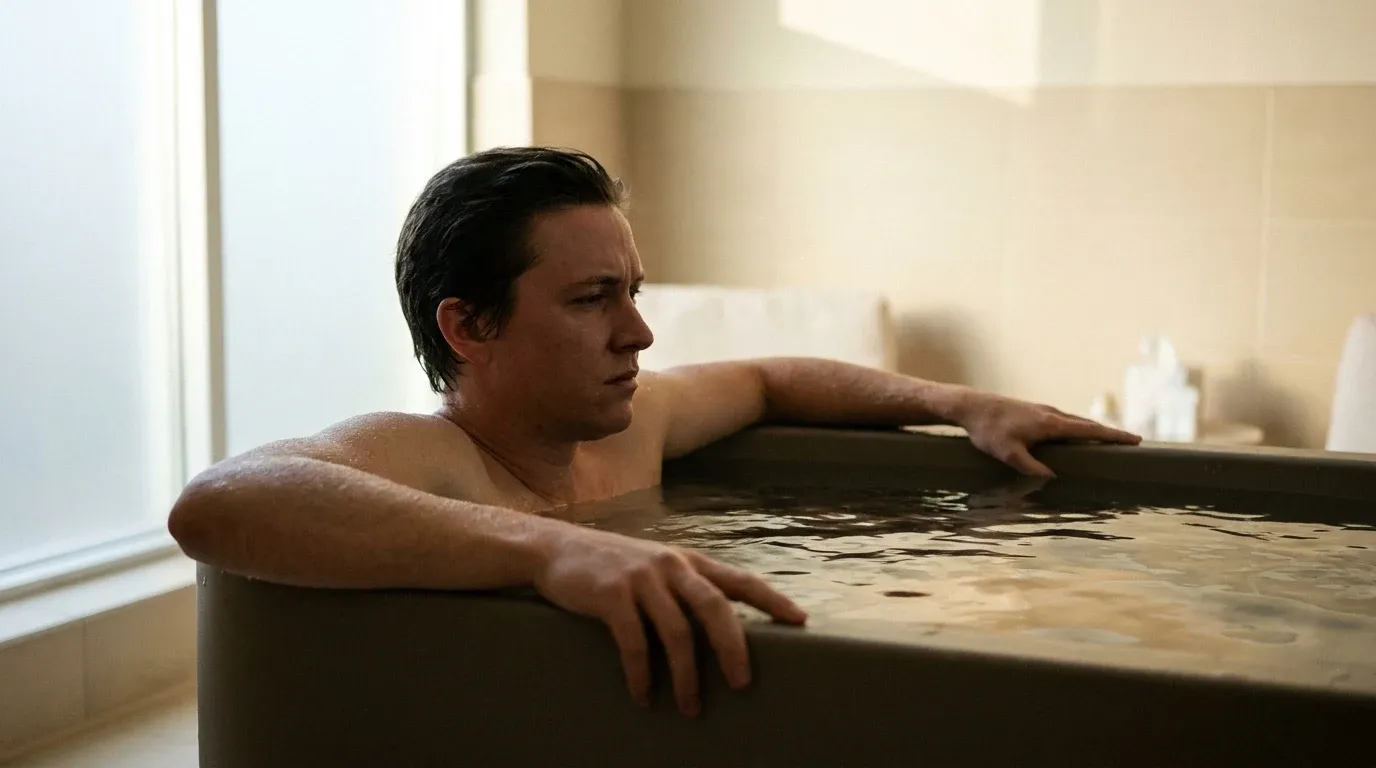
Cold-water immersion (CWI) has become a fixture in professional sports and gym culture alike. The appeal is intuitive: cold reduces inflammation, numbs soreness, and helps athletes feel fresher faster. For competition contexts where performance turnaround is 24 to 48 hours, that's sometimes exactly what's needed.
But a growing body of research suggests that for athletes focused on long-term strength and muscle gain, cold-water immersion applied immediately after resistance training may blunt the anabolic response. Studies using muscle biopsies have shown reduced activation of mTOR signaling. a central pathway for muscle protein synthesis. in participants who immersed post-strength training compared to those who recovered passively.
One controlled trial found that athletes who used cold-water immersion after resistance sessions over several weeks gained significantly less muscle mass and strength than those who did not, despite identical training loads. The cold was reducing soreness. and simultaneously reducing the adaptation that soreness was partly driving.
This doesn't mean cold exposure is useless. It means context is everything. Cold immersion may still serve a legitimate role for endurance athletes, in between-session recovery during high-frequency competition blocks, or for general wellbeing. What it's poorly suited for is blunting inflammation immediately after a hypertrophy session when you're specifically trying to build muscle.
High-Dose Antioxidants: When More Is Less
The same logic applies to antioxidant supplementation. Vitamins C and E are widely taken by athletes under the assumption that reducing oxidative stress accelerates recovery. And in everyday health contexts, antioxidants play an important role. But the timing and dosage in a training context matter enormously.
Research published over the past decade has consistently shown that high-dose vitamin C and E supplementation taken immediately before or after exercise attenuates the cellular signaling cascade that drives endurance adaptation. Specifically, it blunts increases in mitochondrial biogenesis markers. the process by which your muscles develop more energy-producing capacity over time.
In one notable study, participants supplementing with high-dose antioxidants showed lower improvements in maximal oxygen uptake (VO2max) compared to a placebo group following the same training program. The supplement was interfering with the very stress response that made training productive.
It's worth noting that food-based antioxidants consumed as part of a regular diet don't appear to carry the same risk. The concern is concentrated supplemental doses taken strategically around training. That distinction matters, especially as supplement marketing continues to conflate general nutritional support with performance optimization.
Discomfort Is Not the Enemy
The core insight from this line of research is a reframe that feels counterintuitive in a wellness culture that prizes feeling good quickly. Some post-exercise discomfort. the mild soreness, the fatigue, the metabolic inflammation. is not a problem to fix. It's a mechanism to protect.
This connects to a broader principle about how the body responds to stress. Training works because it's a controlled stressor. The body perceives a threat to homeostasis and builds back stronger in response. Interventions that eliminate that signal too rapidly can short-circuit the process, leaving you feeling recovered but actually less adapted than you would have been.
This is also why reading your recovery signals carefully is a skill worth developing. There's a meaningful difference between the productive discomfort of normal post-training soreness and signs of genuine overtraining or injury. Chasing the elimination of all discomfort is a different problem than managing real recovery debt.
What Actually Helps. And When
None of this means abandoning recovery practices entirely. It means applying them with more precision. Here's how the evidence currently maps out:
- Sleep remains the single most evidence-backed recovery tool available. Deep sleep drives growth hormone release, protein synthesis, and central nervous system restoration. No supplement or cold bath comes close. Research on the health risks of irregular sleep patterns underscores that consistency matters as much as duration.
- Active recovery, meaning low-intensity movement like walking or light cycling, promotes blood flow and waste clearance without suppressing adaptation signals. It's often more effective than complete rest for mild soreness.
- Protein timing does matter. Consuming adequate protein within a few hours post-training supports muscle repair through pathways that don't interfere with ROS signaling. This is an intervention that works with the adaptation process, not against it.
- Cold immersion, used strategically, is not off the table. It may have legitimate uses for pain management, mental recovery, and performance turnaround in competition settings. The key is reserving it for those contexts rather than applying it reflexively after every session.
- High-dose antioxidants are better consumed away from training windows. if you use them at all. Whole food sources of vitamins and polyphenols don't carry the same interference risk and offer a broader nutritional profile. Thinking carefully about where your nutrients come from matters more than chasing isolated supplemental doses.
The Bigger Framework: Tools Have Contexts
What this research ultimately offers is not a list of things to stop doing. It's a framework for thinking about recovery tools more honestly. The question is never just "does this work?" It's "does this work, for this goal, at this time, in this context?"
A sprinter competing in back-to-back heats has different recovery needs than someone doing three strength sessions a week trying to build muscle over six months. A cold bath that helps the former perform better on day two might actively undermine the latter's progress over a training cycle. Same tool. opposite outcomes. because the context is different.
The fitness industry tends to market recovery interventions as universally beneficial. Research increasingly says otherwise. Understanding how long-term exercise habits shape health outcomes over years and decades makes it clearer why protecting the quality of your adaptation matters, not just how recovered you feel on any given day.
If you're working with a coach, this is exactly the kind of nuance worth raising early. Your first session with a coach is an opportunity to map out not just your training plan but your full recovery strategy, so your practices actually support your goals rather than quietly work against them.
The Practical Takeaway
You don't need to suffer through recovery to make progress. But you do need to stop treating every signal of post-exercise discomfort as a problem that requires immediate intervention. Some of it is the process working exactly as it should.
Use sleep aggressively. Time your protein well. Apply cold and antioxidant strategies with intention rather than habit. And give your body the space to do what hard training primes it to do: adapt, rebuild, and come back stronger.
The recovery industry will keep selling you faster relief. The science says what you actually want is smarter restraint.