
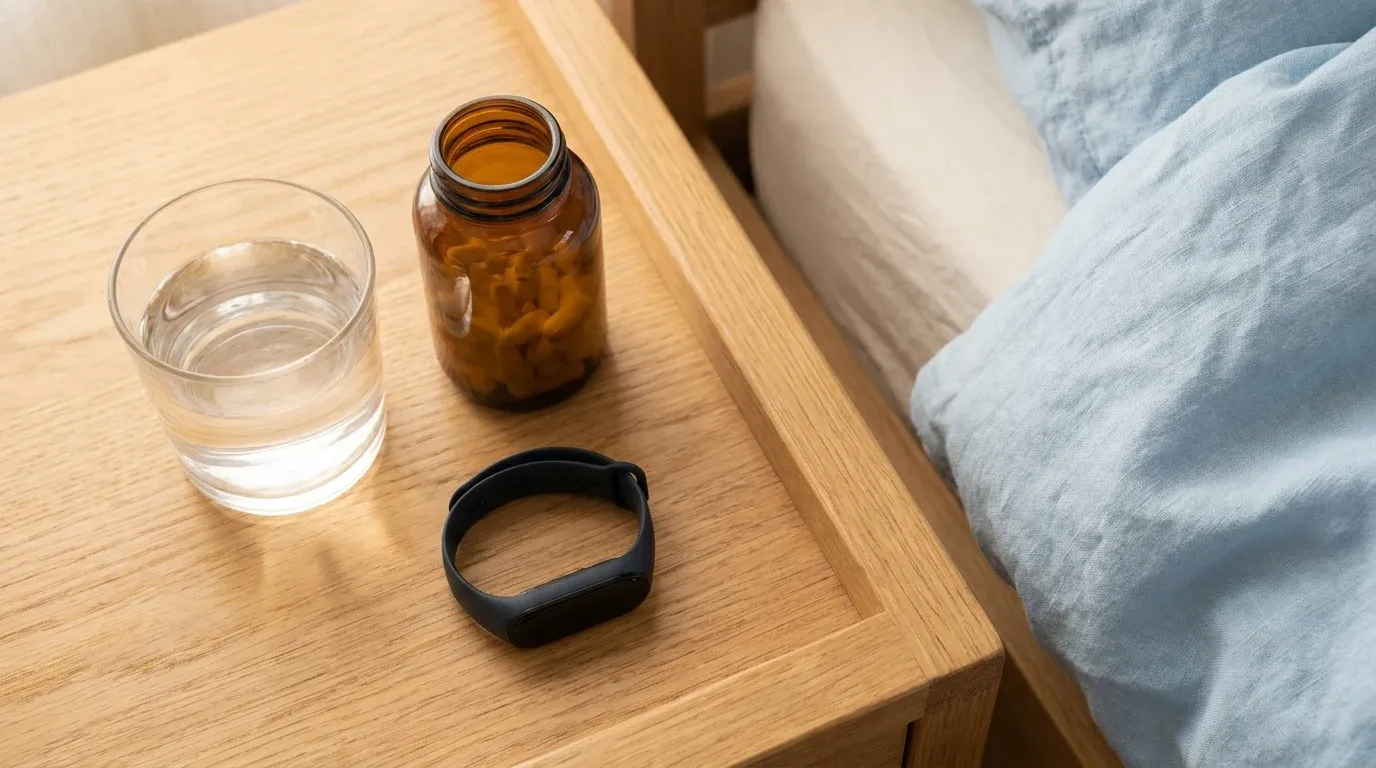
Sleep isn't passive rest
The classic representation of sleep as "rest" is biologically wrong. Sleep is the most intense period of biological activity for an athlete — the phase where muscle rebuilding, motor skill consolidation, and metabolic waste clearance peak.
More than 80% of muscle protein synthesis occurs during sleep — specifically during slow-wave deep sleep stages 3 and 4. Growth hormone secretion peaks in the first 2–3 hours of sleep. Without sufficient sleep, tomorrow's session builds less muscle than your biology would allow.
The key data on sleep and performance
The most cited study in sports science on sleep comes from Stanford University's research on collegiate sports teams. Result: athletes who extended their sleep to 10 hours per night for 5–7 weeks improved sprint speed by 5%, reaction time by 8%, and technical accuracy (basketball shooting, tennis serving) by 9%.
These gains didn't come from additional training. They came from better recovery from the same training volume.
The key point: the difference between 6 and 8 hours of sleep isn't linear — it's exponential for athletic performance. Below 7 hours, cognitive performance (reaction time, decision-making) and physical performance (maximal strength, VO2max) degrade measurably.
The concrete protocol
On duration: target 8–10 hours. If your schedule makes 9 hours impossible, add a 20–30 minute nap (not longer — past that, you enter deep sleep and risk sleep inertia on waking). A midday nap maintains cognitive function without replacing nighttime sleep — it's a complement, not a crutch.
On quality: your room temperature is the most powerful lever. 18–20°C (64–68°F) is the optimal range for deep sleep onset. Above 22°C (72°F) — common in summer — deep sleep duration drops 10–15%. A fan pointed out the window, a lukewarm shower 90 minutes before bed, blackout curtains — these are the highest-impact interventions.
On light: 45 minutes screen-free before bed is the minimum recommendation. Blue light from screens suppresses melatonin — the molecule that triggers sleep onset — for 2–3 hours after exposure.
On supplements: magnesium glycinate (300 mg) is the only supplement with a meaningful literature base for improving sleep quality outside medication. Melatonin (0.5 mg — low dose, not 3+ mg) can help resynchronize circadian rhythm during jet lag or schedule changes. It doesn't improve sleep quality outside those contexts.