
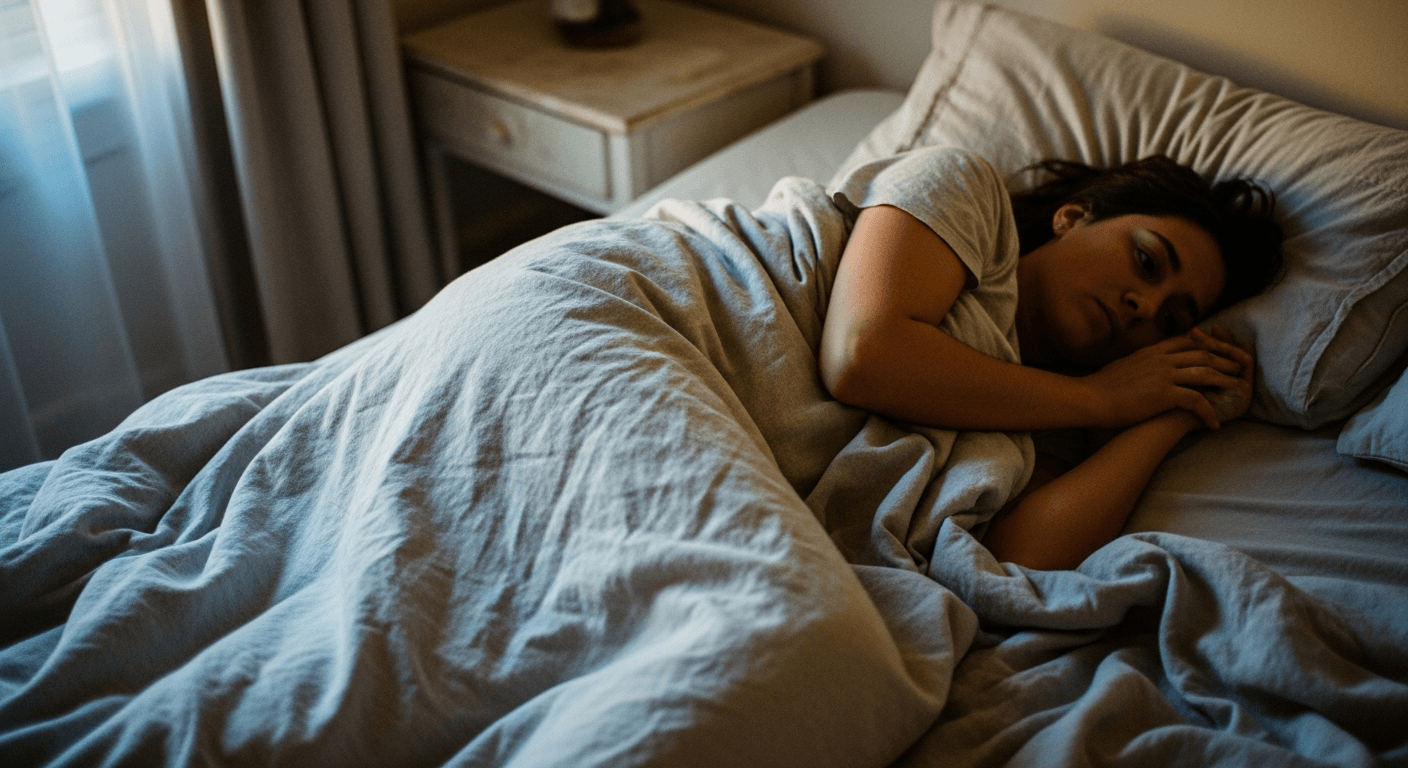
Sleep has a fairness problem. And for the first time, major global health institutions are naming it directly. The Global Wellness Institute's 2026 sleep trends report identifies "sleep inequality" not as a side effect of poor personal habits, but as a structural public health crisis rooted in financial insecurity and chronic stress environments. If you've been telling yourself you just need better discipline around bedtime, you may be misreading the actual problem.
The data is sobering. ResMed's sixth annual Global Sleep Survey, which gathered responses from over 30,000 people across 13 countries, found that more than half of respondents get quality sleep only four nights a week or fewer. That's not an occasional rough patch. That's the baseline for most people on the planet.
What the Numbers Actually Show
When asked to rank the single most important factor for a long, healthy life, 53% of survey respondents put sleep above diet and exercise. That's a significant cultural shift. For years, fitness culture has placed nutrition and physical training at the top of the wellness hierarchy. Sleep has quietly overtaken both in public awareness, at least in terms of what people say they value.
But awareness and access aren't the same thing. Knowing sleep matters doesn't guarantee you'll get it. And that gap, between understanding the importance of rest and actually being able to prioritize it, is precisely where inequality enters the conversation.
The Global Wellness Institute's report is careful to distinguish between sleep problems that respond to behavioral interventions and those that don't. For millions of people, the obstacles to quality sleep aren't addressable by a wind-down routine or a white noise machine. They're structural. Shift work schedules. Overcrowded housing. Financial anxiety that keeps the nervous system in a low-grade state of threat response. These aren't problems a meditation app solves.
Who Bears the Burden
Sleep inequality doesn't affect everyone equally, and the patterns follow predictable lines of economic and social disadvantage. Research consistently shows that people in lower-income brackets report shorter sleep duration, more fragmented sleep, and higher rates of sleep disorders. Hourly and shift workers, who often lack control over their schedules, face compounding disadvantages: irregular hours disrupt circadian rhythms, and the financial stress of living paycheck to paycheck activates cortisol pathways that are physiologically incompatible with restorative sleep.
Chronic stress is a biological reality, not a mindset issue. When your body perceives persistent threat, whether financial, environmental, or social, it suppresses the neurological processes that allow deep, slow-wave sleep to occur. You can do everything "right" and still lie awake at 3 a.m. because your body is running an ancient survival program that doesn't distinguish between a predator and an overdue rent payment.
This is why understanding stress resilience frameworks matters, but only up to a point. Resilience tools are genuinely useful. They're not a substitute for economic stability.
The Awareness-Action Gap Is Widening
One of the more troubling findings from the current sleep research landscape is how clearly people understand what they need, and how little their circumstances allow them to act on that understanding. The ResMed survey doesn't show a population that's indifferent to sleep. It shows a population that's frustrated, aware, and largely stuck.
This widening gap between awareness and action has real consequences. Sleep deprivation at a population level correlates with increased rates of cardiovascular disease, metabolic disorders, impaired immune function, and cognitive decline. It also compounds existing health inequalities, because the people most likely to be sleep-deprived are already navigating healthcare systems with less access and fewer resources.
Recent research out of Stanford illustrates how high the stakes are. AI analysis of sleep data is now capable of predicting cardiovascular and neurological disease years before symptoms appear. That's a powerful tool. But it's a tool that, without structural change, will primarily benefit people who already have access to advanced sleep tracking technology and the conditions needed to act on what the data reveals.
Technology Is Reshaping the Sleep Landscape, But Not Equally
The 2026 sleep market is being transformed by technology, intentional product design, and a shift toward measurable, data-driven rest. Wearable sleep trackers, smart mattresses, chronobiology-informed scheduling apps, and AI-powered sleep coaching tools are proliferating fast. The global sleep economy is now valued in the hundreds of billions of dollars, and it's growing.
That growth, however, is concentrated at the premium end of the market. High-quality sleep technology and sleep-optimized environments remain largely accessible to those who can afford them. A temperature-regulating mattress might run $2,000 to $4,000. A comprehensive sleep coaching program in the US market can cost $200 to $500 per month. These aren't entry-level price points.
This creates a paradox at the heart of the sleep wellness boom. The people who need sleep interventions most urgently are least likely to have access to the tools being marketed as solutions. Meanwhile, the people purchasing premium sleep technology are often already in conditions that support better sleep. Better products are going to people who already sleep better.
Recovery practices more broadly face the same dynamic. Building a genuine recovery routine requires not just knowledge but time, financial capacity, and a degree of schedule control that isn't equally distributed.
Sleep and the Broader Wellness Picture
Sleep doesn't operate in isolation. It's deeply connected to nutrition, stress physiology, physical performance, and long-term disease risk. Poor sleep degrades the body's ability to regulate appetite hormones, impairs glucose metabolism, and blunts the muscle repair processes that make physical training effective. You can follow the latest guidance on protein intake and training structure, but if your sleep is fragmented, you're working at a significant deficit.
There's also a meaningful relationship between sleep and gut health. Circadian disruption, which is common among shift workers and people under chronic stress, alters microbiome composition in ways that affect inflammation, immune response, and mood. The evidence connecting gut health and physical performance is increasingly robust, and sleep sits squarely in that chain of causality.
Some research has explored whether supplementation can offer partial support for people facing sleep disruption driven by stress. Adaptogenic compounds have received attention in this context. Evidence around ashwagandha for stress and sleep, particularly in women, suggests some benefit for reducing cortisol and improving sleep quality in stress-burdened populations. That's not a structural fix. But for individuals navigating high-stress circumstances, it may represent a meaningful, accessible intervention while larger systemic changes lag behind.
What a Public Health Response Actually Looks Like
If sleep inequality is a structural issue, then addressing it requires structural thinking. That means policy conversations around shift work regulation, paid leave, housing quality, and the financial conditions that generate chronic stress in the first place. It means employer-level accountability for schedule design and workload management. It means healthcare systems that screen for sleep disorders across income levels, not just among patients who show up asking about sleep.
At the community level, it means acknowledging that telling people to "prioritize sleep" is an incomplete message if the conditions that make prioritization possible aren't in place. Wellness communication that frames sleep purely as a personal responsibility question does a disservice to the complexity of what the data actually shows.
For individuals operating within real constraints, the most useful framing is probably this: do what you can within your circumstances, take the structural barriers seriously rather than internalizing them as personal failure, and recognize that the awareness you have about sleep's importance is accurate, even if your current ability to act on it is limited.
The Bottom Line
Sleep inequality is real, measurable, and growing. More than half of people globally aren't getting quality sleep most nights, and the reasons why are tangled up in economics, work structures, housing, and stress in ways that no bedtime routine fully addresses. The 2026 data is pointing clearly toward a public health gap, not a motivation gap.
The fact that 53% of people now rank sleep above diet and exercise in importance suggests that cultural awareness has arrived. What hasn't arrived yet is the structural response that would make acting on that awareness possible for everyone, not just those who can afford it.
That's the conversation worth having. And it's one the wellness industry, policymakers, and employers can't afford to keep sleeping through.