
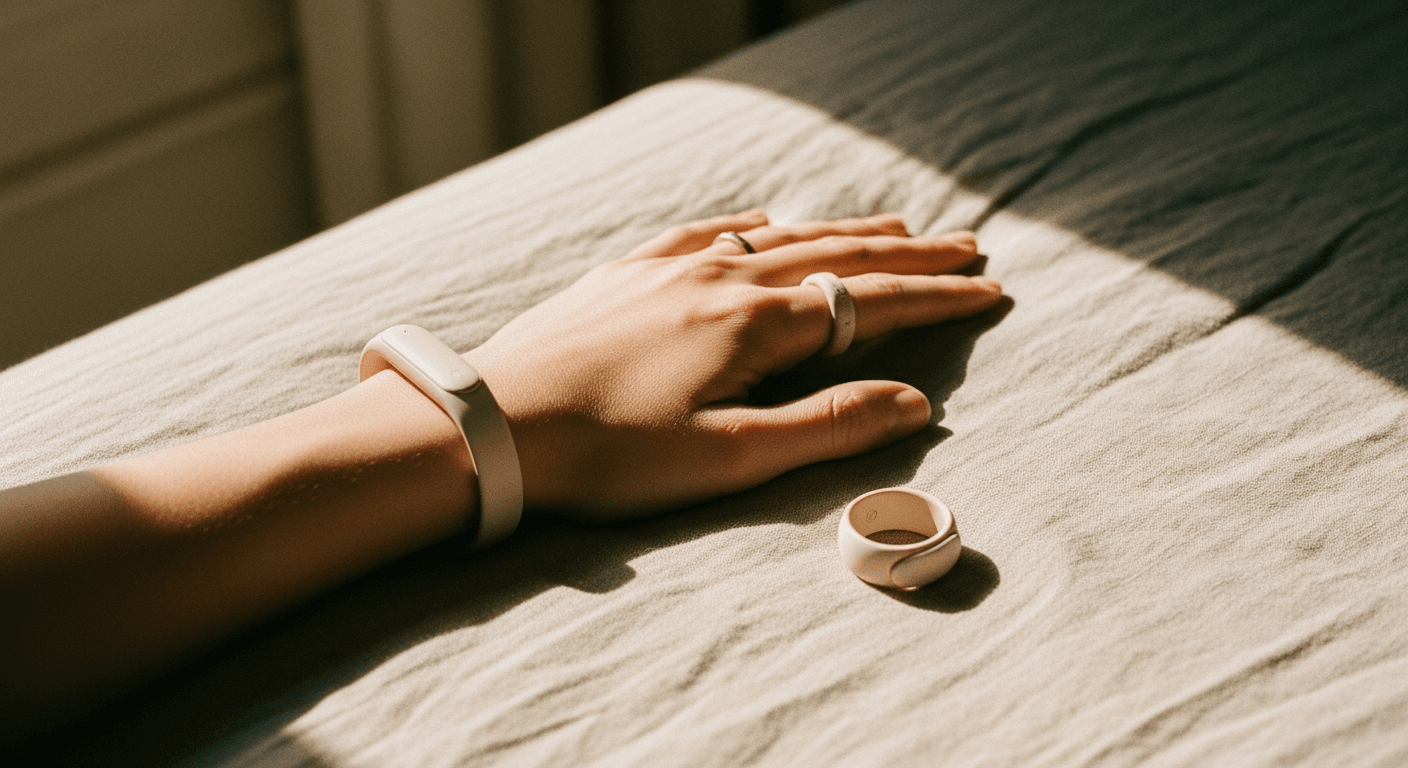
The smart recovery wearable market has exploded in 2025-2026. Whoop 5, Oura Ring 4, Garmin's built-in HRV monitoring — the options are plentiful, and so are the price tags. The real question isn't which one to pick. It's: do they actually work?
Here's what the science says about biometric recovery tracking — and which type of athlete genuinely benefits.
Key takeaways
- HRV (Heart Rate Variability) is the most validated biomarker for recovery readiness — lower HRV = more physiological stress on your system
- Whoop 5: continuous HRV + sleep + strain tracking; no screen; subscription ~$30/month
- Oura Ring 4: best-in-class sleep staging accuracy; overnight HRV measurement; ~$6/month subscription
- Garmin HRV Status: built into most premium watches, no subscription — less granular but sufficient for most athletes
- Who actually benefits: athletes training 4+ times/week with variable intensity
HRV: what it is and why it matters
Heart Rate Variability measures the time interval variation between heartbeats. Unlike heart rate (beats per minute), HRV captures the variation in those intervals. Higher variability means your autonomic nervous system is responsive — a sign of recovery. Low HRV signals physiological stress, regardless of how you subjectively feel.
It's a biomarker with over 30 years of scientific validation. What changed recently is the ability to measure it continuously via consumer-grade wearable sensors.
The key limitation: HRV is highly individual. A reading of 65ms might be excellent for one athlete and average for another. What matters is deviation from your own 30-day baseline — not the absolute number.
Whoop 5 (2026): the high-intensity training tracker
Whoop 5 is a significant update with improved HRV sensors and extended battery life. Its core strengths:
- Continuous HRV measurement (not just overnight) — useful for tracking recovery arc after a hard session
- Strain algorithm that quantifies daily training load
- Daily recovery score integrating HRV, sleep quality, and resting heart rate
- No screen (minimalist form factor) — designed for athletes who don't want distraction
Downsides: mandatory subscription (~$30/month), community skews toward elite/competitive athletes, can generate data anxiety in less experienced users.
Best for: endurance athletes, CrossFitters, HYROX competitors — any athlete with high, variable training loads who wants to optimize recovery timing.
Oura Ring 4 (2025): the sleep-first tracker
The Oura Ring 4 has established itself as the reference for sleep tracking quality. Its HRV measurement happens primarily overnight during deep sleep, which produces a more stable baseline than continuous measurement. Its strengths:
- Most accurate consumer-grade sleep staging available (per independent reviews)
- Ring form factor: unobtrusive, doesn't interfere with daily activities or sleep
- More affordable subscription (~$6/month)
- Skin temperature monitoring — useful for catching early signs of illness or systemic fatigue
Downsides: doesn't capture training load with the same precision as Whoop; ring format incompatible with some sports (weightlifting, climbing).
Best for: athletes prioritizing sleep optimization, high-stress professionals who also train, people who want discrete tracking.
Garmin HRV Status: the no-subscription option
If you already own a premium Garmin watch (Fenix 7+, Forerunner 955+, Epix), HRV Status is built in with no additional subscription. It measures your HRV each night and gives a rolling 5-day status (Balanced, Elevated, Low).
Less granular than Whoop or Oura? Yes. Sufficient for most athletes training 3-5 times per week? Probably. The advantage: no extra friction, no added cost, and the data integrates directly into your existing Garmin training history.
Who actually benefits from recovery tracking
A recovery tracker is genuinely useful if you're training four or more times per week with variable intensity. That's the context where HRV becomes an actionable signal — telling you whether today is a day to push hard or pull back.
If you're training 2-3 times per week at moderate intensity, the highest-leverage recovery factors are still sleep, nutrition, and stress management. A tracker can make those factors visible — but it doesn't replace them.