
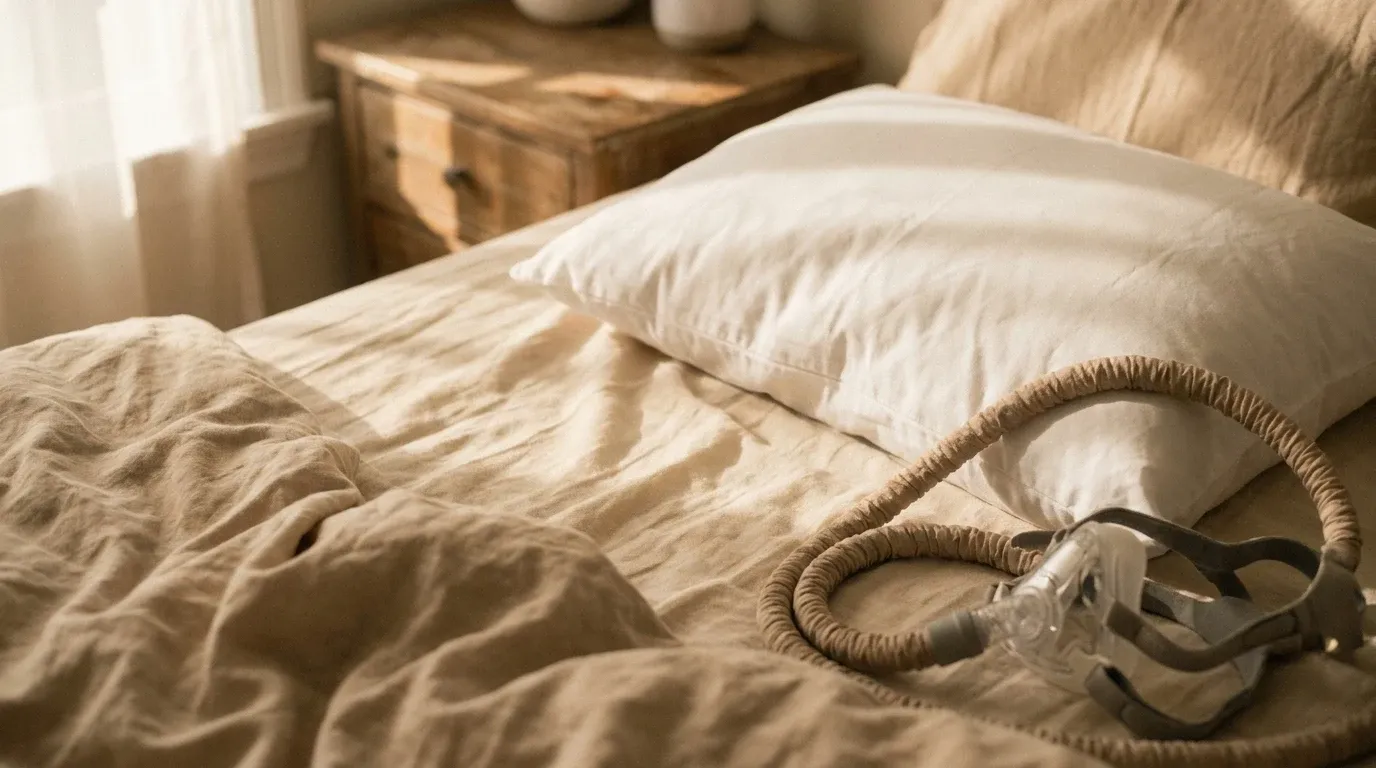
The FDA approval of tirzepatide for obstructive sleep apnea made headlines, and understandably so. A medication that reduces the severity of a condition affecting tens of millions of adults worldwide sounds like a major step forward. It is, in some ways. But the clinical trial data tells a more complicated story, and if you or someone you know is living with moderate-to-severe obstructive sleep apnea (OSA), you need to understand what this drug actually delivers before assuming it's a replacement for existing treatment.
What the FDA Actually Approved
In June 2024, the FDA approved tirzepatide (sold under the brand name Zepbound) as a treatment for moderate-to-severe obstructive sleep apnea in adults who also have obesity. This makes it the first medication approved specifically for OSA, which is a significant regulatory milestone.
The approval was based on results from the SURMOUNT-OSA phase 3 clinical trial program, which enrolled adults with moderate-to-severe OSA who were either not using CPAP therapy or who were using it but willing to pause it for the trial. Participants received weekly injections of tirzepatide or a placebo over 52 weeks.
The drug works by mimicking two gut hormones, GLP-1 and GIP, which regulate appetite and metabolism. By reducing appetite and promoting significant weight loss, tirzepatide appears to reduce the anatomical factors that contribute to airway collapse during sleep, including excess fat tissue around the neck and upper airway.
The Numbers That Matter
The trial results were genuinely promising. Tirzepatide significantly reduced the apnea-hypopnea index (AHI), the standard measure of sleep apnea severity that counts the number of breathing disruptions per hour of sleep. In participants not using CPAP, the AHI dropped by roughly 25 to 30 events per hour, compared to a reduction of about 5 events per hour in the placebo group.
That's a meaningful clinical difference. But here's where the headline and the reality begin to diverge.
Across both trial groups, between 43% and 52% of tirzepatide users achieved what researchers classified as remission or mild non-symptomatic OSA after one year. That means approximately half of participants still had clinically significant sleep apnea after 52 weeks of treatment. They had improved, but they hadn't crossed into safe territory.
For context, an AHI below 5 events per hour is considered normal. Mild OSA falls between 5 and 15. Moderate OSA runs from 15 to 30, and severe OSA is defined as more than 30 events per hour. Reducing your AHI from 40 to 18 is progress. It is not a cure, and it still carries real cardiovascular and cognitive risk.
Why Weight Loss Is the Core Mechanism
Tirzepatide doesn't target the airway directly. It doesn't strengthen the muscles of the throat, reposition the jaw, or alter upper airway anatomy in any structural way. The primary driver of improvement is weight loss, and significant weight loss at that. Participants in SURMOUNT-OSA lost an average of around 18% to 20% of their body weight, which is substantial by any clinical standard.
Excess body weight, particularly fat deposited around the neck and tongue, is one of the most significant modifiable risk factors for OSA. Reducing that fat reduces the pressure on the upper airway during sleep. So the drug's effect on sleep apnea is largely indirect. It works because weight loss works.
This has an important implication: the benefits are likely to plateau or reverse if you stop taking the drug. The available data on GLP-1 medications consistently shows that a significant portion of lost weight returns after discontinuation. If that weight comes back, the sleep apnea is likely to return with it. This is not a one-and-done treatment. It's a long-term commitment with ongoing costs, currently around $550 to $650 per month in the US without insurance coverage, and coverage for OSA-specific use remains inconsistent across insurers.
CPAP Is Not Going Away
If you're currently using CPAP and it's working for you, tirzepatide does not give you a reason to stop. CPAP remains the most effective treatment for moderate-to-severe OSA. It keeps the airway physically open during sleep, and when used consistently, it reduces AHI to near-normal levels for most patients, regardless of body weight.
The patients in the SURMOUNT-OSA trial who were already using CPAP were asked to pause it for the study. That's a controlled trial design, not a clinical recommendation. In real-world practice, combining tirzepatide with CPAP therapy is likely to produce better outcomes than either intervention alone, particularly for people whose OSA is severe or who have underlying cardiovascular conditions that make untreated apnea especially dangerous.
Sleep health is foundational to everything else you're trying to do with your body. As covered in Sleep and Food Still Beat Every Recovery Gadget, no supplement, wearable, or biohacking protocol overrides the basics. A medication that partially improves your AHI but leaves you with 20 disruptions per hour is not solving the problem. You're still fragmenting your sleep, stressing your cardiovascular system, and likely struggling with daytime fatigue and cognitive fog.
Who Might Benefit Most
Tirzepatide for OSA is most compelling in a specific profile: someone with moderate-to-severe OSA who also has obesity, who is either unable to tolerate CPAP or has not been able to maintain consistent CPAP use, and who is already a candidate for a GLP-1 medication based on metabolic health.
CPAP adherence is a genuine clinical problem. Studies consistently show that 30% to 50% of patients prescribed CPAP don't use it regularly enough to get therapeutic benefit. For that population, a medication-based approach that reduces AHI significantly, even without full remission, could meaningfully lower health risk.
Tirzepatide could also work well as a bridge therapy: helping reduce OSA severity while a patient works toward the kind of sustainable lifestyle changes, including resistance training and improved nutrition, that support long-term weight management. Why Most People Still Skip Resistance Training is worth reading if you're thinking about building the habits that support lasting metabolic health, since muscle mass plays a significant role in how your body manages weight over time.
Protein intake is also worth revisiting if you're on a GLP-1 medication, since appetite suppression can lead to inadequate intake. Your Protein Needs Change With Life Stage. Here's How. breaks down why your requirements may be higher than you think, particularly as you get older.
The Risks and Honest Trade-offs
Tirzepatide carries a known side effect profile: nausea, vomiting, diarrhea, and constipation are the most common, particularly in the early weeks of dose escalation. More serious concerns include a potential risk of thyroid tumors (observed in animal studies, not yet confirmed in humans at scale), pancreatitis, and gallbladder disease.
There's also the question of muscle loss. GLP-1 medications are associated with reductions in lean muscle mass alongside fat loss, which matters for long-term metabolic health and physical function. Why Recovery Takes Longer After 40 (And What to Do) outlines why preserving muscle becomes increasingly important as you age, and why simply losing weight without protecting lean tissue can create its own set of problems down the line.
Anyone considering tirzepatide for OSA should be having a detailed conversation with a sleep specialist and a prescribing physician, not making this decision based on a commercial or a social media post. The drug is not approved for OSA in the absence of obesity. It's not a weight loss shortcut that happens to also fix your sleep. It's a specific medication for a specific population, with real limitations that need to be understood upfront.
The Bottom Line
Tirzepatide represents a genuine advance in OSA treatment, and the FDA approval reflects real clinical evidence of benefit. But "benefit" is not the same as "cure," and the data makes clear that most people taking this drug for a year will still have measurable sleep apnea at the end of it.
For the right patient, tirzepatide is a useful addition to a broader treatment strategy. It can reduce severity, improve metabolic health, and potentially make other interventions more effective. But it doesn't replace CPAP for most people, its benefits depend on continued use and continued weight loss, and it leaves roughly half of users still outside the safe range after 12 months.
Sleep apnea is a serious condition with cardiovascular, cognitive, and metabolic consequences. Treat it with the full toolkit. A medication that moves the needle is valuable. Assuming it's enough when the data says otherwise is a risk you don't need to take.