
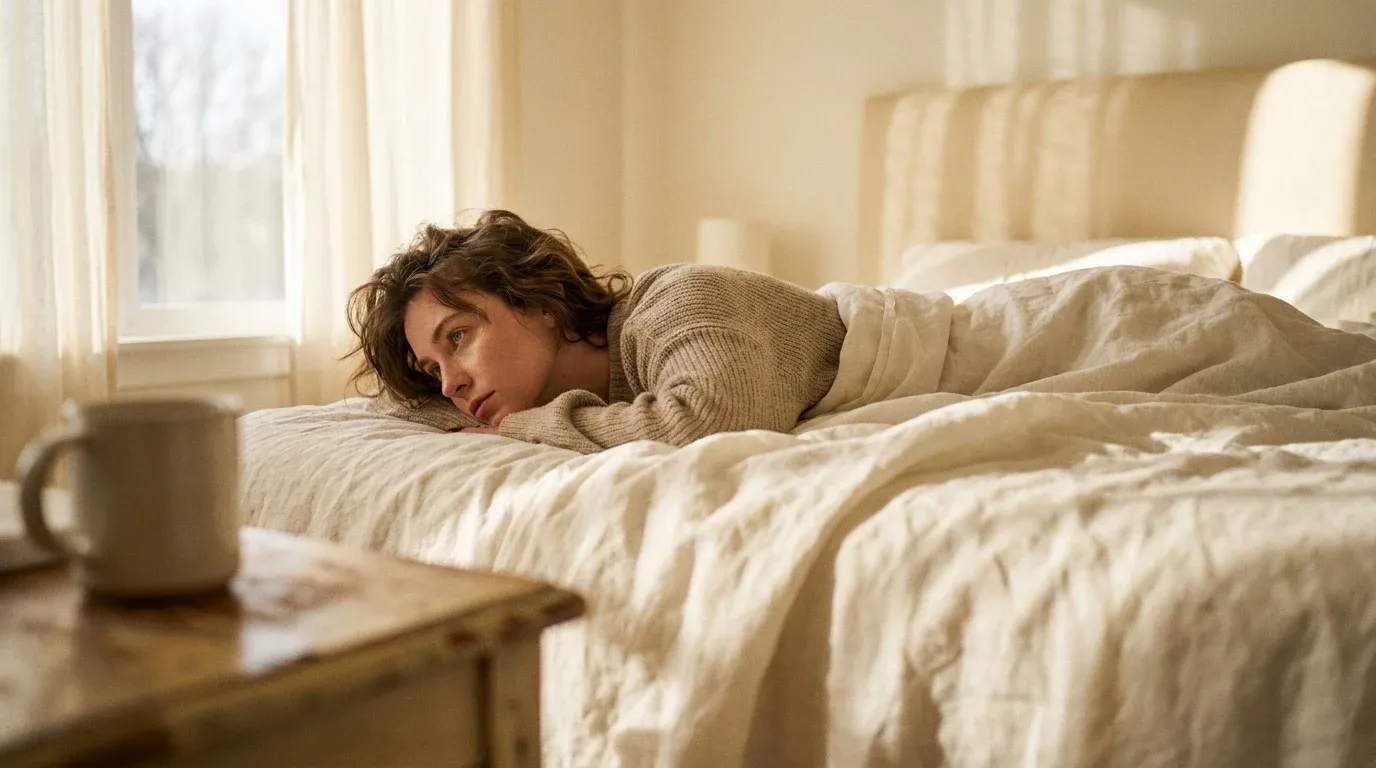
Most people assume that more sleep is always better. If you're dragging through the day, the obvious fix is to sleep longer. But a study from Columbia University Irving Medical Center complicates that picture significantly. It turns out that both ends of the sleep spectrum, too short and too long, accelerate biological aging across multiple organ systems. The goal isn't to maximize sleep. It's to optimize it.
What the Columbia Research Actually Found
Researchers at Columbia University Irving Medical Center analyzed biological aging markers across thousands of adults, measuring what's known as phenotypic age. That's a composite measure of physiological wear derived from biomarkers like inflammation levels, metabolic function, kidney and liver health, and immune system activity. It reflects how old your body actually is, regardless of the number on your birth certificate.
The findings were unambiguous. Adults sleeping fewer than six hours per night showed accelerated biological aging compared to those sleeping seven to nine hours. That part isn't surprising. What caught attention was the other end: people sleeping nine hours or more also showed measurable increases in biological age markers. The aging curve wasn't linear. It was U-shaped.
In other words, there's a biological penalty for sleeping too little, and a separate biological penalty for sleeping too much. Both shortcuts around the optimal window come with a cost your body tracks independently of how old you feel.
Why Oversleeping Isn't a Free Pass
The instinct to sleep in on weekends or extend your hours after a hard week feels logical. Recovery is supposed to be about rest, after all. But chronic long sleep, defined in most research as consistently nine or more hours in adults, correlates with elevated inflammatory markers, reduced cardiovascular efficiency, and changes in glucose regulation that mirror early metabolic dysfunction.
This doesn't mean a single long night damages you. The concern is habitual long sleep as a pattern. Some of the association also runs in reverse: people who are chronically ill or dealing with underlying metabolic conditions naturally sleep longer, which partially explains the correlation. But even when researchers control for illness, the independent association between long sleep duration and accelerated biomarker aging persists.
One hypothesis is that excessive time spent in bed disrupts the architecture of sleep itself. Too much total time can fragment the deep, slow-wave sleep stages that drive cellular repair and memory consolidation. You end up spending more hours lying down but less time in the stages that actually matter. For a deeper look at how specific sleep stages protect cognitive health, deep sleep waves may guard against Alzheimer's by sustaining brain-clearing mechanisms that only activate during the right sleep phases.
The Biological Aging Mechanisms Involved
Sleep doesn't just feel restorative. It performs specific physiological functions that slow down biological aging when they work properly and accelerate it when they don't.
- Inflammation regulation: Cytokine production and inflammatory signaling are partly governed by sleep. Both short and long sleep durations have been linked to higher circulating levels of C-reactive protein and interleukin-6, markers of systemic inflammation that correlate with faster organ aging.
- Metabolic efficiency: Insulin sensitivity drops measurably after even a few nights of short sleep. Chronic long sleep shows similar, if less severe, associations with glucose dysregulation.
- Telomere length: Some studies have found associations between sleep extremes and shorter telomeres, the protective caps on chromosomes whose erosion serves as a biological clock for cellular aging.
- Cardiovascular load: Heart rate variability and blood pressure regulation are both sensitive to sleep duration. The optimal window preserves cardiovascular resilience; the extremes erode it.
- Immune function: Short sleep is well-established as an immune suppressant. But prolonged sleep can also signal immune dysregulation, particularly when it's paired with low physical activity and high sedentary time.
These mechanisms don't operate in isolation. They compound. A person sleeping five hours a night isn't just losing rest. They're running higher inflammation, poorer metabolic function, and reduced cellular repair simultaneously. The biological age gap accumulates faster than most people expect.
What Optimal Sleep Actually Looks Like
The research consensus puts the optimal sleep window for most adults at seven to nine hours per night. But there's meaningful individual variation within that range. Some people genuinely function well at seven hours. Others need closer to eight and a half. Genetics, age, activity level, and health status all shift your personal floor and ceiling.
What matters more than hitting an exact number is sleep quality and consistency. A person sleeping seven hours of uninterrupted, architecturally sound sleep will show better biomarker profiles than someone logging eight and a half hours of fragmented, light-dominated sleep. The stages matter, not just the total.
Consistency across the week also matters more than most people realize. Social jet lag, the pattern of sleeping significantly later on weekends than weekdays, disrupts circadian alignment even when total weekly hours look adequate. Your body responds to timing as much as duration.
Recovery after hard training is another place where sleep optimization pays off directly. The relationship between physical stress and sleep quality runs both ways. For athletes or anyone pushing physical limits, the principles covered in how to actually recover after intense workouts include sleep as a non-negotiable, not an afterthought.
Where Wearables Help and Where They Don't
Consumer sleep trackers have gotten substantially more accurate over the last few years. Devices from Oura, Garmin, Apple, and Whoop now estimate sleep stages, track heart rate variability across the night, and surface trends over weeks and months. For optimizing sleep duration and quality, they offer something genuinely useful: personalized longitudinal data.
Here's what wearables do well. They help you see patterns you'd otherwise miss. Maybe you consistently underestimate how long it takes you to fall asleep. Maybe your deep sleep drops sharply when you have alcohol within two hours of bed. Maybe your heart rate variability tanks every time you sleep under six and a half hours. These insights are hard to gather subjectively but relatively straightforward to track with a device worn nightly.
What they don't do well is measure biological age directly. No consumer device gives you phenotypic age data from a wrist. The research from Columbia used blood-based biomarkers, not accelerometers. Wearables can tell you about sleep architecture and duration trends. They can't tell you your cellular aging rate.
That distinction matters because it's easy to optimize for a wearable score without optimizing for actual health. Chasing a high sleep score while ignoring stress, nutrition, and exercise load misses the point. Sleep is one variable in a larger system. For context on how stress undermines recovery at a physiological level, stress management approaches that are actually backed by evidence address the same nervous system pathways that regulate sleep quality.
Practical Steps to Hit the Optimal Window
Given what the Columbia research shows, the practical goal is straightforward: keep your nightly sleep duration consistently between seven and nine hours, protect sleep architecture, and reduce sources of disruption. Here's how to approach that concretely.
- Set a consistent wake time first. Most people find it easier to anchor their sleep schedule around a fixed wake time rather than a fixed bedtime. Work backward from when you need to be up and protect the preceding seven to eight and a half hours.
- Audit your sleep environment. Room temperature between 65 and 68 degrees Fahrenheit supports the core body temperature drop that deepens sleep stages. Blackout curtains and low ambient noise reduce the micro-arousals that fragment architecture without fully waking you.
- Watch the late-night inputs. Alcohol, heavy meals, and high-intensity exercise within two hours of bed all interfere with sleep staging. They may not keep you awake, but they reduce deep sleep proportion.
- Treat long sleep as a signal, not a solution. If you're regularly needing more than nine hours and still waking unrefreshed, that's a symptom worth investigating. It often points to sleep apnea, poor sleep quality, or an underlying health variable rather than simply "needing more rest."
- Support sleep with nutrition. Magnesium plays a documented role in sleep onset and maintenance. Different forms of magnesium have meaningfully different effects, and choosing the right one matters if you're using it specifically to improve sleep quality.
- Don't treat rest days as sleep extensions. It's tempting to use days off from training as catch-up sleep days. Occasional extension is fine. Chronic oversleeping on non-training days shifts your circadian rhythm and reduces sleep pressure for the following night. The science behind active recovery versus complete rest days is relevant here: staying lightly active on rest days often improves the following night's sleep quality more than lying in does.
The Takeaway
The Columbia University research reframes sleep optimization in a way that matters practically. It's not about sleeping as much as possible. It's about staying consistently within the window where your body's repair processes run efficiently, without the disruptions that come from both ends of the extreme.
Seven to nine hours, high architectural quality, consistent timing. That's the target. Wearables can help you track where you actually land versus where you think you do. Blood-based biomarkers, available through some longevity clinics and primary care providers, can show you whether your habits are translating into measurable biological outcomes.
Your chronological age is fixed. Your biological age is not. Sleep duration is one of the few variables you can adjust starting tonight.