
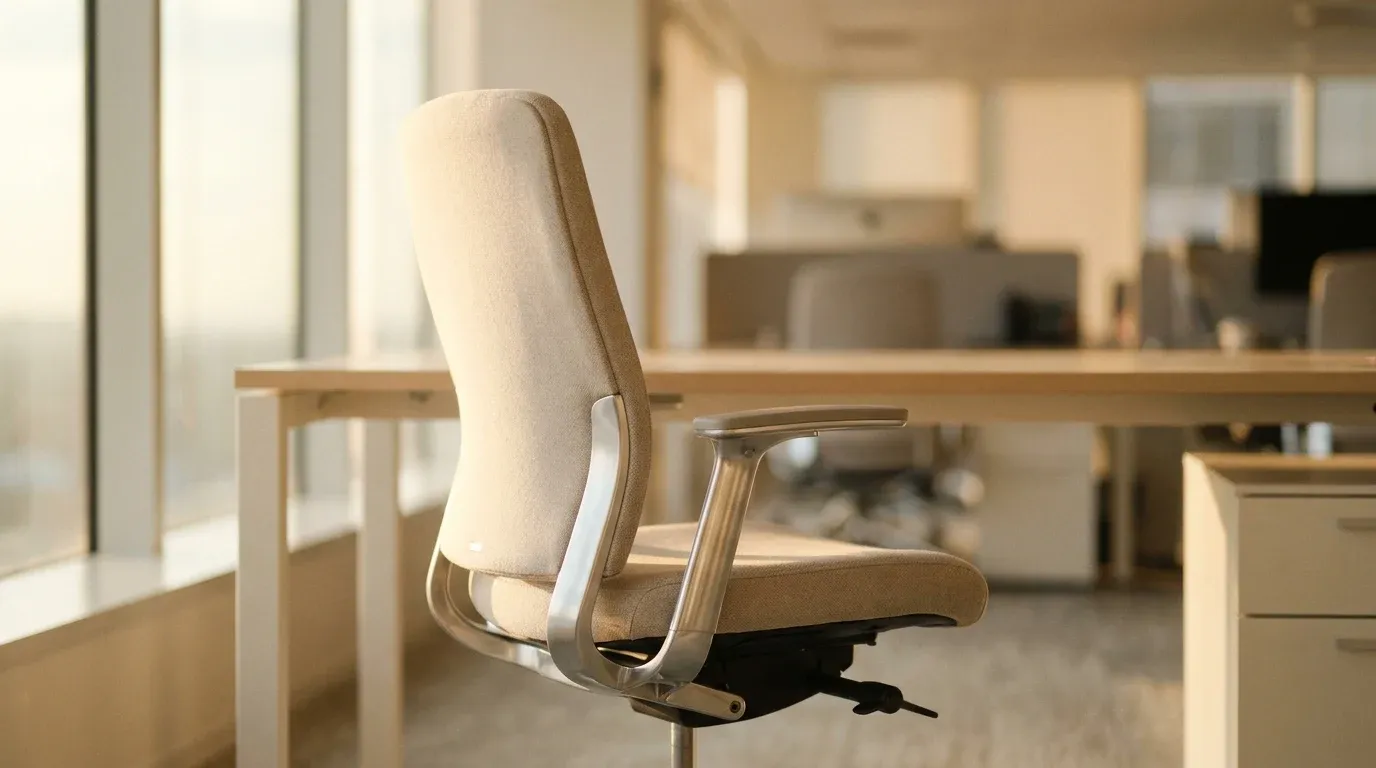
There's a line item missing from most corporate safety audits. It's not a niche hazard or an edge case. It's the chair you're sitting in right now, and the way it's set up for your body. According to an occupational health report published on September 12, 2026, seating ergonomics is the single most frequently missed item in workplace safety inspections across industries. That gap isn't just a procedural oversight. It's a financial liability that most organizations haven't begun to quantify.
The consequence of that omission shows up in your workforce's health data, your absenteeism rates, and your disability claim costs, whether or not your safety team has connected those dots yet.
Why Seating Keeps Getting Skipped
Safety audits are built around visible, immediate hazards. Slip risks, electrical faults, fire exits. Ergonomic risk from poor seating is cumulative and invisible until it becomes a clinical problem, which makes it easy to deprioritize in a structured audit checklist. The September 2026 report identifies this as a systematic blind spot: because seating risk isn't being assessed, it isn't being quantified. And because it isn't quantified, it never makes it into the budget.
That's a structural problem. When a hazard has no assigned risk score, it doesn't generate a corrective action. When there's no corrective action, there's no spend. When there's no spend, the hazard compounds quietly across every desk in every office, accumulating strain in the bodies of the people doing your organization's work.
The gap is especially significant for HR and facilities managers. These are the professionals closest to both the physical environment and the workforce health data. Yet according to the same report, most have no formal protocol for evaluating seating setup during routine compliance reviews. The oversight isn't intentional. It's a design flaw in how safety frameworks have historically categorized ergonomic risk.
Musculoskeletal Disorders: The Direct Cost You're Carrying
Musculoskeletal disorders (MSDs) are the clinical outcome of sustained poor posture and inadequate seating support. They include lower back pain, cervical strain, shoulder impingement, and repetitive stress conditions affecting the wrists, elbows, and forearms. In desk-worker populations, MSDs are among the top drivers of both absenteeism and short-term disability claims.
keedia has previously reported that 56% of desk workers report low back pain as an ongoing issue. That figure is striking on its own. Viewed through the audit lens established by the September 2026 report, it becomes more alarming. If more than half your seated workforce is experiencing low back pain, and your safety audit has never formally assessed the seating conditions contributing to it, you're carrying a known, measurable health risk with no mitigation plan on record.
From a liability standpoint, that exposure is significant. Employers have a documented duty of care around workplace ergonomics in the US, UK, Canada, and Australia. Failure to assess and address ergonomic risk doesn't just affect worker health. It creates a compliance vulnerability that can surface during workers' compensation claims, labor inspections, or litigation.
MSDs generate direct costs through claims, temporary replacement staffing, and long-term disability payments. They also generate indirect costs through reduced output, decreased concentration, and the physical fatigue that compounds across an eight-hour seated workday. These costs are rarely attributed to chair setup in organizational reporting, but the causal link is well established in occupational health literature.
Behavioral Ergonomics: Reframing the Investment
A September 2026 analysis by SmartErgo repositions ergonomic investment in terms that finance and operations teams are more likely to respond to. Rather than framing improved seating as a wellness perk, the analysis frames it as a healthcare spend reduction strategy, with return on investment expressed in avoided claims and reduced absenteeism costs.
That framing matters. Wellness perks are discretionary. Healthcare cost avoidance is a line item with measurable ROI. When ergonomic chairs, posture support tools, and movement protocols are evaluated against the cost of a single short-term disability claim, the math tends to favor prevention decisively. A mid-range ergonomic chair priced between $300 and $700 is substantially less expensive than a single MSD-related workers' compensation claim, which can run into thousands of dollars when medical costs, lost productivity, and administrative overhead are included.
The SmartErgo analysis also introduces the concept of behavioral ergonomics, the idea that seating improvements only deliver their full benefit when paired with behavioral protocols. Employees who have access to adjustable chairs but don't know how to set them correctly, or who don't take scheduled movement breaks, capture only a fraction of the ergonomic benefit. The intervention has to include both the physical tool and the behavioral framework around it.
This connects to broader workplace wellbeing strategies. Organizations that are already investing in mental health and burnout prevention, areas covered in depth in keedia's reporting on mindful breathing as a burnout intervention HR is currently underusing, are well positioned to layer ergonomic protocols into existing wellness infrastructure. The integration is practical, not aspirational.
What Poor Seating Actually Does to the Body
Understanding the physiological mechanism helps clarify why seating ergonomics deserves formal risk classification. When a chair doesn't support the natural lumbar curve, the lower back muscles engage continuously to compensate for the lack of structural support. Sustained low-level muscle activation across hours of seated work leads to fatigue, inflammation, and over time, tissue breakdown.
Poor seat height creates hip flexor tension that radiates into the lower back and glutes. Armrests set at the wrong height force shoulder elevation, which produces upper trapezius and cervical strain. A monitor positioned too low encourages forward head posture, placing significant load on the cervical spine. None of these are acute injuries. All of them accumulate.
Fatigue is another underreported consequence. Workers in poor ergonomic conditions report higher levels of physical tiredness by mid-afternoon, which directly reduces cognitive output and decision-making quality in the hours that most organizations consider peak productivity time. If you're managing a team of knowledge workers, the cost of that fatigue isn't trivial.
Research on what the science actually supports around desk exercise and movement breaks reinforces that no amount of movement intervention fully compensates for a poorly configured seated environment. Movement breaks reduce risk, but they work best when the baseline seating setup is already sound.
Practical Interventions That Scale
The good news is that effective ergonomic intervention doesn't require a full office redesign or a significant capital commitment. Here's what the evidence supports as scalable, cost-effective approaches:
- Adjustable chairs with lumbar support. A quality adjustable chair, properly set up, is the highest-leverage single intervention. Seat height, lumbar depth, and armrest height should all be configurable. Budget-range ergonomic chairs start around $150 to $200, with mid-range options between $300 and $700 delivering substantially better long-term support.
- Sit-stand desk options. Sit-stand desks reduce total seated time and give workers postural variation across the day. They don't replace chair ergonomics but work effectively in combination. Electric height-adjustable desks are available from around $400 to $900 for quality commercial options.
- Scheduled posture check protocols. A structured reminder system, whether through software prompts, team check-ins, or a posted reference guide, significantly improves the consistency with which employees use ergonomic tools correctly. This costs nothing beyond the time to implement.
- Ergonomic assessment access. Providing employees with access to a brief ergonomic assessment, either through a trained internal point of contact or a third-party occupational health provider, ensures that equipment is configured for individual body dimensions rather than assumed defaults.
- Footrests and monitor risers. For workers whose feet don't rest flat on the floor, or whose monitors sit too low, these low-cost accessories address common setup failures that adjustable chairs alone can't correct.
Sleep quality and stress recovery also interact with musculoskeletal health in ways that compound over time. Employees managing chronic back pain sleep less effectively, enter work already fatigued, and are less resilient to additional physical strain during the workday. keedia's reporting on sleep and stress management for busy professionals is directly relevant to workers whose physical discomfort is disrupting their recovery outside working hours.
The Audit Gap Is Also a Leadership Signal
When seating ergonomics doesn't appear on a safety audit, it tells employees something about how their physical experience of work is being valued. That signal matters more than most organizations realize. Discomfort that goes unaddressed becomes resentment. Resentment affects engagement. Engagement affects retention. The chain from "we never fixed the chair issue" to "we're losing people we didn't expect to lose" is shorter than it looks.
For HR teams already working to demonstrate that employee wellbeing is a strategic priority, ergonomic audit integration is a concrete, evidence-backed action they can implement with clear metrics attached. Reduced MSD-related claims. Lower absenteeism in desk-worker populations. Improved self-reported comfort scores. These are reportable outcomes that connect directly to organizational health costs.
Employees who feel physically supported in their work environment are also more likely to engage with complementary wellness investments, including mindfulness programming and stress management resources. Organizations looking to understand the evidence base for those adjacent interventions will find a thorough review in keedia's coverage of what workplace meditation science actually proves.
The chair in your office has been on the wrong side of the audit checklist for too long. The September 2026 report didn't identify a new problem. It named one that's been generating cost in plain sight. Closing that gap starts with putting it on the list.