
You go to the gym three times a week. You hit your step count on most days. By every conventional wellness metric, you're doing the right things. But if you spend eight to ten hours a day seated at a desk, a new body of research suggests your workouts are covering far less ground than you think.
A comprehensive analysis published November 14, 2026 confirms what earlier studies have been pointing toward for years: prolonged sitting is an independent health risk. That means it doesn't matter how hard you train outside of work. The hours you spend sedentary carry their own biological consequences, and exercise alone does not fully erase them.
Sitting Is Its Own Risk Factor
The November 2026 analysis examined cardiovascular outcomes, metabolic markers, cancer incidence, and mortality data across large adult populations. The finding that keeps surfacing is consistent: people who sit for extended periods each day face elevated risk of heart disease, type 2 diabetes, certain cancers, and premature death, even when they meet weekly physical activity guidelines.
This isn't a marginal difference. Prolonged sedentary time was associated with meaningfully higher risk across all these categories, independent of exercise volume. The mechanism involves what happens to your body when it stays still for long stretches: insulin sensitivity drops, lipid metabolism slows, and vascular function degrades. These are processes that an hour at the gym later in the day does not simply reverse.
Weight gain enters the picture too. When you sit for hours, your body burns fewer calories than it would during low-level movement, and the hormonal environment shifts in ways that promote fat storage. The cumulative effect across months and years is significant.
The 30-Minute Threshold Changes Everything
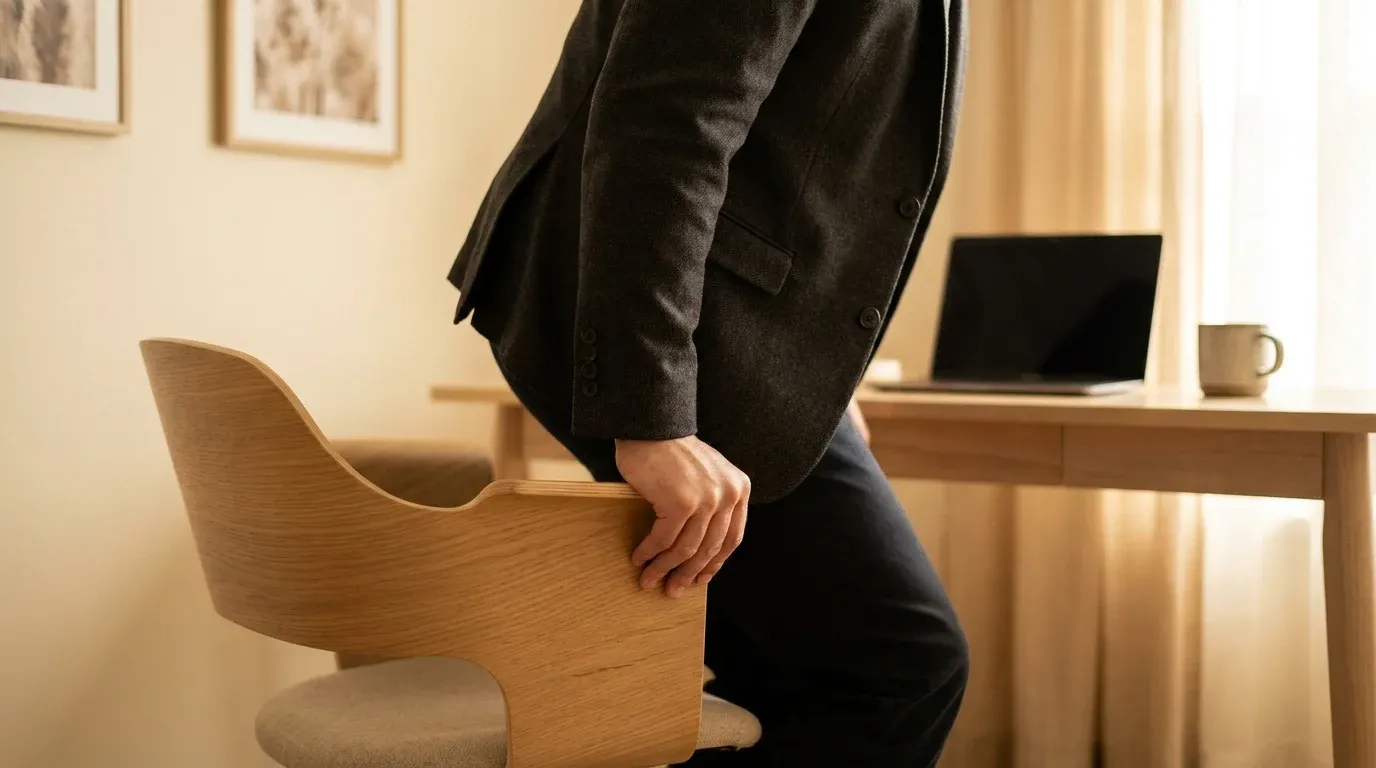
Here's where the research gets specific and actionable. The critical intervention point is not your daily step count or whether you squeezed in a lunchtime run. It's whether you're interrupting sitting every 30 minutes.
Breaking sedentary time at roughly half-hour intervals, even with just two to five minutes of light movement, appears to blunt the metabolic and cardiovascular damage that accumulates during prolonged sitting. Post-meal blood glucose levels, blood pressure, and markers of vascular stress all respond favorably to these short interruptions. The body doesn't need intense effort. It needs movement signals at regular intervals throughout the day.
This reframes the entire conversation. You can read about how to break up sitting at work and what the science actually recommends in practical terms, but the core principle is straightforward: frequency of movement matters more than intensity, and the threshold that triggers protective effects is 30 minutes, not the duration of your evening workout.
Why Gym Subsidies Are the Wrong Answer
Corporate wellness spending in the US runs into the billions annually. A significant portion goes toward gym membership subsidies and fitness app partnerships. These are not worthless investments, but they're addressing roughly one hour of an eight-to-ten hour sedentary exposure window. For most desk workers, that math doesn't hold up.
If an employee sits from 9am to 6pm with minimal movement, then attends a 45-minute spin class after work, the net result is still approximately eight hours of uninterrupted or minimally interrupted sedentary time during the day. The gym session adds genuine value for fitness and mental health. But it cannot retroactively undo the metabolic drift that accumulated during the workday.
This is not an argument against exercise. Research on brief daily exercise achieving meaningful health outcomes shows that even small doses of intentional movement matter enormously. But those benefits layer on top of a base level of daily activity. When the base is eight hours of sitting, you're starting from a deficit that gym time alone can't close.
Employers who want to actually move the needle on workforce health need to redesign the sedentary environment, not just fund access to exercise outside of it.
What the Workday Actually Needs
Structural fixes exist, and several have enough evidence behind them to be worth implementing at scale. These aren't wellness gimmicks. They're design decisions about how work gets done.
- Walking meetings: Any meeting that doesn't require screen sharing or collaborative document work can happen on foot. For one-on-ones and brainstorming sessions, a 20-minute walk is functionally equivalent to a conference room, with better circulation and, in many cases, better thinking. Teams that build walking meetings into their culture report less afternoon fatigue and higher engagement scores.
- Mandatory movement prompts: Calendar-integrated reminders set at 30-minute intervals are low-tech and effective. Some organizations are building these into their existing communication platforms so that movement breaks appear as scheduled events rather than optional suggestions. The distinction matters. Optional suggestions get ignored under deadline pressure.
- Activity-permissive meeting culture: This means explicitly normalizing standing, stretching, or walking in place during calls. When this behavior is modeled by managers and built into team norms, participation rates climb significantly. When it's left to individual initiative, most people sit through every meeting regardless.
- Task-switching protocols: Designing the workday so that transitions between tasks involve a physical reset. Standing up between finishing one document and opening another, walking to a colleague instead of messaging them, using a standing desk for one category of work and a seated setup for another. These micro-decisions add up across a full day.
Height-adjustable desks are part of this picture but only if they're actually used. Studies consistently find that sit-stand desks in offices reduce sitting time by 60 to 90 minutes per day on average, which is meaningful. The challenge is adoption. Without reinforcement from team culture and manager behavior, stand-desk usage drops off significantly within the first few months of implementation.
Remote and Hybrid Work Makes This Harder
Office environments, for all their friction, do generate incidental movement: walking to a meeting room, going to the kitchen, moving between floors. Remote work strips most of that out. The commute disappears, and with it, whatever walking it involved. Bathroom and kitchen are steps away. The result, for many people, is a workday that's even more sedentary than an office one.
This compounds other challenges that come with distributed work. Research on remote work and its psychological costs already points to meaningful risks around isolation and mental health. Add a physical environment that removes natural movement cues, and you have a situation that wellness programs designed around gym access are poorly equipped to address.
Remote workers need location-specific strategies: designated movement zones in their home, scheduled outdoor walks at defined points in the day, and home office setups that make it physically easier to alternate between sitting and standing. The absence of colleagues and physical office architecture means these behaviors have to be more deliberately engineered.
The Health Cost Nobody Is Tracking
Prolonged sitting is not framed as an occupational health issue the way repetitive strain injury or chronic stress is. But the evidence now justifies that framing. Occupational stress accelerates biological aging in measurable ways. Prolonged sedentary work exposure appears to operate through overlapping pathways, affecting inflammatory markers, insulin regulation, and cardiovascular function in ways that compound over years of desk-based work.
The organizations best positioned to address this are those that treat sedentary exposure as an environmental design problem rather than a personal responsibility problem. When employees are expected to manage their own movement within a workday that's structured entirely around sitting, most won't. The environment wins.
When the environment is redesigned, with 30-minute movement norms built in, with walking meetings on the calendar, with standing as a default option rather than an exception, behavior shifts without requiring heroic individual effort.
What You Can Do Right Now
If your employer hasn't caught up to this yet, your own workday structure is still within your control. Set a 30-minute timer and treat it as non-negotiable. Stand up, walk to the window, do a brief stretch, refill your water. The activity doesn't need to be intense. It needs to happen.
Build movement into your existing work transitions rather than adding new habits on top of an unchanged schedule. Finish a document, stand up. Join a call, stand up. These micro-decisions don't require willpower once they're linked to existing cues.
And keep exercising. The gym session, the morning run, the lunchtime yoga class. all of it still matters. Regular exercise delivers benefits that movement breaks can't replicate: cardiovascular conditioning, muscle development, bone density, and mental health support. Research into how explosive physical activity supports bone health is one example of why structured exercise remains worth protecting in your schedule.
But exercise is not a substitute for reducing sedentary time during the workday. It never was. The November 2026 analysis makes that case with enough force that it should finally change how employers, HR teams, and individuals think about what a healthy workday actually looks like.
Thirty minutes. That's your intervention threshold. Set the timer.