
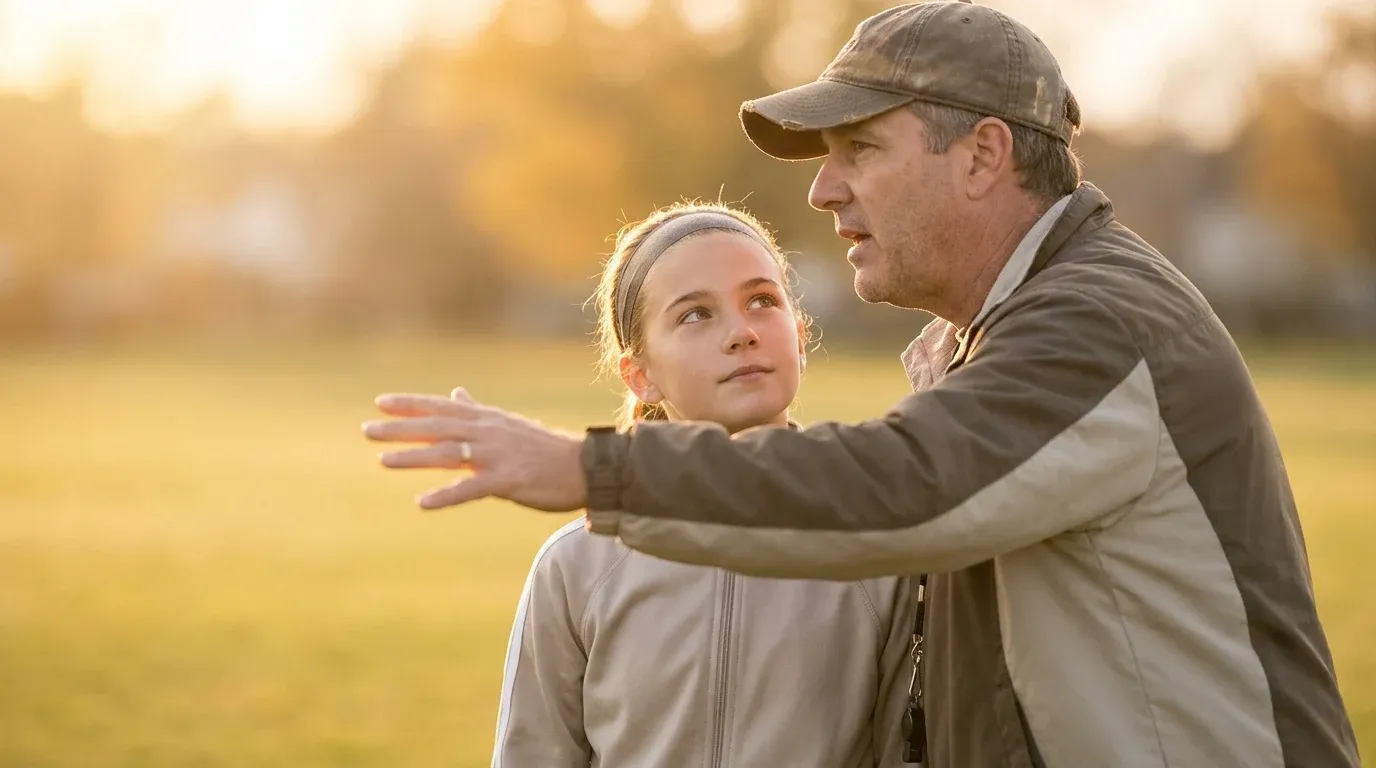
Youth sport dropout is a real and persistent problem. Research consistently shows that roughly 70% of young athletes quit organized sports by age 13. The reasons vary, but three factors appear repeatedly in the data: a lack of enjoyment, low confidence, and feeling socially disconnected from the team. Each of these is something you, as a coach, can directly influence.
This isn't about being soft or lowering standards. It's about understanding what actually keeps young people engaged long enough to develop skill, resilience, and a lifelong relationship with physical activity. Here are three evidence-informed strategies you can put into practice tomorrow.
1. Celebrate Small Progress to Build Real Motivation
Most youth coaches spend the majority of their feedback time correcting errors. That's understandable. You're trying to improve performance. But when correction outweighs recognition, young athletes, especially those still developing basic competence, start to associate training with failure rather than growth.
The science behind this is straightforward. Intrinsic motivation, the kind that keeps people doing something because they genuinely want to, grows when individuals feel a sense of progress and competence. Self-determination theory, one of the most replicated frameworks in sports psychology, identifies perceived competence as a core psychological need. When athletes feel they're getting better, even incrementally, they want to keep going.
The practical implication is simple: you need to notice small wins and say them out loud. A 12-year-old who finally keeps their elbow up on a freestyle stroke deserves the same energy as the swimmer who just dropped three seconds off their personal best. Progress is progress, and your job is to make it visible.
- Set session-level micro-goals. Before practice, identify one technical focus per athlete or per group. At the end of the session, acknowledge who hit it.
- Use effort-based feedback first. "You stayed focused through the whole drill" lands differently than a generic "good job." It tells the athlete what you actually saw.
- Keep a simple progress log. Even a whiteboard with weekly wins creates a visual record that young athletes genuinely respond to.
This approach connects naturally to how coaches structure progressive skill development over time. If you're looking for a framework on how to communicate gradual progression to athletes of any age, Progressive Overload: How to Explain It So Clients Get It offers a practical breakdown you can adapt to youth settings.
One important caveat: avoid empty praise. Young athletes know when you're being genuine. The goal isn't to hand out compliments for breathing. It's to train your own eye to catch real moments of growth, then name them specifically.
2. Create a Body-Positive Environment to Reduce Dropout in Girls
Girls drop out of sport at significantly higher rates than boys during adolescence. Multiple studies point to body image as a central factor. As physical development accelerates in early teenage years, many girls become acutely self-conscious, particularly in sports where bodies are visible, compared, or commented on.
A coach who casually comments on an athlete's weight, even positively, can do lasting damage to that athlete's relationship with sport and with their body. Equally, a culture where teammates make size-related comments without correction sends a clear message: this environment isn't safe for you.
Creating a body-positive training environment doesn't mean ignoring health or performance. It means shifting the focus from how bodies look to what bodies can do.
- Audit your language. Remove weight-related and appearance-related comments from your coaching vocabulary entirely. Focus feedback on function: strength, speed, endurance, technique.
- Frame nutrition as fuel, not control. When the topic of eating comes up, frame it around performance capacity. What does your body need to do what you're asking it to do?
- Address peer comments immediately. If an athlete makes a remark about another's body, correct it calmly and without embarrassing the speaker. Set the norm clearly and early in the season.
- Celebrate physical capability out loud. "Look how much more power you're generating off that turn" reinforces that strength and capacity are what matter here.
Research published in sports medicine literature suggests that athletes in body-positive environments report significantly higher enjoyment, stronger team cohesion, and lower rates of disordered eating behaviors. These aren't soft outcomes. They're directly tied to long-term participation and physical health.
It's also worth understanding the broader stress physiology at play during adolescent sport. Recovery, sleep, and nervous system regulation all affect how young athletes experience their bodies during training. Mobility as a Stress Tool: What Science Actually Shows is a useful resource for coaches thinking about the physical and psychological demands placed on developing athletes.
3. Recognize Team Culture Contributors, Not Just Performers
Youth sport has a recognition problem. The athletes who win awards, get playing time, and receive public praise are almost always the highest performers. That's logical from a results standpoint. But it creates a silent message for everyone else: if you're not winning, you don't matter here.
Social belonging is one of the strongest predictors of long-term sport participation. Young people who feel genuinely connected to their team, who feel seen and valued, are far more likely to stick with sport through the difficult developmental years. And the research is clear that belonging doesn't only come from performance recognition.
Some of your most valuable athletes are the ones who set up cones without being asked, who encourage a teammate who missed a shot, who show up early and stay late. These behaviors build team culture from the inside. When you acknowledge them publicly, you do two things at once: you reinforce that behavior, and you signal to every athlete watching that there are multiple ways to matter on this team.
- Introduce a weekly "culture recognition" moment. At the end of practice, name one athlete who demonstrated a team-first behavior and describe exactly what you saw. Keep it brief and genuine.
- Ask athletes to nominate peers. A short peer-recognition round once a month gives athletes agency and deepens awareness of how teammates contribute.
- Define your culture values explicitly. You can't recognize what you haven't named. At the start of the season, work with your team to identify two or three values, things like accountability, encouragement, or resilience, and refer back to them throughout the year.
- Make sure recognition reaches diverse athletes. Track who you're recognizing over time. If the same four athletes keep appearing, that's a signal to look more broadly.
This approach is especially powerful for athletes who are still developing physically. A 14-year-old who isn't yet the strongest or fastest player but who leads by example in practice is building a foundation that will serve them well beyond sport. Recognizing that openly keeps them in the room.
It also benefits the athletes who are high performers. When your best player sees that being a good teammate is valued alongside being skilled, it reinforces healthy competitive values and reduces the kind of ego-driven dynamics that fracture team cohesion.
How These Three Strategies Work Together
Small progress recognition builds individual confidence. A body-positive environment builds safety. Team culture recognition builds belonging. Together, they address the three most common reasons young athletes quit: feeling like they're not improving, feeling uncomfortable in their body, and feeling like they don't belong.
None of these strategies require extra time or resources. They require a shift in attention. You're already watching your athletes every session. The question is what you're choosing to notice and what you're choosing to say out loud.
Coaches who get this right aren't just producing better short-term performances. They're creating athletes who return to sport as adults, who coach the next generation, and who carry the physical and psychological benefits of sport through their entire lives. That's an outsized return on a few intentional words at the end of practice.
If you work with athletes across different age groups and are thinking more broadly about how physical capacity develops over time, Why Your Muscles Lose Strength as You Age offers useful context on the neuromuscular factors that shape performance at different life stages.
The young athlete who stays in sport becomes the adult who stays active. Your influence doesn't end when the season does.