
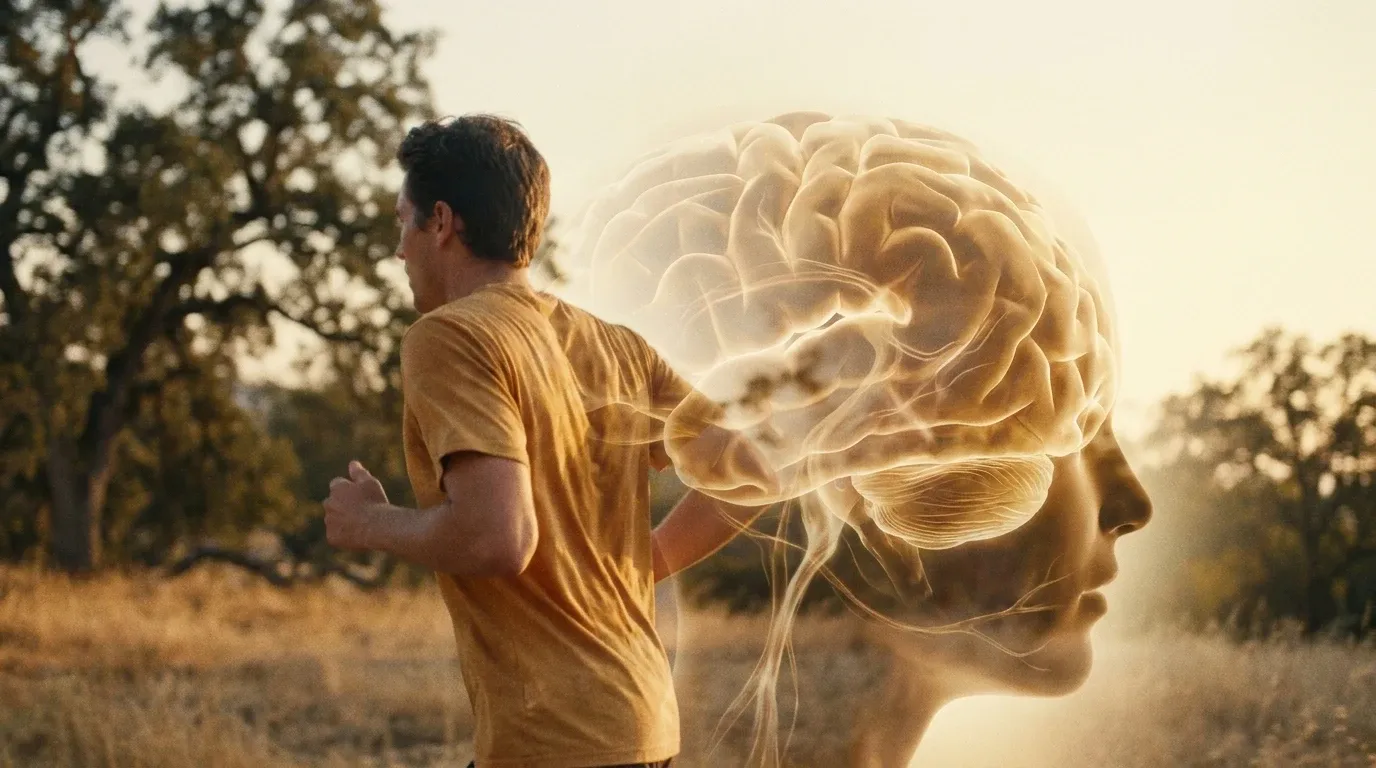
For decades, researchers have known that aerobic exercise is good for your brain. What they couldn't do was show you exactly what happens inside it. A study published September 2, 2026, from researchers at Japan's National Institute of Advanced Industrial Science and Technology (AIST) and the University of Texas Southwestern Medical Center changes that. For the first time, scientists have clearly visualized how a single aerobic session reshapes regional brain activity during cognitive tasks.
The implications reach well beyond academic curiosity. This is the kind of mechanistic clarity that turns a wellness recommendation into a clinical tool, and it strengthens the case for cardio as a frontline strategy against cognitive decline.
Why Previous Research Left Us Guessing
Here's the problem that plagued earlier studies: when researchers scanned participants' brains before and after exercise, they couldn't cleanly separate two competing effects. Did the brain changes they observed come from the exercise itself? Or were they simply the result of doing the same cognitive task a second time? Practicing any task changes how your brain processes it, a phenomenon called practice effects or task repetition effects. Without controlling for that, you can't trust what you're seeing.
This methodological gap wasn't a minor quibble. It clouded the entire body of literature on acute exercise and cognition. Studies produced inconsistent results, and critics had legitimate grounds to question whether the reported brain changes were real exercise effects at all.
The AIST and UT Southwestern team designed their study specifically to close that gap. By carefully isolating the exercise condition from the repetition condition, they were able to attribute observed changes in regional brain activity directly to the aerobic session itself. That's the breakthrough here, not just that exercise affects the brain, but that science can now prove which effects belong to the exercise.
What the Scans Actually Revealed
Using neuroimaging conducted during cognitive task performance, the researchers identified distinct patterns of regional brain activity that emerged after a single bout of aerobic exercise. The changes were not uniform across the brain. Specific regions shifted their activation levels in ways that tracked with improved cognitive performance, and those shifts were measurably different from what task repetition alone produced.
The prefrontal cortex, which governs executive function, decision-making, and working memory, showed particularly notable changes. So did regions involved in attention and processing speed. What this tells you is that cardio isn't producing a vague, generalized "brain boost." It's doing targeted work in exactly the areas that deteriorate earliest and most significantly in conditions like Alzheimer's disease.
That specificity matters enormously for the dementia prevention conversation. Interventions that can be shown to activate the right brain regions through a credible mechanism carry far more weight with clinicians and policymakers than broad claims about exercise being healthy.
One Session Is Enough to Measure a Change
One of the most practically useful findings from this research is that you don't need months of training to see neurological effects. A single aerobic session produced measurable changes in brain activity patterns. That's not to say chronic training doesn't matter, it absolutely does, and long-term adaptations are deeper and more durable. But the acute effect is real and detectable.
This has direct relevance to how you think about consistency. Every cardio session contributes something to your brain, not just your cardiovascular system. Skipping a workout isn't neutral. And starting a cardio habit, even imperfectly, begins producing neurological benefits immediately.
If you've been focused primarily on body composition or cardiovascular fitness as your motivation to train, brain health is now a fully evidence-backed reason to add to the list. The research is no longer inferential. It's visual.
Why This Matters for Dementia Prevention
Dementia prevention is one of the most urgent public health challenges of this decade. With global dementia cases projected to nearly triple by 2050, identifying modifiable risk factors and effective interventions is critical. Exercise has long appeared on prevention checklists, but its inclusion was based largely on epidemiological associations rather than mechanistic proof.
That's changing. This study is part of a growing body of work that moves exercise from "associated with lower dementia risk" to "demonstrably alters the brain systems most vulnerable to dementia." That's a significant shift in the strength of the evidence, and it matters for how exercise is discussed in clinical settings, public health campaigns, and insurance frameworks.
It's also worth noting that exercise operates through multiple overlapping pathways. Increased cerebral blood flow, elevated BDNF (brain-derived neurotrophic factor), reduced neuroinflammation, and now, clearly documented changes in regional activation patterns. The convergence of these mechanisms makes the case harder to dismiss and easier to act on.
For context, the rigorous methodology here is exactly what separates credible exercise science from the kind of poorly controlled supplement studies that have muddied health research for years. If you want to understand how to evaluate research quality across health topics, Funding Bias in Supplement Research: How to Spot It breaks down the red flags worth knowing.
What Type of Cardio, and How Much?
The study used aerobic exercise as its intervention, but the published findings don't make a strong case for one specific modality over another. Running, cycling, rowing, and swimming all qualify. What the research points to is sustained aerobic effort, the kind that elevates your heart rate into a moderate-to-vigorous zone for a meaningful duration.
Current public health guidelines recommend at least 150 minutes of moderate-intensity aerobic activity per week, or 75 minutes of vigorous activity. For brain health specifically, some researchers have suggested that sessions lasting 20 to 30 minutes at moderate-to-vigorous intensity are sufficient to trigger the acute neurological effects observed in studies like this one.
Intensity and hydration also interact in ways that affect both performance and recovery. If you're running or doing sustained cardio, Why Sodium Changes Everything About Runner Hydration explains why electrolyte balance matters more than most people realize, especially as session duration increases.
Stacking the Benefits: What Else Supports Brain Health
Cardio doesn't operate in isolation. Recovery quality, sleep, and complementary wellness practices all influence how effectively your brain consolidates the benefits of exercise. The neurological gains from a workout don't arrive during the session itself. They're processed and reinforced afterward, which is why recovery is part of the equation.
Emerging research on heat exposure offers one parallel worth tracking. The Sauna Mood Effect: What's Really Happening in Your Brain covers the neurological mechanisms behind heat-based recovery, some of which overlap with the pathways activated by aerobic exercise, particularly those involving mood regulation and stress response.
Sleep quality is the other major variable. Brain clearance of metabolic waste, including amyloid proteins associated with Alzheimer's risk, happens primarily during sleep. If you're training consistently but sleeping poorly, you're limiting the returns on your effort. The science on this is covered in depth in Sleep Debt Recovery: What Actually Works.
The Practical Takeaway
You don't need to wait for a perfect program or ideal conditions to start protecting your brain with cardio. The evidence now supports that even a single session shifts your brain's activity in meaningful, measurable ways. The key variables are simple: get your heart rate up, sustain the effort for at least 20 to 30 minutes, and do it regularly.
If you're rebuilding your training after a gap or restructuring your weekly schedule, September Strength Reset: Rebuild Your Program Right offers a structured approach to reintroducing consistent training in a way that's sustainable.
The bigger picture here is that the science on exercise and brain health is maturing fast. What was once a hopeful association is becoming a documented mechanism. Cardio was already worth doing. Now you can see exactly why.