
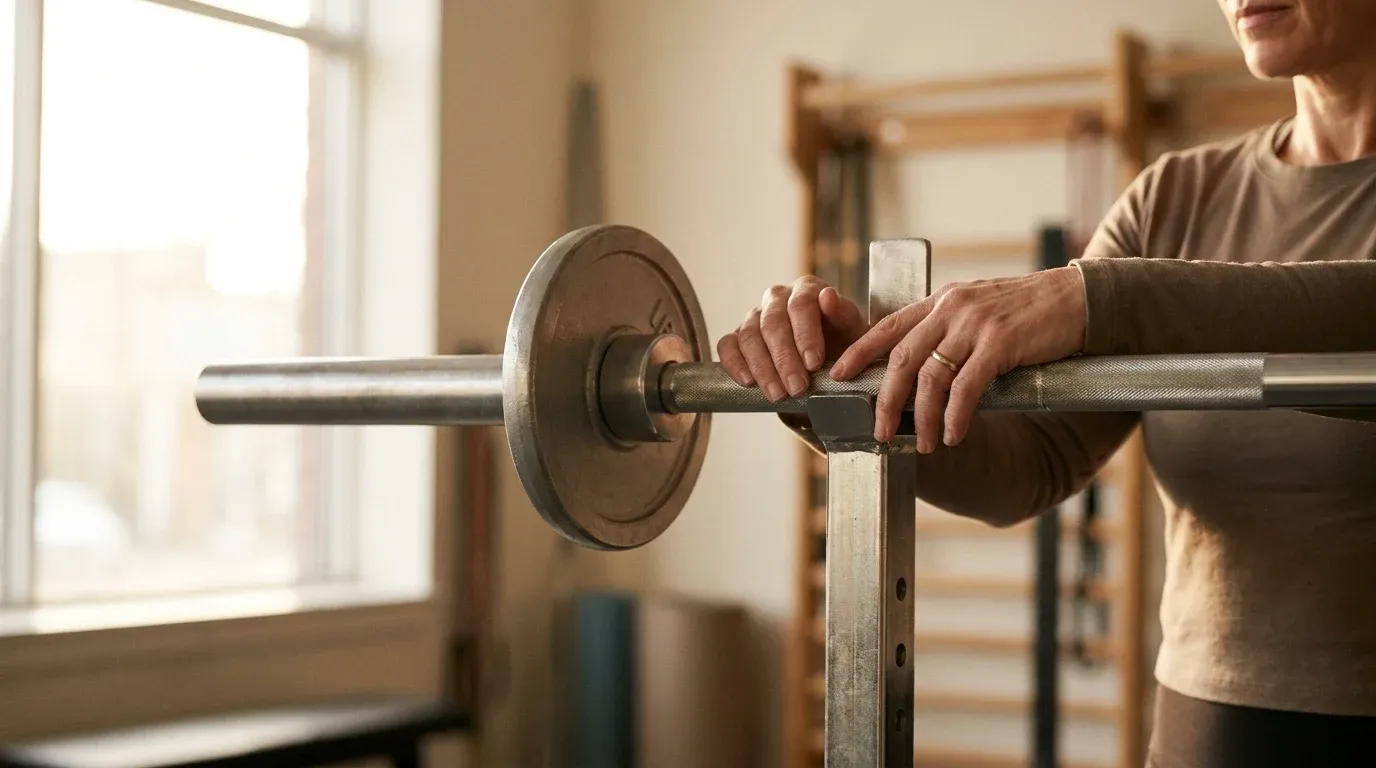
Every October 20th, World Osteoporosis Day puts a spotlight on a condition that quietly affects over 200 million people worldwide. This year, guidance from Cleveland Clinic sports medicine researchers reinforces what the evidence has been building toward for decades: lifting weights isn't just for aesthetics or athletic performance. It's one of the most powerful tools you have to protect your skeleton for life.
If you've been treating strength training as optional, this is the moment to reconsider.
Why Bone Density Declines and When It Starts
Bone is living tissue. It's constantly being broken down by cells called osteoclasts and rebuilt by cells called osteoblasts. In your twenties and early thirties, this process stays roughly balanced. After that, the balance starts to tip. Bone mass begins declining gradually, and for women, that decline accelerates sharply after menopause due to the drop in estrogen, a hormone that plays a direct role in regulating bone turnover.
By the time a woman reaches her mid-sixties, she may have lost 30 to 40 percent of her peak bone density. Osteoporosis. the point where bone becomes porous and fracture-prone, isn't a sudden event. It's the endpoint of decades of gradual loss. Which is exactly why the decisions you make in your forties and fifties matter so much.
Globally, one in three women over 50 will experience an osteoporotic fracture in her lifetime. For men, the figure is one in five. These aren't minor injuries. Hip fractures in particular carry a one-year mortality rate of up to 30 percent in older adults.
How Strength Training Actually Protects Bone
The mechanism is mechanical. When your muscles contract forcefully against resistance, they pull on the bones they're attached to. That tensile stress signals the body to activate osteoblasts, the cells responsible for depositing new bone mineral. The result, over weeks and months of consistent training, is measurable increases in bone mineral density at the sites being loaded.
This is why strength training outperforms most other forms of exercise for bone health. Walking, cycling, and swimming are valuable for cardiovascular fitness, but they don't generate the same mechanical load on bone. High-impact activities like running do stimulate bone, but they carry injury risk that isn't appropriate for everyone. Resistance training lets you apply progressive, controllable stress to the skeleton without that tradeoff.
Research consistently shows that postmenopausal women who engage in regular resistance training can increase lumbar spine and hip bone mineral density by 1 to 3 percent over 12 months. That might sound modest, but it's clinically significant when the alternative is continued loss. More importantly, strength training also builds the muscle mass and coordination that reduce fall risk, which is the proximate cause of most osteoporotic fractures.
The Cleveland Clinic Approach: Form Before Load
What makes the latest Cleveland Clinic guidance particularly useful is its practical specificity. Rather than simply recommending "resistance exercise," the sports medicine team emphasizes a sequenced approach: master technique first, then increase load progressively.
This matters more than most lifters realize. Using weights that are too heavy before your movement patterns are solid doesn't accelerate bone adaptation. It accelerates injury risk. A spinal compression fracture caused by poor deadlift mechanics is the opposite of what you're training for.
The recommended framework looks like this:
- Start with bodyweight or very light resistance. Learn the movement. Hip hinges, squats, rows, and overhead pressing patterns should feel controlled and repeatable before you add meaningful load.
- Prioritize compound, multi-joint exercises. Squats, deadlifts, lunges, rows, and presses load the spine, hips, and wrists simultaneously, the three sites most vulnerable to osteoporotic fractures.
- Apply progressive overload gradually. The standard benchmark is adding no more than 5 to 10 percent load per week. Bone adaptation is slower than muscle adaptation. Patience is structural.
- Train two to three times per week. This frequency is supported by the research as the threshold for meaningful bone stimulus without exceeding recovery capacity.
- Include balance and stability work. Single-leg exercises, stability challenges, and core training reduce fall probability, which is the other side of the fracture-prevention equation.
For women over 40 specifically, the Cleveland Clinic guidance recommends working with a certified trainer at least initially, particularly if you're new to lifting or have existing joint concerns. In the US market, personal training sessions typically run between $60 and $120 per hour depending on location and credentials. Small group training, which averages $25 to $45 per session, is an effective and more accessible alternative.
Women Over 40: The Window That Matters Most
Here's the reality that doesn't get enough attention in mainstream fitness coverage. The decade between 40 and 50 is arguably the most consequential window for long-term bone health. Estrogen levels begin declining during perimenopause, often years before a woman's last period, and with that decline comes accelerated bone loss. Starting a consistent strength training program now, before peak bone mass has dropped significantly, produces compounding returns over time.
Women who build strong bones at 45 arrive at 65 from a much higher baseline. The goal isn't just to slow loss. It's to have enough bone in reserve that even age-related decline doesn't push you into the fracture zone.
This is also the stage of life where strength training intersects with other health priorities. Resistance training supports metabolic health, helps maintain lean muscle mass as hormones shift, and contributes to better sleep quality. The brain circuit that links deep sleep to hormones plays a role in bone and muscle recovery that's often underestimated. Growth hormone, released during deep sleep, actively supports bone remodeling. Your training and your recovery are part of the same system.
It's also worth noting that strength training's benefits for this age group go beyond the physical. Research on social engagement and consistent exercise habits shows that training in community settings improves adherence significantly. The gym as a third place for social connection is more than a cultural trend. It's a mechanism that keeps people showing up, which is the only way any training program produces results.
What to Watch Out For
A few common mistakes undercut the bone-health benefits of strength training, and they're worth naming directly.
Ignoring the lower body. Many recreational lifters, especially women new to resistance training, gravitate toward upper body work. But the hip and lumbar spine are the highest-stakes fracture sites. Squats, deadlifts, and lunges need to be central to your program, not an afterthought.
Avoiding loading out of fear. If you have low bone density or a family history of osteoporosis, it's natural to feel cautious about heavy lifting. But the research is clear: appropriately loaded resistance training is safe and beneficial even for women with osteopenia. The key word is appropriate. Get a baseline bone density scan if you're over 50 or have known risk factors, and work with a professional to calibrate your program.
Relying on calcium and vitamin D alone. Supplementation supports bone health, but it doesn't substitute for mechanical loading. Nutrients give your body the raw materials. Resistance training tells the body to use them to build bone. You need both.
Overdoing recovery interventions that may blunt adaptation. There's growing evidence that some popular recovery tools can interfere with the adaptation process. Ice baths might be hurting your muscle gains, and similar concerns apply to aggressive cold exposure immediately after bone-loading sessions. Let your body respond to the training stimulus before interrupting it.
Building a Program That Works Long-Term
Bone density responds to consistent, progressive loading over months and years, not days. That changes how you should think about structuring your training life.
The most effective approach isn't the most intense one. It's the one you sustain. A program you follow reliably three times a week for five years will do more for your skeleton than an aggressive protocol you burn out on in three months. Consistency compounds.
Start with a movement screen or a session with a qualified coach to identify any form issues early. Focus your first four to six weeks entirely on technique. Then begin adding load systematically. Track your sessions. Celebrate small progressions. Two and a half pounds added to a squat each month is 30 pounds over a year, and your bones will register every increment of that.
Nutrition matters too. Strength training's bone benefits are amplified by adequate protein intake, which supports the muscle contractions that drive bone stimulus, and by sufficient calcium and vitamin D. Diet and exercise work together, and bone health is no exception to that rule.
Osteoporosis isn't inevitable. It's largely preventable, and strength training is one of the most direct levers you have. The best time to start was twenty years ago. The second best time is today.