
Xponential Fitness just handed analysts a number that's hard to spin positively. Revenue fell 21% year-over-year in Q1 2026. Adjusted EBITDA dropped 25%. And yet, the company keeps opening studios under its portfolio of boutique brands, which includes Club Pilates, CycleBar, StretchLab, and several others.
That combination, expanding footprint alongside shrinking financials, isn't just a corporate accounting story. If you're paying $150 to $250 a month for a boutique fitness membership, it's a story that affects you directly.
The Numbers Don't Match the Narrative
Xponential Fitness has built its entire business model around franchised boutique studios. The pitch to franchisees is straightforward: people will pay premium prices for specialized, community-driven fitness experiences. The pitch to consumers is equally clear: you get better instruction, better programming, and a better environment than a big-box gym.
That pitch still holds cultural weight. Boutique fitness continues to attract new members, and studio counts have not collapsed. But the financial architecture supporting that growth is visibly cracking.
A 21% revenue decline doesn't happen because a few studios had a slow quarter. It signals structural pressure, whether from franchisee failures, reduced royalty streams, softer new studio openings, or members downgrading. In Xponential's case, the company pointed to continued strategic growth initiatives in its public statements, but those statements sit awkwardly next to a 25% EBITDA decline that suggests the cost of running this model is outpacing whatever revenue it's generating.
EBITDA, for those unfamiliar, strips out interest, taxes, depreciation, and amortization to give a cleaner view of operational profitability. When adjusted EBITDA falls faster than revenue, it means the business is becoming less efficient at the core level, not just facing a temporary revenue headwind.
Why the Boutique Model Is Under Real Stress
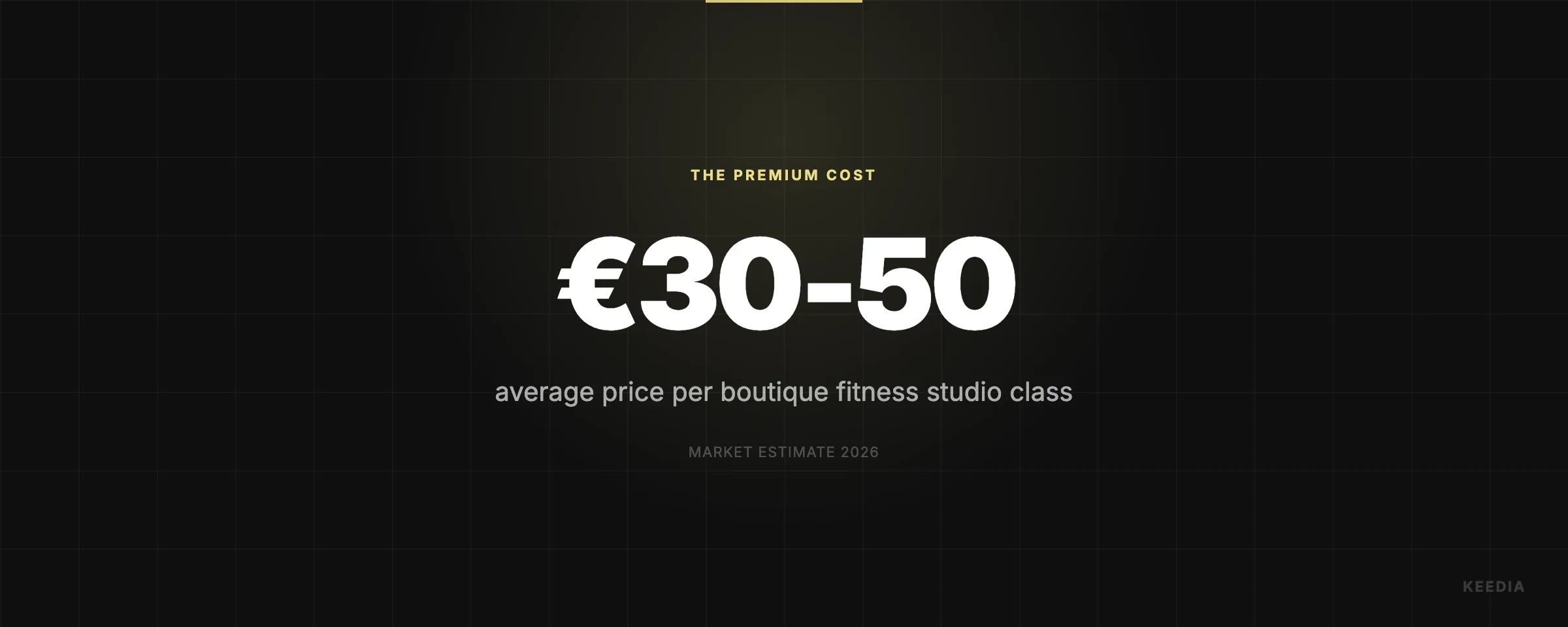
Boutique fitness was supposed to be recession-resistant. The argument was that consumers would cut back on restaurants and travel before they'd give up their $30 cycling class. That theory held reasonably well through 2022 and into 2023. It's holding less convincingly now.
A few structural forces are worth understanding.
- Franchise dependency creates fragility. Xponential doesn't operate most of its studios directly. It collects royalties and fees from franchisees who bear the operational risk. When franchisees struggle or close, Xponential's revenue drops even if the brand is still standing. A leaky pipeline of new franchise openings can mask a deteriorating base of existing ones.
- Premium pricing has a ceiling. At $180 to $250 per month for unlimited classes at many boutique brands, these memberships compete with rent increases, childcare costs, and grocery bills that have all moved significantly higher in the past two years. The value proposition doesn't disappear, but discretionary tolerance does shrink.
- Digital alternatives have matured. A consumer who wants structured cycling, Pilates, or stretching programming now has credible at-home options that cost a fraction of a boutique membership. The in-studio experience still differentiates, but the gap has narrowed enough to influence decisions at the margin.
- Labor costs in fitness remain elevated. Qualified instructors are expensive, and retaining them in boutique environments, where pay is often tied to class headcount, creates instability that affects member experience directly.
Planet Fitness Adds Context
Xponential isn't the only gym brand navigating turbulence. Planet Fitness, which operates at the opposite end of the price spectrum with memberships starting around $10 per month, has faced its own headwinds in 2026, including leadership changes and pressure on its growth metrics.
That matters because it rules out the easy explanation. This isn't simply a story about premium pricing being squeezed. Both the budget and boutique ends of the fitness industry are showing strain simultaneously, which points to something broader: consumer fitness spending is being recalibrated across the board.
The middle of the market, traditional gyms with group classes included in flat-rate memberships, is arguably the most stable segment right now. The extremes are where the stress is concentrated.
What This Means If You're a Boutique Member
If you currently hold a membership at a Club Pilates, CycleBar, StretchLab, or any other boutique brand, here's what you should be thinking about practically.
Studio closures are a real risk. Individual franchise locations can and do close independently of the parent brand's survival. If your local studio is operating at low capacity or has reduced its class schedule, that's worth monitoring. Franchisee financial distress often precedes closure by several months, during which class quality and instructor consistency tend to decline.
Pricing pressure can cut both ways. Struggling studios may offer aggressive promotions to retain members. That's good for your wallet short-term but can accelerate the conditions that lead to closure. Conversely, a parent company under financial pressure may push franchisees to increase rates to shore up royalty revenue.
Your programming and instructors may not be as stable as you think. High-quality boutique fitness depends on consistent instructors who know your goals and can adjust your programming over time. Financial instability tends to increase instructor turnover, which erodes exactly the personalized experience you're paying a premium for.
If you're structuring a serious training program and relying on boutique sessions as a core component, it's worth building some redundancy. Understanding how to apply progressive overload to your cardio training means you can maintain and build fitness independently if your studio situation changes unexpectedly.
Should You Still Pay the Premium?
The financial struggles of a parent company don't automatically mean your local boutique studio is doomed. Plenty of individual franchise locations are operationally healthy even within a struggling portfolio. The question is whether the value proposition holds for you specifically.
Boutique fitness is worth the premium if the community and instructor accountability are genuinely driving your consistency. Research consistently shows that social environment and structured accountability are among the strongest predictors of long-term exercise adherence. If your boutique class is the reason you show up four times a week instead of twice, the price premium pays for itself in outcomes.
It's worth less if you're paying for an experience you're no longer fully getting, whether because instructor quality has dropped, class times have been cut, or the community feel has thinned out. Studios under financial stress don't always advertise it, but the signs show up in the product before they show up in any press release.
For members focused on specific outcomes like fat loss, cardiovascular development, or endurance, understanding the underlying science of what you're doing also matters independently of where you train. Knowing how to use heart rate training zones effectively means you can evaluate whether your boutique programming is actually structured to deliver what it promises, or just providing a high-energy environment that feels productive.
The Broader Signal for 2026
What Xponential's Q1 2026 results really expose is that the boutique fitness boom was partly fueled by post-pandemic enthusiasm and cheap capital. Both of those tailwinds have faded. The brands that built their expansion on aggressive franchising rather than unit-level profitability are now navigating the consequences.
That doesn't mean boutique fitness as a category is finished. The demand for specialized, community-oriented fitness experiences is real and durable. But the industry is going through a consolidation and rationalization phase that will likely result in fewer, stronger operators rather than the sprawling multi-brand portfolios that defined the 2018-to-2023 expansion era.
For consumers, that's actually a reasonable outcome. A smaller number of financially stable boutique studios is more useful than a large number of fragile ones. The challenge is getting through the transition without losing the studios and instructors you've built your routine around.
Regardless of how your boutique situation evolves, investing in your own fitness knowledge remains the most durable hedge. Understanding how to structure your recovery, for example by building an effective off-day recovery routine, means your results stay yours no matter what happens to any particular studio brand.
The fitness industry is under real stress in 2026. Xponential's numbers make that concrete. For anyone paying boutique prices, that stress deserves honest attention rather than brand loyalty on autopilot. Keep training. Just train with your eyes open.