
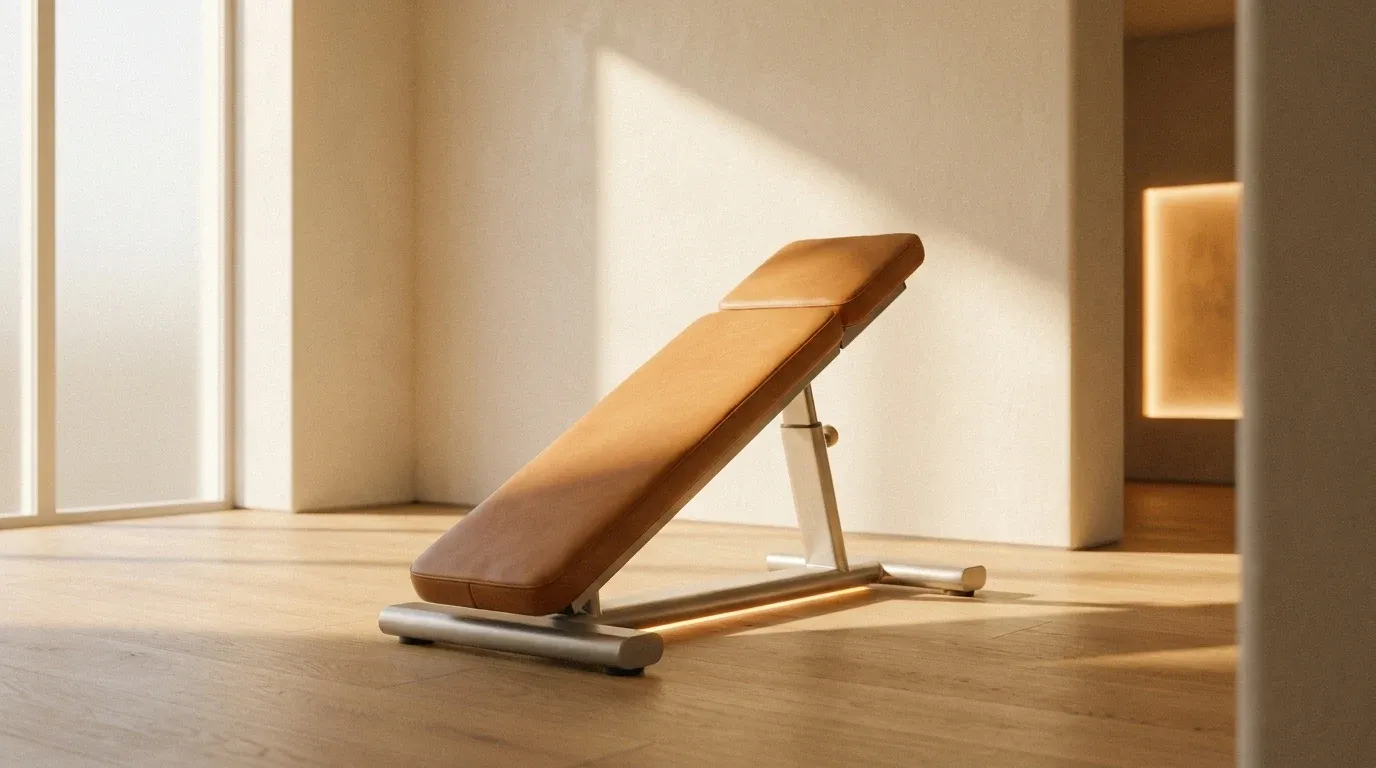
Decathlon launched its Smart Bench on September 28, 2026, priced at approximately $1,400. It's an all-in-one connected weight bench that the brand positions as both a serious training tool and a piece of intelligent home gym equipment. The timing is deliberate. The connected fitness market has spent several years recovering from its post-pandemic collapse, and Decathlon is betting that a smarter price point can unlock a segment that premium brands haven't been able to crack.
Whether serious lifters buy that pitch is a different question entirely.
What Decathlon Is Actually Selling
The Smart Bench is designed as a single unit that combines adjustable bench functionality with integrated resistance, sensors, and a connected training layer. Think of it as Decathlon's answer to the Tonal problem: that kind of technology costs $3,000 to $4,000 before installation, subscription fees, or accessories. The Smart Bench sits well below that ceiling, which is its clearest selling point.
Decathlon has built its global reputation on high-value, accessible sports equipment. The brand operates in over 60 countries and understands how to manufacture at scale without gutting build quality. Applying that same formula to connected fitness makes strategic sense. The question is whether "accessible connected fitness" translates into something that actually trains you better, or whether it just adds a screen to an otherwise ordinary bench.
The connected layer here matters. Integrated sensors can track range of motion, rep velocity, and load consistency. A coaching interface can cue form corrections in real time. When this technology works well, it addresses one of the most persistent problems in home training: you're lifting without feedback, which means you're likely reinforcing bad patterns just as effectively as good ones.
Where This Sits in the Market
The connected home fitness space has always had a pricing problem. At the low end, you have a $300 adjustable bench and a set of dumbbells. At the high end, you have Tonal, Mirror (now folded into Lululemon's ecosystem), and subscription-heavy platforms that charge $40 to $50 per month on top of hardware that costs several thousand dollars upfront. The middle was empty.
Decathlon is trying to own that middle. At $1,400 for the unit, the Smart Bench is expensive enough to signal quality but accessible enough that it doesn't require the same financial commitment as a premium system. It's a category that didn't really exist before, which is either an opportunity or a warning sign depending on how you read the market.
For context, a quality traditional setup, an adjustable bench, a power rack, and a set of adjustable dumbbells, can run anywhere from $600 to $1,500 depending on brand. The Smart Bench asks you to pay a comparable amount for something that does more but also requires software, firmware updates, and potentially a subscription to unlock full functionality. That's a different kind of commitment than a dumbbell that never needs a software update.
The Real Test: Does the Connected Layer Improve Training?
This is where the conversation gets honest. Smart gym equipment has a checkered track record not because the hardware is bad but because the software and coaching layers often fail to deliver what they promise. Many products have launched with adaptive programming features that were too generic to be useful, or real-time feedback that was either too delayed or too intrusive to integrate naturally into a training session.
The lifters most likely to benefit from a product like the Smart Bench are intermediate trainees who have moved past beginner gains but haven't yet hit the kind of advanced plateau that requires periodization and individualized programming. Research consistently shows that feedback on rep velocity and load management is most impactful in this middle tier of training. If you've been wondering how to break a strength plateau using updated ACSM resistance training guidelines, the tools the Smart Bench offers, specifically velocity tracking and auto-regulated load adjustments, align reasonably well with what the evidence recommends.
The skeptics aren't wrong to ask hard questions, though. Sensor accuracy matters enormously. A bench that tracks your range of motion incorrectly will give you feedback that's worse than no feedback at all. Battery life, app stability, and long-term software support are concerns that no product page addresses honestly. And there's the question of whether the coaching content built into the platform is designed by qualified coaches or assembled to fill a content library.
If you're evaluating any connected fitness product, it's worth applying the same scrutiny you'd use when hiring a human coach. The 5 questions to ask a trainer before you hire them translate cleanly to evaluating smart equipment: What methodology does the programming follow? How does the system adjust when your performance changes? What happens to your data if the company shuts down the app?
Who the Smart Bench Is Actually For
Let's be direct about the target user. The Smart Bench is not for competitive powerlifters or experienced athletes who already train with a coach and understand progressive overload intuitively. Those lifters have systems that work and no compelling reason to rebuild around a connected bench.
The more realistic buyer is someone in one of these groups:
- The lapsed gym member who wants a serious home setup but has been put off by the cost and complexity of premium systems like Tonal.
- The intermediate self-coached lifter who trains consistently but suspects their programming has gaps, especially around load management and form consistency.
- The data-oriented beginner who responds well to feedback loops and wants structure built into their equipment rather than requiring a separate app or coach.
- The space-constrained home gym builder who wants a single unit that consolidates equipment rather than a full rack-and-plate setup.
These are real segments with real buying power. The strength training category has also expanded significantly as evidence continues to build around resistance training and long-term health. Research on cardio versus strength training and cardiovascular mortality protection has shifted how many health-conscious consumers think about lifting. It's no longer just an aesthetic pursuit. For that audience, a connected bench that helps them train more consistently and with better form has legitimate appeal.
The Subscription Question Nobody Wants to Answer
Decathlon hasn't made its subscription model fully transparent at launch, which is a red flag worth naming. Connected fitness hardware is almost always designed around recurring revenue. The hardware price subsidizes the platform, and the real margin sits in monthly fees.
If the Smart Bench requires a $20 to $40 monthly subscription to access its core connected features, the total cost over three years looks very different from the headline $1,400 price. That would put the three-year cost somewhere between $2,100 and $2,800, which starts to erode the pricing advantage over premium competitors. Buyers should push for clarity on what's locked behind a paywall before committing.
This is also where Decathlon's brand positioning creates some tension. Decathlon has built loyalty by being the brand that doesn't nickel-and-dime you. A subscription-heavy model would cut against that identity. If the company prices its platform competitively and keeps core programming accessible without monthly fees, that distinction could matter a great deal in a crowded market.
The Bigger Shift in Home Fitness
The Smart Bench launch is part of a broader pattern. Home fitness hardware has been commoditized. Sensors and connectivity that once required premium engineering budgets are now accessible to mass-market manufacturers. What separates good connected equipment from bad connected equipment is increasingly software quality, coaching methodology, and long-term platform support, not hardware specs.
Decathlon is a hardware company trying to become a fitness platform company. That's a harder transition than it looks. The companies that have done it well, Apple with fitness tracking, Garmin with training analytics, have invested years into the software and data science layers that make connected health products genuinely useful rather than just technically impressive.
The Smart Bench will be judged on whether Decathlon has made that investment seriously or whether the connected layer is a marketing wrapper around an otherwise conventional piece of equipment. Early hands-on testing, expected in the weeks following the September 28 launch, will tell a clearer story than any spec sheet.
The Bottom Line
Decathlon's Smart Bench is the most credible attempt yet to occupy the mid-market in connected home strength training. The price is right, the brand has global reach and manufacturing credibility, and the timing aligns with sustained consumer interest in home training infrastructure. None of that guarantees a good product.
If the sensors are accurate, the programming is evidence-based, and the software receives consistent support, the Smart Bench could genuinely expand who has access to high-quality connected strength training. If any of those pieces fall short, it becomes another piece of expensive equipment that people stop using after six months.
The connected fitness market doesn't need another product that's impressive on paper. It needs one that earns its place in your actual training routine, week after week, long after the novelty has worn off.