
3 Fitness Tests That Predict How Long You'll Live
Last updated: April 1, 2026
Key Takeaways
- Grip strength, chair-stand speed, and VO2 max predict all-cause mortality better than BMI, blood pressure, or cholesterol.
- All 3 tests require no lab equipment.
- March 2026 data reinforces what earlier research already showed.
Most people track their health with a scale or a waist measurement. Both are convenient and deeply incomplete. They tell you nothing about your cardiorespiratory capacity, your muscle strength, or your actual risk of dying early from a chronic disease.
Three tests do that much better: grip strength, chair-stand speed, and VO2 max. And 2026 data strengthens what we already knew about their predictive power.
24 kg). 34% lower mortality for fastest chair-stand group. Each 1-MET VO2 max increase = 13% mortality reduction. Sources: March 2026 study (CNN), BJSM meta-analysis. -->
Grip Strength: What Your Handshake Says About Your Health
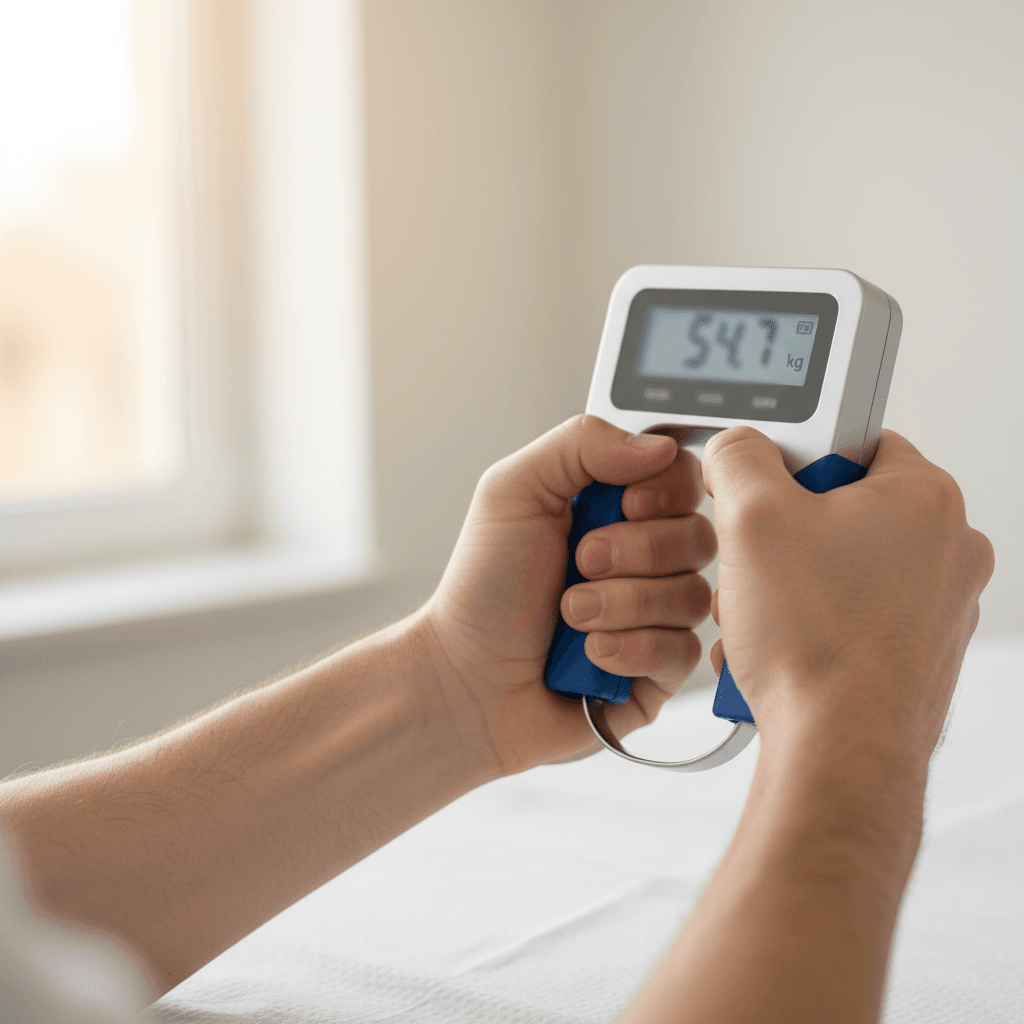
A study published in March 2026 and covered by CNN followed thousands of women over several years. Women in the top quartile of grip strength, above 24 kg, had 33% lower all-cause mortality than women in the lowest quartile, below 14 kg.
To put that in perspective: the difference between the extreme grip strength quartiles predicted mortality better than most standard clinical markers in that cohort.
Why does grip strength predict longevity? Because it reflects the health of multiple systems simultaneously. When people maintain strength as they age, it typically means their muscles, bones, nervous system, and metabolism are all working well together. The handshake is a proxy for systemic resilience.
The Chair-Stand Test: Functional Strength in the Real World
In the same study, women who completed 5 consecutive chair stands fastest had 34% lower mortality than the slowest group.
This test measures quad, hip, and core strength in combination. That's functional strength. It's different from testing max strength on a machine. The chair stand simulates what your body does daily. The ability to do it quickly and without compensation reflects a physical reserve that neither BMI nor weight can capture.
VO2 Max: The Strongest Predictor of All
VO2 max, your maximum oxygen consumption capacity, is probably the most underused health marker in general medicine. The research data is clear: each 1-MET increase in cardiorespiratory fitness is associated with roughly a 13% reduction in all-cause mortality risk.
In a meta-analysis in the British Journal of Sports Medicine, people with low VO2 max had 5 times higher cardiovascular mortality risk than those with high VO2 max. That's a stronger association than smoking, hypertension, or diabetes in some cohorts.
You don't need a lab to estimate yours. The Rockport Walk Test (1-mile fast walk) or the Cooper Test (12-minute run) give reliable estimates. Modern smartwatches also provide increasingly accurate estimates from running heart rate data.
Why BMI Misses All of This
Two people with a BMI of 25 can have VO2 max values differing by 30%, grip strength differing by 50%, and very different premature mortality risks. The scale sees none of it.
That's not an argument against managing body weight. Chronic overweight is still a real risk factor. But it's an argument against BMI as your only health metric. These three tests add a dimension that standard markers don't provide.
What You Can Do Now
If you take one thing away: start by measuring your grip strength and chair-stand time. You need nothing but a chair and a stopwatch.
And if you want to improve those markers, the data is clear: progressive strength training combined with regular cardio is what works.
Also read: Zone 2 Cardio: What 2026 Research Actually Shows
Frequently Asked Questions
What grip strength is considered good for longevity?
Above 24 kg for women, according to a March 2026 study. Women in this top quartile had 33% lower all-cause mortality than those below 14 kg. Thresholds are higher for men, but the principle holds: higher grip strength correlates with lower mortality risk.
How can you measure VO2 max without a lab?
Three reliable options exist. The Rockport Walk Test (1-mile fast walk, recording time and heart rate), the Cooper Test (12-minute run, recording distance), or a smartwatch estimate from running heart rate data. Lab testing is the gold standard, but these methods provide usable estimates.
Why is BMI a poor health indicator?
Two people with an identical BMI of 25 can have VO2 max values differing by 30% and grip strength differing by 50%. BMI doesn't measure cardiorespiratory capacity, muscular strength, or actual body composition. These functional parameters are what predict mortality.
How do you improve grip strength?
Progressive strength training is the main lever. Pulling exercises (rows, pull-ups, deadlifts), specific grip work (farmer's carries, dead hangs), and regular training with free weights build grip strength over 8-12 weeks.