
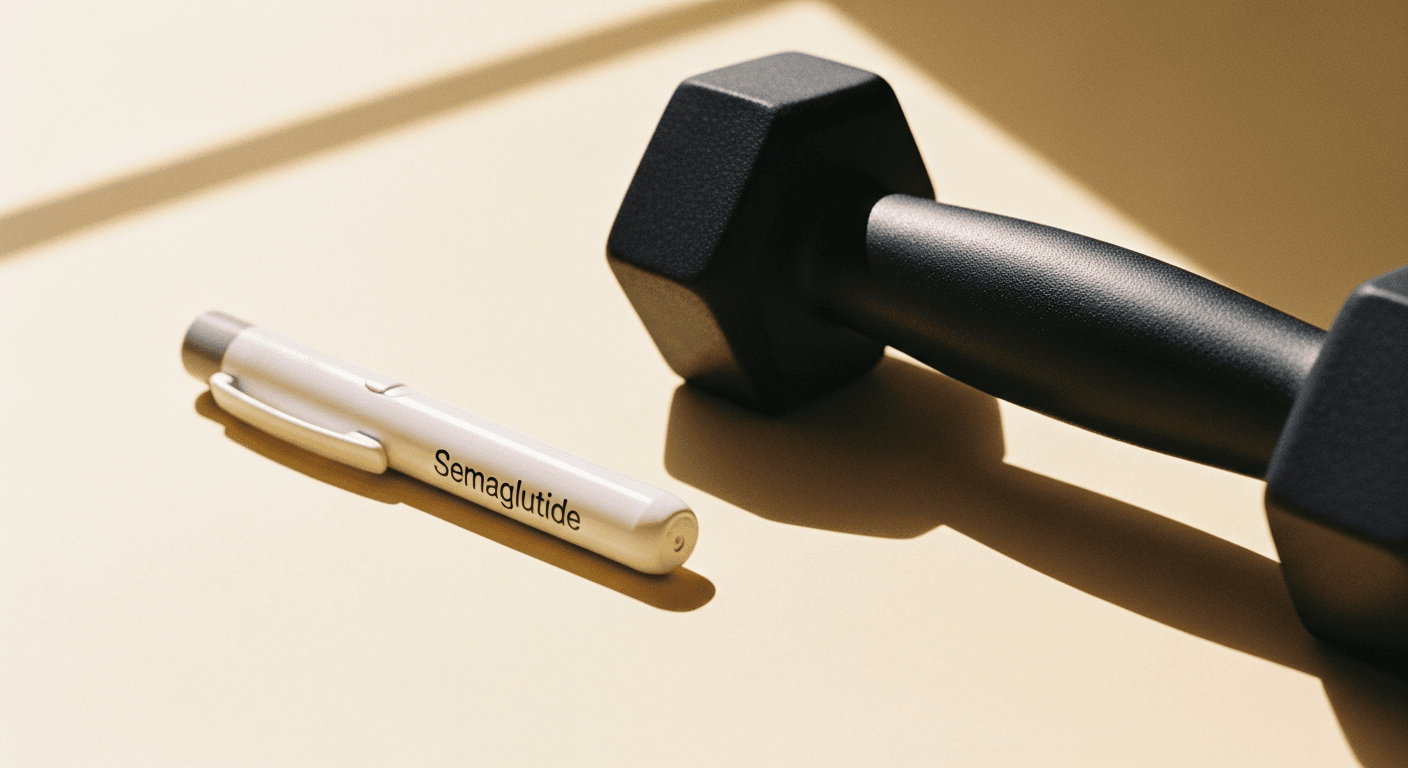
GLP-1 receptor agonists — semaglutide (Ozempic, Wegovy), tirzepatide (Mounjaro) — have become some of the most widely prescribed drugs in the world within a few years. Their effectiveness for weight loss is documented. What's less discussed in the mainstream conversation is what they do to muscle mass.
The Problem: Significant and Underreported Lean Mass Loss
Major clinical trials for semaglutide and tirzepatide consistently show the same finding: between 25% and 40% of total weight lost comes from lean mass, not fat. In the STEP 1 trial for semaglutide, participants lost an average of 14.9% of body weight — but a significant portion of that loss was skeletal muscle.
For someone losing 44 lbs on Ozempic, that could mean 11-17 lbs of lost muscle. For adults over 40, this accelerates sarcopenia risk — the progressive loss of muscle mass and strength associated with aging.
What Research Says About Strength Training
A 2026 meta-analysis in Obesity Reviews analyzed pooled data from multiple trials that incorporated resistance training during GLP-1 treatment. The conclusion is clear: structured resistance training significantly attenuates the lean mass loss caused by these medications — without reducing fat loss.
In other words, lifting doesn't slow the drug's effect on fat. It protects the muscle. That's exactly what users need — and the exact protocol for maximizing muscle retention on GLP-1 makes that protection measurable.
The Protein Challenge
The secondary problem is nutritional. GLP-1s strongly suppress appetite — that's their primary mechanism. For many users, hitting protein targets becomes difficult when you're eating significantly less.
Current recommendations to preserve lean mass during active weight loss sit at 1.6-2.2g of protein per kg of bodyweight per day. For a 175-lb person, that's 126-170g of protein daily — an amount that's hard to hit when appetite is suppressed by 20-30%.
The solution: high protein density at every meal (fish, lean meat, eggs, cottage cheese, legumes), and protein supplementation to close the nutrition gaps GLP-1 medications create if food intake stays insufficient.
The Recommended Protocol
Sports medicine physicians and endocrinologists increasingly align on these recommendations for patients on GLP-1 medications:
- 2-3 resistance training sessions per week, emphasizing compound movements (squat, deadlift, press, row, pull)
- Moderate to high intensity — light sets don't produce a strong enough muscle-retention signal
- 1.6-2.2g protein per kg bodyweight per day, prioritized at every meal
- Protocol maintained throughout the full duration of treatment, not just at the start
What This Means for Coaches
Fitness professionals are seeing increasing numbers of clients on GLP-1 medications. These clients often have a vague sense that exercising during treatment is a good idea — but few understand why strength training specifically is critical, and fewer still know the protein requirements.
Education on this topic has become a differentiating skill for coaches. A client on Ozempic who loses 30 lbs while preserving muscle through a well-designed GLP-1 coaching protocol will have radically different outcomes — body composition, strength, resting metabolic rate — than one who loses the same weight without guidance.