
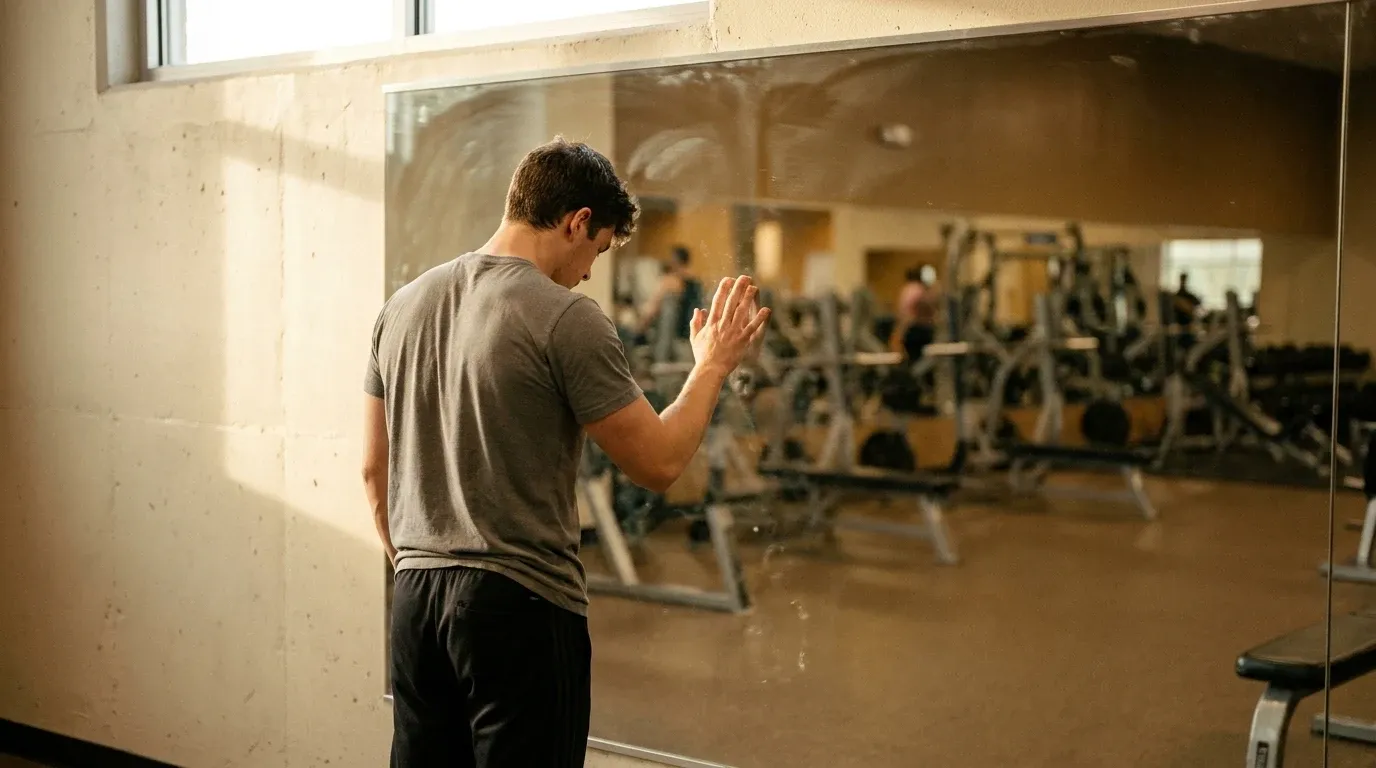
Scroll through fitness content on TikTok for ten minutes and a pattern emerges fast. Shredded physiques. Supplement stacks. Transformation videos where the before looks like a healthy person and the after looks like a competitive bodybuilder. It feels like entertainment, but a growing body of research suggests it's quietly reshaping how you perceive your own body.
A recent study analyzing more than 2,200 GymTok videos found that content featuring high muscularity and steroid-adjacent themes doesn't just exist on the platform. It dominates. And the algorithm rewards it disproportionately, pushing those videos to wider audiences and generating the most engagement. That feedback loop has real consequences, particularly for boys and young men.
What the Research Actually Found
Researchers coded over 2,200 TikTok videos using the hashtag #gym, categorizing them across a range of variables: muscularity levels depicted, supplement promotion, dieting content, and exercise frequency messaging. The results were pointed.
Videos featuring highly muscular physiques and content that implicitly or explicitly referenced performance-enhancing substances attracted significantly more likes, comments, and shares than content showing moderate or functional physiques. In a platform economy where engagement drives reach, this means the most extreme body content gets amplified far beyond its actual representation in real-world gyms.
The study also flagged two compounding factors. Rigid dieting content, including very low-calorie approaches and strict food elimination, frequently appeared alongside high-muscularity videos. So did content promoting excessive exercise, framing rest as failure and high training volume as the baseline rather than the exception. Together, these elements create an environment where the distorted becomes the default.
Why Young Men Are Particularly at Risk
Body image research has historically focused on women and the pressure to be thin. That framing is increasingly inadequate. The pressure on men, and particularly adolescent boys, to be simultaneously lean and extremely muscular is now well-documented, and GymTok appears to be accelerating it.
The technical term is "muscularity-oriented body dissatisfaction," and rates have been climbing for over a decade. Social media exposure is a consistent predictor. The specific mechanics here matter: TikTok's algorithm is designed to show you more of what you engage with, which means that even brief interaction with high-muscularity content can quickly recalibrate your feed toward increasingly extreme physique ideals.
For a 16-year-old who just started training, that feed can establish what "normal" looks like before he's ever set foot in a real gym or understood what it actually takes to build muscle over years. What he's seeing likely reflects years of dedicated training, specific genetic advantages, careful lighting, and in some cases, pharmacological assistance. None of that context travels with the video.
The Supplement Promotion Problem
Supplement content is woven tightly into GymTok's high-engagement ecosystem. The study found that supplement promotion was a consistent feature of the most-shared videos, often paired with physique content that implies a direct causal relationship between the product and the result shown.
This matters because it creates a distorted understanding of what drives physical change. When you watch someone with an extraordinary physique credit a pre-workout or protein blend, the implicit message is that the product is a meaningful variable. The actual variables, training consistency, sleep quality, caloric management over years, and in many cases, substances that are never mentioned, stay invisible.
The global sports nutrition market is worth over $50 billion and growing. Supplement brands have an enormous financial incentive to populate platforms like TikTok with aspirational content tied to their products. That's not a conspiracy. It's a business model, and understanding it helps you watch the content differently.
The Algorithmic Feedback Loop
Here's what makes GymTok's body image risk structurally different from, say, flipping through a fitness magazine in the 1990s. Magazines had a fixed selection of images. Algorithms adapt in real time based on your behavior.
When you watch a high-muscularity video to completion, or pause longer on it than you do on others, the platform registers that signal and serves you more of the same. Over time, your feed narrows toward an increasingly extreme slice of physique content. You're not seeing fitness. You're seeing the most engaging edge of fitness, which is not the same thing.
This is the feedback loop the research is describing. The content that generates the most engagement gets distributed most widely. That content tends to show extreme physiques and supplement culture. Wider distribution means more engagement. The cycle compounds, and the normative baseline keeps shifting upward in ways that have nothing to do with health or sustainable training.
If you're trying to build an honest training foundation, understanding Breaking a Strength Plateau: What Actually Works is a more useful framework than optimizing your physique to match what's trending on a recommendation algorithm.
Rigid Dieting and Overtraining: The Silent Co-Stars
The muscularity content doesn't travel alone. The study found that it regularly appears alongside two additional risk factors: extreme dietary restriction and messaging that frames high-frequency, high-volume training as the minimum standard for serious athletes.
Rigid dieting content on GymTok often promotes elimination approaches, fear-based framing around certain foods, and unrealistic caloric targets. Combined with imagery of extreme muscularity, this creates a double bind: the physique ideal requires both maximum muscle and minimum body fat, two goals that are genuinely difficult to pursue simultaneously and that, for most people, require years of periodized effort to even approximate.
The overtraining messaging is equally problematic. When content consistently portrays rest as laziness and two-a-day sessions as the norm, it distorts your understanding of what recovery actually requires. The science on How Often Do You Actually Need to Train to Keep Muscle? is clear: more is not always better, and the minimum effective dose is significantly lower than GymTok's most popular voices suggest.
This Isn't a Reason to Delete TikTok
The research isn't arguing that GymTok is uniformly harmful or that fitness content on social media has no value. Some of it is genuinely useful. Technique breakdowns, programming ideas, nutrition frameworks, and community engagement all have legitimate roles in a training life.
The issue is uncritical consumption. When you scroll passively and let the algorithm decide what fitness looks like, you're outsourcing a normative judgment to a system that's optimizing for engagement, not accuracy or health. That's a meaningful distinction.
The practical intervention the research points toward is awareness. Knowing that the content you're seeing is a highly filtered, algorithmically amplified subset of fitness culture changes how you receive it. It doesn't require you to avoid the platform. It requires you to hold what you're watching at a slight critical distance.
It's also worth auditing your feed deliberately. If every creator you follow has a physique that represents the top fraction of one percent of the population, your algorithmic baseline is miscalibrated. Diversifying toward coaches who discuss periodization, recovery, and long-term training adaptation gives you a more accurate picture of what sustainable fitness actually looks like. The Fitness Trends Actually Dominating Right Now reflect a broader move toward longevity and functional health, not just aesthetic extremes.
The Practical Checklist for Smarter Scrolling
- Notice what the feed is normalizing. If every physique you see is at the extreme end of muscularity, that's an algorithm artifact, not a reflection of your peer group or realistic goals.
- Track supplement claims skeptically. When a creator links a product to a result, ask what else might explain the result. The answer is almost always more complicated than the video suggests.
- Reframe rest and recovery as performance tools. Content that shames rest days is not evidence-based. Recovery is where adaptation happens, and cheap recovery often beats expensive tech when it comes to actual outcomes.
- Compare yourself to your previous self, not to creators. Progress is specific to your history, your starting point, and your biology. External physique benchmarks pulled from a recommendation algorithm are not useful training targets.
- Be aware of how the content makes you feel. If scrolling consistently leaves you feeling inadequate about your body, that's information worth acting on. That's not motivation. That's a risk factor.
What This Means for the Bigger Picture
GymTok is part of a wider pattern where social media platforms amplify the most extreme versions of any given subculture because extreme content drives engagement. Fitness happens to be a domain where those extremes have documented health consequences, including body dysmorphia, disordered eating, and exercise addiction.
The study of 2,200+ videos isn't a condemnation of fitness content online. It's a structural analysis of what gets amplified and why. Understanding that structure makes you a more informed consumer of the content you're already watching.
Your training goals should come from your life, your health, your performance needs, and your honest assessment of what you want from your body long-term. Not from what a recommendation engine has determined will keep you on the app for another thirty seconds.
That's a small shift in framing. But over months and years of training and scrolling, it makes an enormous difference to what you're actually building, in the gym and in your head.