
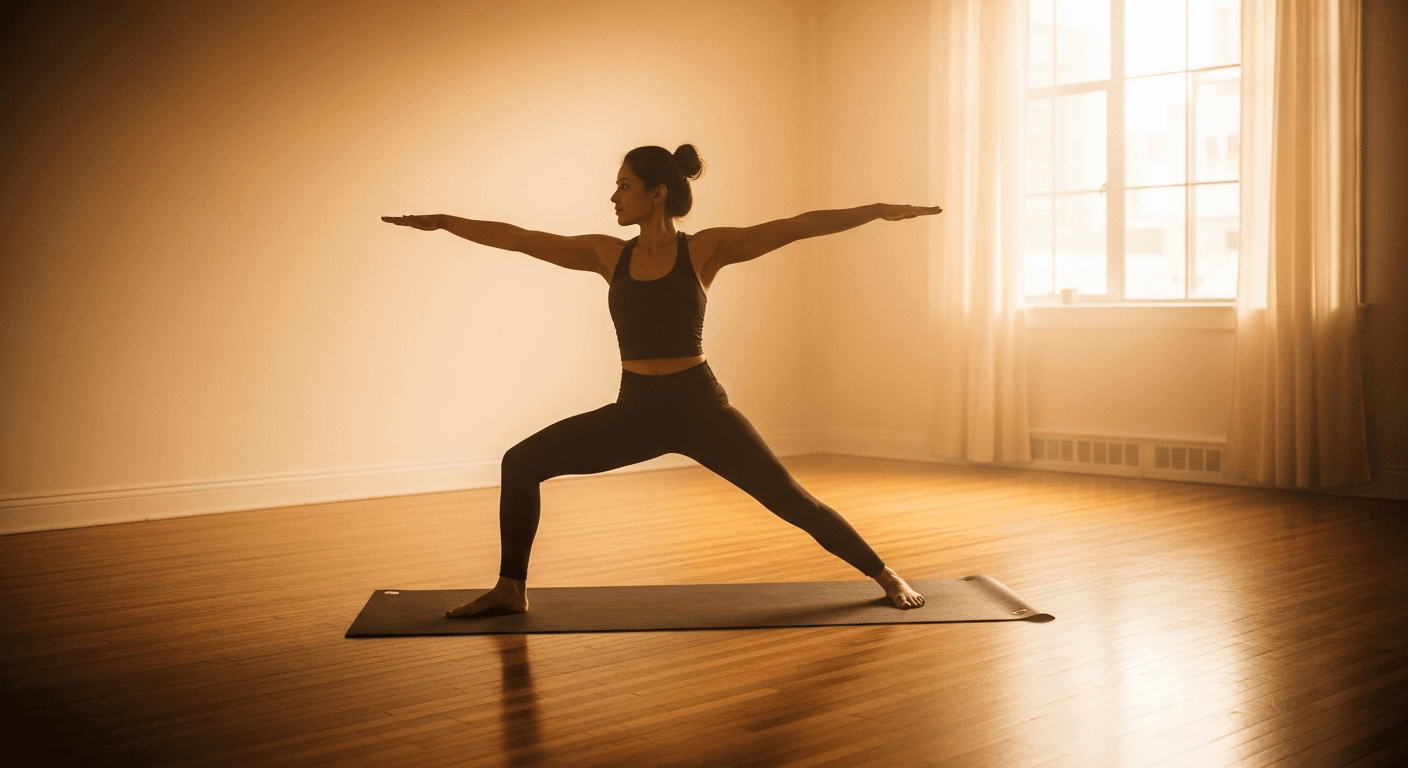
High-Intensity Yoga Beats All Other Exercise for Sleep Quality
If you've been logging miles on the treadmill or grinding through resistance sessions to fix your sleep, the evidence now suggests you might be doing it wrong. A landmark analysis published in Frontiers in Psychology in April 2026 found that high-intensity yoga outperforms both walking and resistance training for improving sleep quality in people with documented sleep disturbances.
The findings carry real weight. This wasn't a single small study. It was a systematic review and meta-analysis covering 30 randomized controlled trials and more than 2,500 participants. That's the kind of statistical power that changes recommendations.
What the Research Actually Found
The analysis focused exclusively on people with sleep disturbances, not just poor sleepers who occasionally toss and turn. Participants across the included trials had measurable, clinically relevant sleep problems, and researchers compared outcomes across different types of exercise interventions.
High-intensity yoga consistently came out on top. It outperformed moderate-intensity walking, which is often cited as a go-to recommendation for sleep health. It also outperformed resistance training, which has its own solid body of evidence for improving sleep architecture. When all 30 trials were pooled together, yoga's advantage was clear and statistically significant.
The specific metric that kept showing up was sleep quality as measured by validated tools like the Pittsburgh Sleep Quality Index. Participants who practiced high-intensity yoga saw meaningfully larger improvements in both subjective sleep quality and total sleep time compared to other exercise groups.
Two Sessions Per Week Is Enough
Here's where the findings become genuinely practical. You don't need to restructure your entire schedule. The research points to two vigorous yoga sessions per week as the threshold for producing significant results. That's a relatively low time commitment compared to the protocols used in most exercise-for-sleep research.
And the timeline is faster than most people expect. Participants started seeing meaningful improvements in sleep quality within eight to ten weeks. That's roughly two months of consistent effort, which is achievable for most people without major lifestyle disruption.
This aligns with a broader pattern emerging in exercise science, where the minimum effective dose is often lower than assumed. Research on the minimum dose of strength training that actually produces results has made similar points about efficiency. You don't always need more volume. You need the right kind of stimulus.
Why High-Intensity Yoga Works Differently
The mechanism behind yoga's outsized effect on sleep isn't fully mapped, but researchers point to several converging pathways. High-intensity yoga combines vigorous physical exertion with controlled breathwork and deliberate attentional focus. That combination appears to activate the parasympathetic nervous system more effectively than exercise alone.
Sustained deep breathing, particularly when paired with movement, reduces cortisol levels and lowers physiological arousal. For people with sleep disturbances, elevated nighttime cortisol and hyperarousal are often central to the problem. Yoga addresses these mechanisms directly in ways that walking on a treadmill simply doesn't.
There's also the mental component. Yoga requires you to stay present and regulate your attention, which may reduce the rumination and cognitive hyperactivation that keep many people awake at night. The research on mindfulness combined with exercise as a stress-reduction strategy supports this idea, suggesting the mind-body integration of yoga produces outcomes that neither pure mindfulness nor pure physical training achieves alone.
Where Resistance Training Still Fits
The fact that resistance training ranked below high-intensity yoga doesn't mean you should drop it from your program. Resistance training still outperformed control conditions, meaning it's still better for sleep than doing nothing. And its benefits for metabolic health, bone density, and muscle preservation remain well-documented and irreplaceable.
For people over 40 in particular, the case for maintaining some form of resistance work is strong regardless of sleep outcomes. Long-term data on resistance training after 40 makes a compelling argument for its role in healthy aging that goes far beyond sleep metrics.
The smarter approach for most people isn't to choose between yoga and strength work. It's to use both, with yoga as the primary tool for sleep quality and resistance training supporting everything else.
Walking Still Has Value, But Not for This
Walking remains one of the most accessible forms of exercise available, and its general health benefits are not in question. But for people specifically dealing with sleep disturbances, the analysis suggests that moderate-intensity steady-state cardio like walking produces the smallest improvements among the exercise types studied.
That's worth knowing if sleep quality is your primary concern. If you're currently relying on evening walks as your main strategy for better sleep, the data suggests upgrading to high-intensity yoga sessions would produce notably better results in roughly the same timeframe.
Who Benefits Most
The analysis draws its conclusions from people with documented sleep disturbances, so the findings are most directly applicable to that population. That includes people with insomnia symptoms, difficulty maintaining sleep, and poor subjective sleep quality. The 2,500-plus participants spanned a range of ages, backgrounds, and health profiles, which strengthens the generalizability of the results.
Sleep quality is also tied to mental health outcomes in ways that go beyond feeling rested. Poor sleep amplifies anxiety, reduces emotional regulation, and increases the risk of depressive episodes. The data connecting exercise, sleep, and mental health is increasingly robust. The relationship between exercise and mental health outcomes including anxiety and depression shows that interventions that improve sleep often produce downstream mental health benefits as well.
It's also worth noting that sleep quality can be influenced by factors beyond exercise. If you haven't examined your sleep environment, research consistently shows that thermal conditions matter more than most people realize. The science on bedroom temperature and its effect on sleep quality is worth reviewing if you're building a comprehensive approach.
What High-Intensity Yoga Actually Looks Like
The phrase "high-intensity yoga" can be confusing because yoga spans an enormous range of formats and intensities. In the context of this research, high-intensity yoga refers to styles that elevate heart rate meaningfully, challenge muscular endurance, and require sustained physical effort throughout the session.
Think Power Yoga, Ashtanga, and vigorous Vinyasa flows rather than Yin, Restorative, or gentle Hatha. The key characteristics are:
- Sustained aerobic demand: sessions that keep your heart rate elevated, not just occasional bursts of movement
- Strength components: poses and sequences that load the muscles for extended holds or repeated transitions
- Breathwork integration: deliberate, structured breathing throughout the session rather than just during cool-down
- Duration: sessions in the 45 to 60 minute range appear most commonly in the included trials
Two sessions per week at this intensity level is enough to generate the sleep improvements documented in the analysis. You don't need daily practice to see results within the eight-to-ten-week window.
How to Add This to Your Current Routine
If you're already training regularly, adding two weekly yoga sessions doesn't have to displace your existing work. Schedule them on days that allow for recovery from harder training, or use them as active recovery sessions that also happen to deliver measurable sleep benefits.
If you're newer to exercise or returning after a break, two high-intensity yoga sessions per week is a manageable starting point on its own. The low barrier to entry is one of the practical strengths of this finding. You don't need equipment, gym memberships, or complex periodization. A consistent practice with appropriate intensity is the whole formula.
The research is clear on one thing: for people struggling with sleep disturbances, the exercise type you choose matters. High-intensity yoga isn't just another option on the list. Based on the best available evidence, it's the most effective one.