
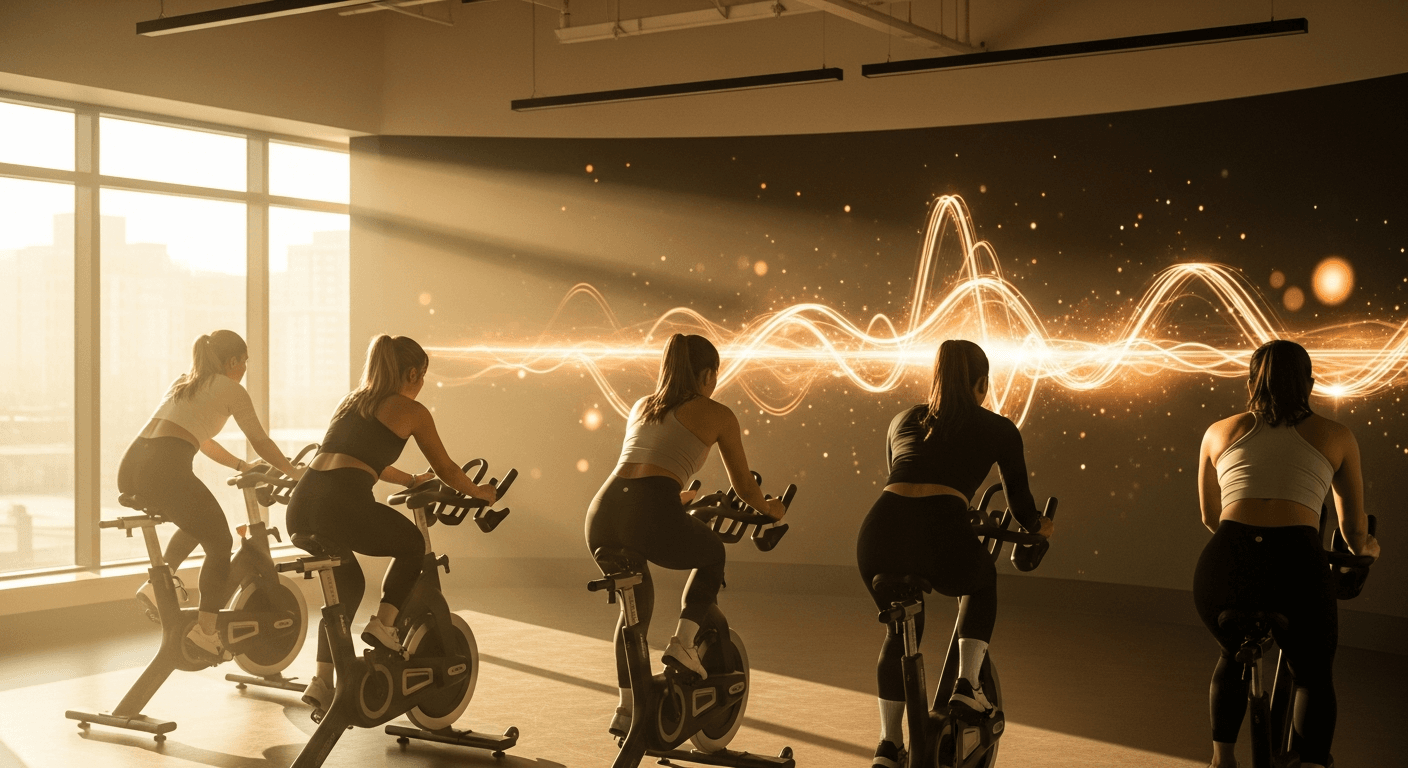
On April 17, 2026, Spivi and Les Mills US announced a formal partnership that puts real-time performance visualization at the center of group fitness classes. It's a move that signals something bigger than a software deal. It marks the moment when gym floors start operating more like performance environments, and when the data that was once reserved for elite athletes becomes standard equipment for everyday members.
If you've ever wondered why some workouts feel electric and others feel like going through the motions, the answer often comes down to feedback. And that's exactly what this collaboration is built to change.
What Spivi Actually Does
Spivi is a fitness gamification and performance-tracking platform designed specifically for group settings. It captures real-time biometric and effort data from participants, then displays that data visually on large screens throughout the studio. Think heart rate zones, effort scores, leaderboards, and performance trends, all rendered live during class.
The platform connects with heart rate monitors and fitness wearables, translating raw numbers into something immediately legible. A color-coded avatar shows where you are relative to your target zone. A live leaderboard shows where you sit among your classmates. Points accumulate. Progress becomes visible.
That visibility is the core product. Spivi doesn't just track. It turns data into experience.
Why Les Mills Is the Right Partner
Les Mills needs little introduction in the group fitness world. The New Zealand-born brand operates in over 100 countries, trains hundreds of thousands of instructors, and licenses its programming to more than 21,000 gyms globally. Its classes, including BodyPump, BodyCombat, and HIIT formats like Les Mills Sprint, are taken by an estimated 9 million people every week.
The US market is a priority. American gym culture has always had a strong group fitness component, but retention remains a stubborn problem. Industry data consistently shows that most gym members who try group fitness classes drop off within the first 90 days. The reasons are predictable: they don't feel progress, they don't feel connected to the class, and the experience doesn't adapt to them.
Spivi's integration into Les Mills group classes is a direct response to that problem. When you can see your effort score improve week over week, when you watch yourself climb a leaderboard as your fitness builds, the psychological feedback loop changes entirely.
The Science Behind Gamification in Fitness
The link between gamification and exercise adherence is well-established. Research across fitness and behavioral science consistently shows that visible performance feedback, social comparison, and reward structures increase both session intensity and long-term participation.
A review of fitness technology interventions found that real-time feedback during group exercise increased average effort output by measurable margins, particularly in the first and final thirds of sessions when motivation typically dips. Leaderboard mechanics, even optional ones, have been shown to push participants to sustain higher heart rate zones for longer durations without increasing perceived difficulty significantly.
That last point matters. You're working harder, but it doesn't feel harder in the same way, because your attention is on the display, on your position, on your score. The cognitive load of competition or self-monitoring partially displaces the sensation of effort.
This is also why formats like indoor cycling have seen such strong retention figures in studios that use live performance displays. The data isn't decorative. It's functional.
What Changes Inside the Class
For members in a Les Mills class running the Spivi integration, the experience shifts in several concrete ways.
- Live effort scoring: Your output is translated into a score in real time, calibrated to your individual fitness level rather than an absolute benchmark.
- Heart rate zone tracking: Color-coded zones show whether you're in recovery, aerobic, or high-intensity work, helping you stay within the right band for your goals.
- Class leaderboards: Optional competitive rankings visible on studio screens during class, with personal bests tracked across sessions.
- Post-session summaries: After class, you receive a breakdown of your performance, giving you something concrete to compare against next time.
Instructors benefit too. Spivi's data gives a coach a live read of where the room is. If the majority of participants have dropped out of the target heart rate zone, that's a cue to adjust cuing, tempo, or energy. It makes the instructor's job more precise.
Retention Is the Real Business Case
For gym operators, this partnership isn't primarily about member experience. It's about economics. The fitness industry loses an enormous percentage of its member base every year. US gym member attrition rates typically run between 30 and 50 percent annually, depending on the facility type. Each churned member represents lost recurring revenue and a replacement acquisition cost that ranges from $60 to $200 depending on market and channel.
Gamified fitness environments demonstrably reduce churn. Gyms using real-time performance display technology in group classes report meaningfully higher retention rates among members who attend those classes regularly, compared to members who use only floor equipment or non-gamified formats.
When you can track your progress, when there's a record of your improvements, and when the class itself creates social accountability, you're far less likely to cancel your membership. That's the business logic behind every investment in fitness technology, and the Spivi-Les Mills deal is one of the cleaner implementations of it.
Part of a Larger Shift in Gym Design
This deal doesn't exist in isolation. It reflects a fundamental change in what gyms are becoming. The gym of 2026 is not the gym of 2015. It's a tech-enabled wellness environment where data, community, personalization, and recovery infrastructure sit alongside traditional equipment.
How AI Is Building Personalized Workout Programs in 2026 explores how algorithms are now structuring training at an individual level, something that would have required a personal trainer a decade ago. Spivi fits into the same trajectory: technology doing the work of making fitness more responsive, more adaptive, more personal.
At the same time, the industry is grappling with a deeper problem that technology alone can't solve. Sedentary living is damaging joints earlier than most people realize, and getting people into group fitness classes consistently is one of the more effective population-level interventions available. Tools that increase class adhesion aren't just good for gym revenue. They're good for public health outcomes.
What This Means for You as a Member
If you're already attending Les Mills classes at a US gym, the rollout of Spivi integration will likely reach your facility in phases across 2026. Not every location will adopt it simultaneously, as hardware installation and instructor training take time. But the direction is clear.
When it arrives, the most useful thing you can do is engage with the data honestly rather than chasing the leaderboard for its own sake. Your effort score and heart rate zones are tools for calibration. They tell you whether you're training in the right intensity band for your goals, whether that's fat loss, cardiovascular fitness, or general conditioning.
If you're also doing strength work outside of Les Mills classes, understanding how hard you're pushing in group sessions helps you manage total training load. How long you should rest between strength sessions is shaped in part by how much cumulative fatigue you're carrying from cardio and group work. Real data from your classes makes that calculation more accurate.
And if you've been hitting a wall in your overall fitness progress, tracking group class performance adds a new variable to examine. Sometimes the limiting factor isn't your lifting. Sometimes it's that your group sessions aren't hitting the right intensity, or that they're pushing you too hard to recover properly. Data doesn't solve that automatically, but it gives you something to work with. Pairing session tracking with structured recovery thinking aligns directly with the wellness trends reshaping how we train in 2026, where recovery is treated as training, not its absence.
The Bigger Picture
The Spivi-Les Mills partnership is a milestone for group fitness, but it's also a preview. As real-time performance visualization becomes standard in group classes, the expectation will spread. Members who experience it will expect it everywhere. Gyms that don't offer it will feel behind.
That's how technology adoption works in fitness. Indoor cycling displays normalized data expectations for cardio. Wearables normalized personal tracking. Now group fitness is catching up, and the infrastructure to support it is finally mature enough to scale.
For you as someone who trains, the net effect is more information, more accountability, and more reason to show up consistently. That's not a small thing. Consistency is the variable that determines outcomes in fitness more than any other single factor. If gamification makes consistency easier to maintain, the health impact is real, regardless of how the leaderboard looks.