
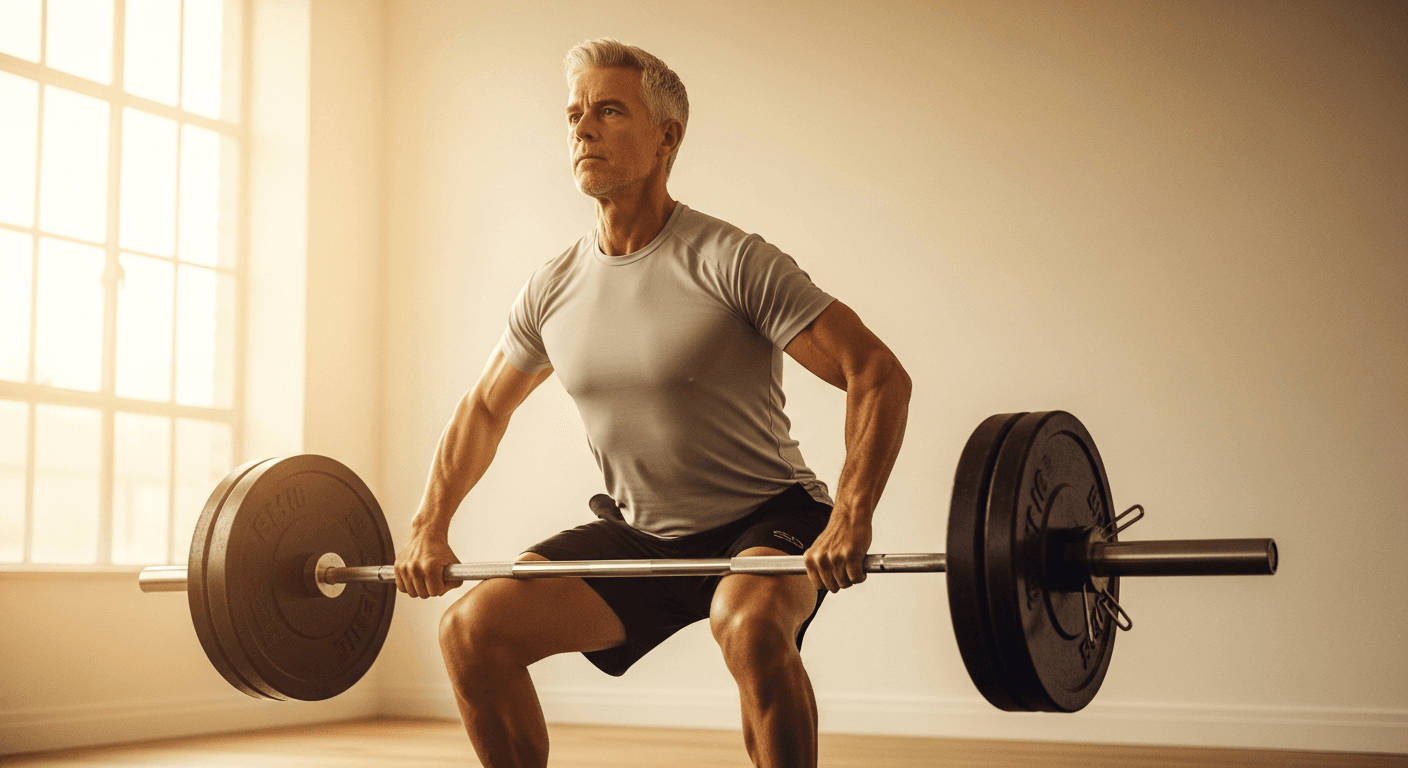
Your birth certificate tells one story. Your cells may be telling a completely different one. Biological age. the internal measure of how fast your body is actually deteriorating. is no longer a vague wellness concept reserved for longevity influencers. It's now measurable, trackable, and increasingly clear that consistent training is one of the most powerful levers you have to shift it in your favor.
Here's what the research actually shows about why your workouts are doing far more than building muscle or burning calories.
What Biological Age Actually Measures
Chronological age counts the years since you were born. Biological age measures how worn down your systems actually are. The gap between the two is where things get interesting.
Scientists now have several validated tools to quantify biological age with real precision. Epigenetic clocks. like the Horvath clock or the newer DunedinPACE model. analyze patterns of DNA methylation to estimate how fast your cells are aging. Telomere length reflects how many more times a cell can safely divide before deteriorating. VO2 max captures the efficiency of your cardiovascular and metabolic systems under load. Grip strength, often overlooked, is one of the strongest predictors of all-cause mortality in large population studies. Inflammatory markers like C-reactive protein and interleukin-6 round out the picture by revealing how aggressively your immune system is fighting a slow, chronic internal fire.
Together, these biomarkers give trainers and athletes something genuinely new: real feedback loops. You're no longer guessing whether your habits are working. You can measure them.
Why Lifting Is One of the Most Potent Anti-Aging Interventions
Strength training's effects on biological age go well beyond aesthetics. At the cellular level, resistance exercise directly influences epigenetic methylation patterns. studies show that consistent strength training can produce measurable changes in epigenetic age markers in as little as 12 weeks. That's not a lifetime commitment before you see results. That's a single training block.
The mechanism involves multiple pathways. Mechanical loading triggers the release of myokines, signaling proteins secreted by muscle tissue that suppress inflammation, improve insulin sensitivity, and regulate cell repair processes. Strength training also stimulates AMPK and mTOR pathways, which play central roles in cellular cleanup (autophagy) and protein synthesis. These aren't marginal effects. They're system-level shifts that show up in measurable biomarker changes.
One underappreciated fact: skeletal muscle is an endocrine organ. It doesn't just move you around. It actively regulates your hormonal and inflammatory environment. The more functional muscle mass you carry, the better your body manages blood glucose, cortisol, and inflammatory cytokines. This is a core reason why muscle mass correlates so directly with lower biological age across populations and age groups.
If you're over 40 and concerned about the rate at which muscle mass naturally declines, the science on intervention is unambiguous. Muscle Loss After 40: How to Actually Stop It breaks down the specific protocols that preserve and rebuild lean tissue as you age. The window doesn't close. but acting earlier makes a meaningful difference.
Cardiorespiratory Fitness: A Separate and Synergistic Layer
Lifting alone is powerful. But the data on VO2 max makes a compelling case for adding structured cardiovascular work alongside it. VO2 max. your body's maximum capacity to use oxygen during intense exercise. is one of the single strongest individual predictors of biological age and all-cause mortality across peer-reviewed literature.
Large prospective studies have shown that moving from a low to a moderate VO2 max category reduces mortality risk more than quitting smoking. That's a striking comparison. and it reflects how central cardiorespiratory fitness is to how your body ages at the system level.
The mechanisms here are distinct from those of strength training, which is exactly why combining both produces synergistic effects. Aerobic exercise improves mitochondrial density and function, reduces arterial stiffness, lowers resting inflammatory markers, and improves the brain's clearance of metabolic waste. It also independently lengthens telomeres. with endurance-trained athletes consistently showing longer telomere length than sedentary peers of the same chronological age.
You don't need to train like a marathoner to capture these benefits. The Minimum Cardio + Lifting Combo That Actually Works outlines exactly how to structure a hybrid approach that develops both VO2 max and muscle mass without requiring two-a-day sessions or elite training volume.
The Celebrity Data Point That Matches the Research
When singer Sophie Ellis-Bextor publicly reported that her biological age tested approximately seven years younger than her chronological age, it generated significant media attention. What got less coverage was how well that result aligns with what peer-reviewed research actually predicts.
Studies on consistently active adults. defined as people who have maintained regular structured exercise for a decade or more. regularly show biological age gaps of five to ten years compared to sedentary peers of the same chronological age. Ellis-Bextor's reported result isn't an outlier. It's close to what the data would expect for someone in that profile.
This matters because it reframes what consistent training is actually doing. You're not just maintaining fitness. You're decelerating a biological clock. The cumulative effect of years of structured movement shows up in epigenetic methylation patterns, in telomere length, in VO2 max trajectories. and eventually in quality of life and independence at ages when sedentary peers are losing both.
Understanding the difference between adding years to your life and adding life to your years is worth internalizing. Health Span vs Lifespan: Why Lifters Need to Know the Difference covers why optimizing for healthspan. the years you spend in full physical function. is the more useful framing for your long-term training decisions.
What This Means for How You Should Train
The evidence points toward a clear structural priority: you need both resistance training and cardiovascular work, and you need consistency over time. Neither component fully substitutes for the other when it comes to biological aging outcomes.
Here's what the research broadly supports as a baseline framework:
- Strength training two to four times per week, with progressive overload and sufficient volume to stimulate myokine release and maintain lean mass. Compound movements. squats, deadlifts, rows, presses. drive the greatest systemic hormonal and inflammatory response.
- Two to three cardio sessions per week, including at least one higher-intensity session to stimulate VO2 max adaptations. Zone 2 aerobic work builds mitochondrial density and metabolic resilience over time.
- Continuity across years, not just training blocks. The most significant biological age gaps observed in research are in long-term exercisers, not recent converts. Starting matters. Staying matters more.
Recovery quality also feeds directly into biological age outcomes. Chronic sleep deprivation accelerates epigenetic aging. Unmanaged psychological stress raises cortisol and inflammatory markers in ways that counteract training benefits. If you're training hard but carrying sustained stress without intervention, you're limiting the return on your effort.
The Supplement Question
As biological age testing becomes more mainstream, the supplement industry has moved quickly to position various products as anti-aging interventions. Some compounds. like creatine for muscle preservation, omega-3s for inflammation, and vitamin D for immune and metabolic function. have legitimate mechanistic support and decent evidence bases. Most products marketed specifically as "biological age reversal" supplements do not.
If you're evaluating what to add to your stack, the same critical lens applies here as everywhere else. How to Spot Fake Supplement Claims in 2026 gives you a practical framework for separating compounds with real evidence from those riding the longevity marketing wave.
The honest summary: no supplement currently available reverses biological age as effectively or as measurably as consistent resistance training combined with structured cardio. The foundational work comes first. Supplements may add marginal benefit on top of a solid training base. not in place of one.
The Takeaway
Biological age is no longer a metaphor. It's a measurable output of how you've been treating your body over time, and the mechanisms through which training influences it are well-documented and increasingly precise. Strength training reshapes your epigenetic landscape and positions skeletal muscle as an active metabolic regulator. Cardiovascular fitness drives VO2 max adaptations that are among the most powerful longevity signals science has identified. Together, they produce a compounding effect on biological age that no pharmaceutical or supplement currently matches.
The celebrities reporting younger biological ages aren't accessing some exclusive protocol. They're doing the unglamorous work of training consistently over years. and the research says that's exactly what the numbers reflect.
You don't need a longevity clinic to start shifting yours. You need a well-structured program and the discipline to show up for it long enough for the biology to catch up.