
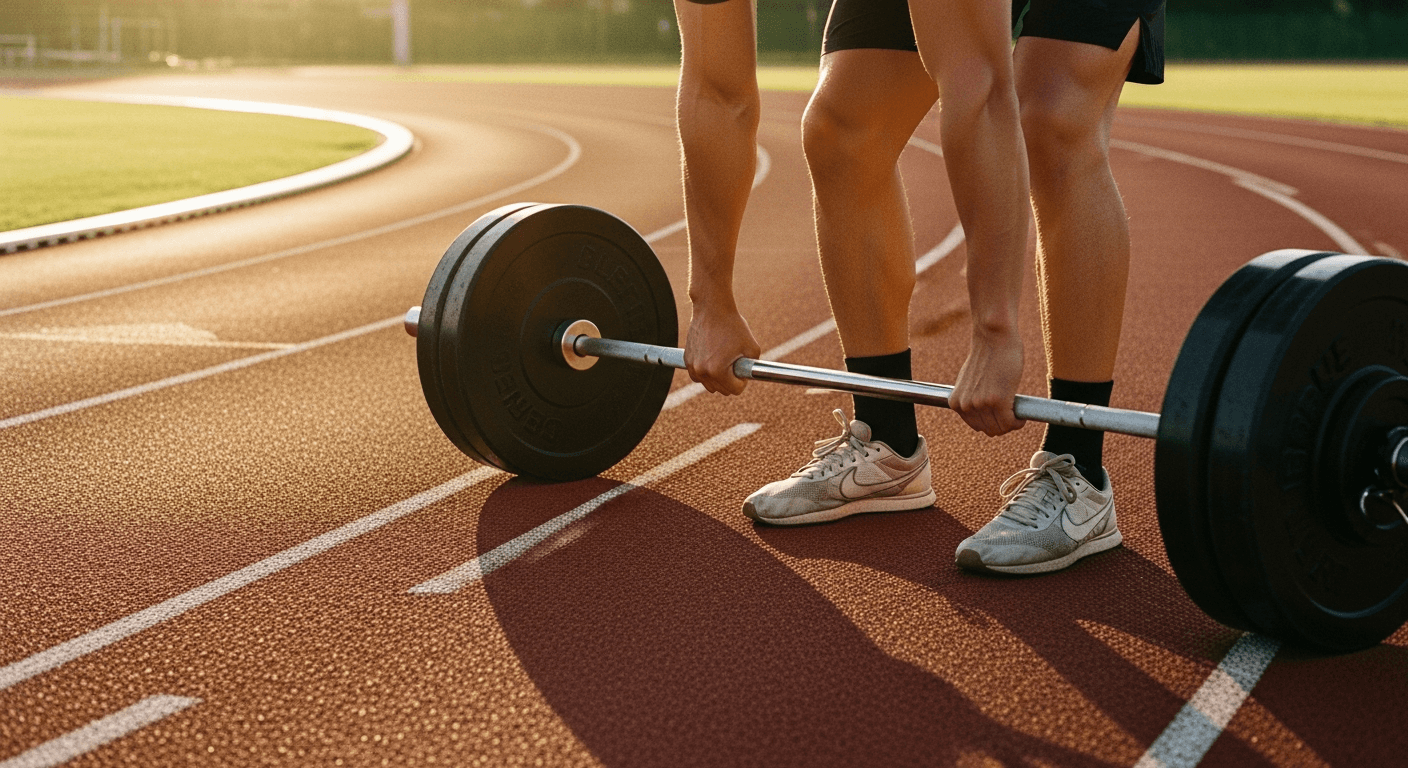
For decades, gym culture has treated cardio and strength training like competing philosophies. Runners dismiss the weight room. Lifters avoid the treadmill. The debate has generated endless opinion but very little clarity. A large-scale Harvard study tracked over 100,000 adults across nearly 30 years and settled the argument with hard numbers: doing both reduces your risk of dying earlier than doing either one alone.
That finding deserves more than a headline. It raises a practical question. What does "doing both" actually look like week to week, and why do these two modalities complement each other so effectively at a biological level?
What the Harvard Data Actually Shows
The study, published in the British Journal of Sports Medicine, followed participants who reported their exercise habits over decades and tracked mortality outcomes. Adults who did only aerobic exercise reduced their risk of all-cause mortality by roughly 32 percent compared to inactive individuals. Those who did only resistance training saw a reduction of around 19 percent. Both results are meaningful on their own.
But adults who combined both forms of exercise reduced their all-cause mortality risk by approximately 41 to 47 percent. That's not simply the sum of two individual benefits. The combination produces a synergistic effect that exceeds what either modality delivers in isolation.
The same pattern held for cardiovascular disease mortality specifically. Combined training outperformed either solo approach by a significant margin. Across 30 years of data and a massive sample size, that signal is difficult to dismiss.
Two Different Machines Working on the Same Problem
Understanding why the combination works requires understanding what each modality actually does inside the body. They don't target the same systems. That's precisely why pairing them is so effective.
Aerobic exercise primarily drives adaptations in your cardiovascular and metabolic systems. Regular cardio lowers resting heart rate, improves stroke volume, reduces blood pressure, and enhances insulin sensitivity. It trains your heart to pump more blood with less effort and your cells to process glucose more efficiently. Over time, these adaptations directly reduce the burden on your cardiovascular system, which explains why cardio produces the strongest standalone mortality reduction in the Harvard data.
Resistance training works through an almost entirely different set of mechanisms. It builds and preserves skeletal muscle mass, which is one of the strongest predictors of longevity independent of aerobic fitness. It increases bone mineral density, reducing fracture risk as you age. It raises your resting metabolic rate by maintaining metabolically active tissue. And research has increasingly shown that muscle mass itself functions as a kind of metabolic reserve. Scientists have identified why exercise reverses muscle aging at the cellular level, and the short version is that resistance training activates repair and protein synthesis pathways that aerobic work simply doesn't trigger in the same way.
When you stack both modalities, you're simultaneously protecting your heart, your metabolic health, your bones, your muscle tissue, and your hormonal function. No single training style does all of that. That's the biological basis for the data.
The Reframe: It Was Never a Competition
The cardio-versus-lifting debate has always been a false binary. It emerged partly from gym culture, partly from fitness marketing, and partly from the practical reality that most people don't have unlimited time. When you feel like you have to choose, you pick a side and defend it.
But the Harvard dataset doesn't support either extreme. It supports a structured integration of both. The adults with the lowest mortality risk weren't doing extreme amounts of one thing. They were meeting modest, consistent thresholds of both aerobic and resistance activity week after week, for years.
That's a different ask than "run a marathon" or "become a powerlifter." It's a much more manageable one.
Building a Weekly Structure That Actually Works
Current guidelines from major health organizations recommend at least 150 minutes of moderate-intensity aerobic activity per week, plus two or more resistance training sessions targeting major muscle groups. The Harvard data aligns with this framework and suggests that meeting both thresholds, even minimally, is where the most significant mortality protection kicks in.
Here's a practical structure that fits both modalities into three to four sessions per week without overtraining:
- Day 1: Full-body resistance training (45 to 60 minutes). Compound movements like squats, deadlifts, rows, and pressing variations. These recruit the most muscle mass and drive the strongest hormonal and metabolic responses.
- Day 2: Moderate aerobic session (30 to 45 minutes). Steady-state cycling, jogging, swimming, or brisk walking. Keep intensity at a level where you can hold a conversation but feel challenged.
- Day 3: Rest or light movement. Walking, stretching, or mobility work. Recovery is where adaptation happens.
- Day 4: Full-body or upper/lower resistance training (45 to 60 minutes). Vary the movement patterns from Day 1 to distribute stimulus across different muscle groups.
- Day 5: Higher-intensity aerobic session (20 to 30 minutes). Interval work or tempo efforts count here. Shorter duration, higher output.
- Days 6 and 7: Rest, active recovery, or a single low-intensity walk.
This structure delivers roughly two resistance sessions and two aerobic sessions per week, meeting evidence-based minimums for both without demanding more than four hours of structured exercise across seven days. It's sustainable, which matters far more than optimizing any single week.
If four days feels like too much initially, start with two combined sessions per week. Even brief resistance efforts contribute. Research has shown that very short bouts of resistance effort can generate measurable strength adaptations when accumulated consistently over time. The goal at first is habit formation, not peak programming.
Equipment Doesn't Determine Outcome
One of the most common barriers people cite is access to equipment. It's worth addressing directly: the research on resistance training and longevity isn't specific to barbells or machines. Bodyweight training, resistance bands, and free weights all produce meaningful adaptations when programmed with sufficient challenge and progressive overload. A breakdown of what actually works across free weights, bands, and bodyweight training shows that the modality matters far less than the principle of progressively increasing demand over time.
If you have access to a full gym, use it. If you're working from home with a set of bands and your own bodyweight, you can still build and maintain the muscle mass that drives mortality protection. The barrier to entry is lower than most people assume.
The Hormonal and Sleep Layer
There's a dimension to the combined training effect that doesn't always get discussed in mortality studies but matters for your day-to-day experience. Resistance training, particularly at sufficient intensity, stimulates growth hormone release and supports testosterone levels in both men and women. Aerobic exercise supports cortisol regulation and sleep architecture.
Those hormonal effects compound the structural benefits. Research from Berkeley has linked deep sleep directly to growth hormone release and improved body composition, suggesting that the exercise-sleep-hormone relationship is a closed loop. Better training habits support better sleep. Better sleep supports the recovery that makes the training effective.
If you're investing time in a combined training program, protecting sleep is part of the return on that investment. The physiological adaptations from both cardio and lifting happen primarily during recovery, not during the sessions themselves.
Consistency Across Years Is the Variable That Matters Most
The Harvard study's 30-year timeframe is the part of the data that should anchor how you think about this. The mortality benefits it captured weren't produced by six-week transformation programs or annual fitness kicks. They accumulated through years of modest, consistent effort.
That means the most important variable isn't how much you lift or how fast you run. It's whether you're still doing both things five years from now. A program that's slightly less optimal but far more sustainable will outperform an aggressive regimen that you abandon after three months.
Build around what fits your schedule and preferences. Prioritize showing up over maximizing intensity. Adjust the structure as life changes. The data supports this approach. The goal isn't a perfect training week. It's a habit that persists long enough to matter.