
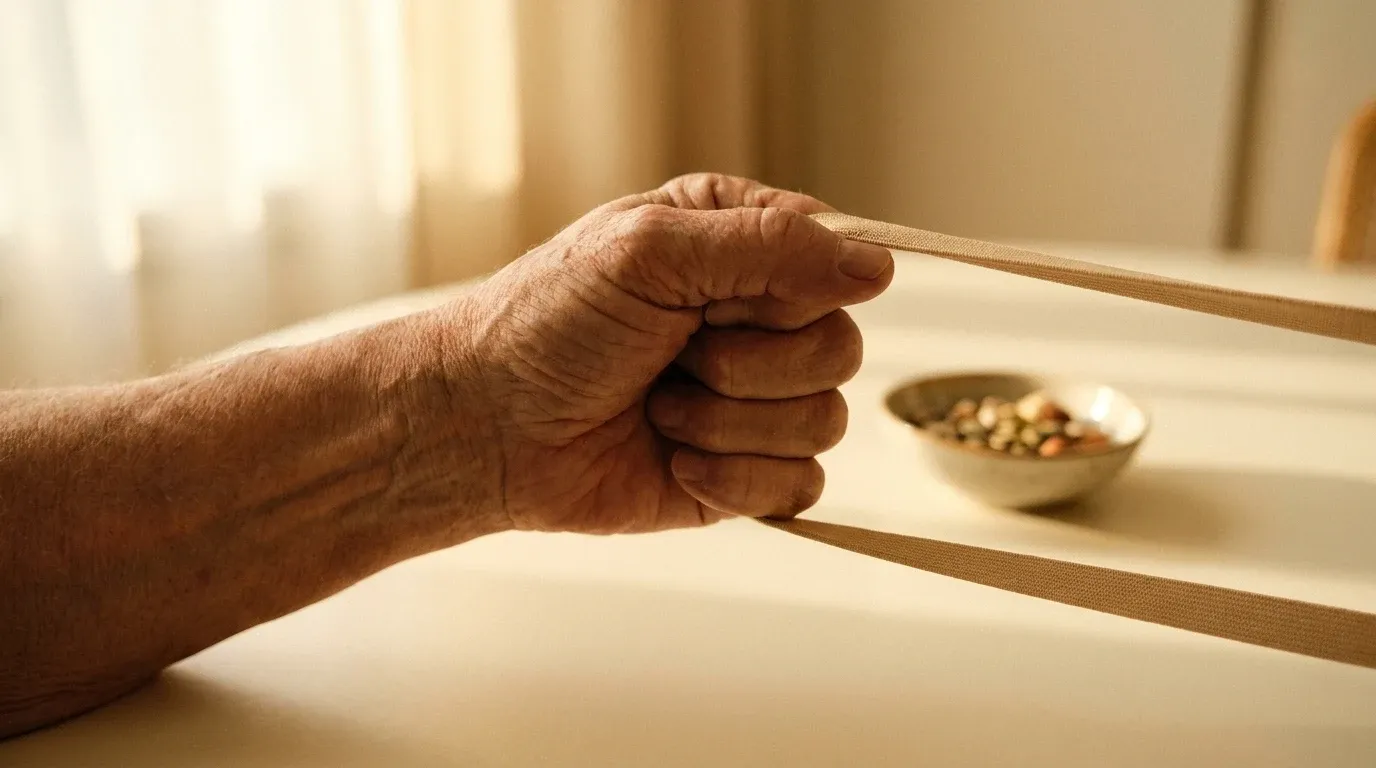
Digital fitness has never been more accessible. Streaming platforms, app-based training plans, and virtual coaching have made structured exercise available to nearly anyone with a smartphone. For adults over 60, that accessibility sounds like a genuine breakthrough. But a growing body of research suggests that for older adults dealing with muscle loss, online workouts alone aren't doing the job.
A recent scientific review examined digital exercise programs specifically designed for adults 60 and older with sarcopenia, the age-related decline in muscle mass and strength that affects roughly 10 to 27 percent of older adults globally. The findings were sobering: exercise alone, delivered digitally, produced no significant improvement in muscle mass or physical mobility. The programs weren't ineffective in every sense, but they weren't moving the needle where it counts most for this population.
What did make a difference was combining those digital programs with nutritional support. When nutrition intervention was added, participants showed meaningful gains in grip strength and reported better quality of life. That gap between "exercise alone" and "exercise plus nutrition" is exactly what clinicians, trainers, and older adults themselves need to understand.
Why Sarcopenia Doesn't Respond to Exercise the Way You'd Expect
Sarcopenia isn't simply a matter of being sedentary. It's a physiological process driven by hormonal changes, reduced anabolic signaling, chronic low-grade inflammation, and, critically, inadequate protein intake. After 60, the body becomes less efficient at synthesizing muscle protein from dietary sources. This phenomenon, known as anabolic resistance, means that the same protein intake that maintained muscle in your 40s is no longer sufficient.
Exercise, in theory, should counteract some of this. Resistance training stimulates muscle protein synthesis and signals the body to retain lean tissue. But that signal requires raw material to work with. Without adequate protein and caloric intake, the stimulus from exercise essentially has nowhere to go. The muscle-building machinery is activated, but the building blocks aren't there.
This is why the review's findings make biological sense. Digital exercise programs can provide the stimulus. They can structure movement, encourage consistency, and even track progress. What they can't do, on their own, is compensate for the nutritional shortfall that often underlies sarcopenia in the first place.
If you're a woman navigating this later in life, the interplay between hormonal shifts and muscle loss adds another layer. The same principles apply, but the context changes. Strength Training Through Menopause: What to Change breaks down how training strategies need to adapt when estrogen levels drop and anabolic resistance increases.
What the Research Actually Found
The review pooled data from multiple randomized controlled trials that tested digital or remote exercise interventions in sarcopenic older adults. Across studies that looked at muscle mass and mobility outcomes, the exercise-only arms showed no statistically significant benefit compared to control groups. That's a striking result given how often structured movement is positioned as the primary intervention for age-related muscle decline.
However, trials that combined digital exercise with nutritional support, typically protein supplementation and sometimes micronutrient protocols, produced different results. Grip strength improved significantly. So did scores on validated quality-of-life measures. These aren't trivial outcomes. Grip strength is one of the most reliable predictors of functional independence, fall risk, and even long-term mortality in older adults. Improving it matters.
It's worth noting what the review didn't find. Even with combined interventions, improvements in lean mass and gait speed were modest and inconsistent. This isn't a story about a simple fix. It's a story about the floor that nutrition establishes, below which exercise simply can't work effectively.
The Nutritional Support That Made the Difference
When researchers refer to "nutritional support" in this context, they're generally talking about protein supplementation, often in the range of 1.2 to 1.6 grams of protein per kilogram of body weight per day, which is well above the standard recommended dietary allowance of 0.8 grams per kilogram. Some protocols also included leucine-enriched formulas or essential amino acid blends, both of which have shown specific benefits for triggering muscle protein synthesis in older adults.
Micronutrients also play a supporting role. Vitamin D deficiency is highly prevalent in older adults and directly impairs muscle function. Adequate omega-3 intake has been linked to reduced muscle inflammation and improved anabolic sensitivity. These aren't fringe additions. They're part of what a comprehensive nutritional strategy for sarcopenia looks like.
The practical implication is that if you're over 60 and relying on a digital fitness program without actively auditing your protein intake and overall diet quality, you may be leaving significant gains on the table. The workout is not the whole answer. It's one half of the equation.
For a broader look at how nutritional science is evolving in the athletic and aging context, JFN 2026: What Sports Nutrition Experts Say You Should Change covers the latest expert consensus on where dietary strategy is heading, including guidance relevant to older exercisers.
Why Digital Programs Fall Short Without Dietary Guardrails
Online exercise platforms are built primarily around movement. That's their product. Even the best-designed app for older adults will typically offer workout videos, mobility guidance, and maybe sleep coaching. What most don't offer is a system for tracking protein intake, flagging nutritional deficiencies, or coordinating with a registered dietitian.
That structural gap matters. When a 65-year-old follows a digital resistance training program three times a week but continues to eat 50 grams of protein per day, the training stimulus is working against a biochemical headwind. Progress stalls. And when progress stalls, adherence often drops. The user concludes the program didn't work, when in fact the program was missing its essential partner.
This also raises questions about how digital fitness products are marketed to older adults. Promising improved strength, better mobility, and muscle maintenance through exercise alone, without any nutritional framework, may be setting users up for disappointment. The science doesn't support that promise for the sarcopenic population.
Recovery is another variable that gets overlooked in digital-only formats. Older muscles recover more slowly and require more deliberate attention to both sleep and active recovery strategies. Active vs. Passive Recovery: Which One Do You Actually Need outlines how to structure recovery in a way that actually supports adaptation rather than just managing fatigue.
Grip Strength as a Meaningful Marker
The fact that grip strength specifically improved in the combined intervention groups is worth pausing on. Grip strength is measured with a simple handheld dynamometer, but what it reflects is far from simple. It's a proxy for overall neuromuscular health, upper body function, and systemic muscle quality. Research consistently shows that lower grip strength in adults over 60 is associated with higher rates of hospitalization, disability, and all-cause mortality.
Improving grip strength isn't just about shaking hands more firmly. It reflects a genuine shift in functional capacity. The fact that nutritional support plus digital exercise produced this outcome, while exercise alone did not, reinforces the idea that the combination is not just additive. It may be synergistic. The nutritional foundation allows the exercise stimulus to actually translate into physiological change.
Bone health follows a similar logic. Exercise alone isn't always sufficient to protect skeletal integrity in aging adults, particularly without adequate calcium, vitamin D, and load variety. Your Bones Need More Than Lifting to Stay Strong explores how bone formation markers respond differently to various training types, and why dietary inputs are part of that picture too.
What You Should Actually Do If You're Over 60
The takeaway here is not that digital fitness programs are useless for older adults. They're accessible, often well-structured, and can provide real motivation and consistency. The takeaway is that they're incomplete without a nutritional strategy running alongside them.
Here's what the evidence supports for adults 60 and older dealing with or at risk of sarcopenia:
- Prioritize protein at every meal. Aim for at least 25 to 30 grams of high-quality protein per meal to maximize muscle protein synthesis throughout the day, rather than loading protein into one sitting.
- Supplement strategically. If your diet doesn't consistently hit 1.2 to 1.6 grams of protein per kilogram of body weight, a whey or plant-based protein supplement is a practical and evidence-backed option.
- Get your vitamin D levels checked. Deficiency is common and directly impairs muscle function. Supplementation is often warranted, particularly in northern latitudes or for those with limited sun exposure.
- Keep resistance training in your program. Digital platforms can deliver this effectively. Two to three sessions per week of progressive resistance exercise remain the gold standard for preserving muscle in older adults.
- Don't treat mobility work as optional. For older adults, mobility and flexibility work directly supports the quality of movement during resistance training. Daily Mobility Work: How Much Time Do You Actually Need gives practical guidance on how to integrate this without it taking over your schedule.
- Consider working with a registered dietitian. Even a few sessions can help you identify gaps in your nutritional intake and build a strategy that actually supports your training goals.
The science is clear that you can't out-train a nutritional deficit at any age. After 60, that reality becomes harder to ignore. Digital exercise programs have genuine value, but for older adults managing sarcopenia, they're a starting point, not a complete solution. Pair the workout with the nutrition, and the outcomes look meaningfully different.