
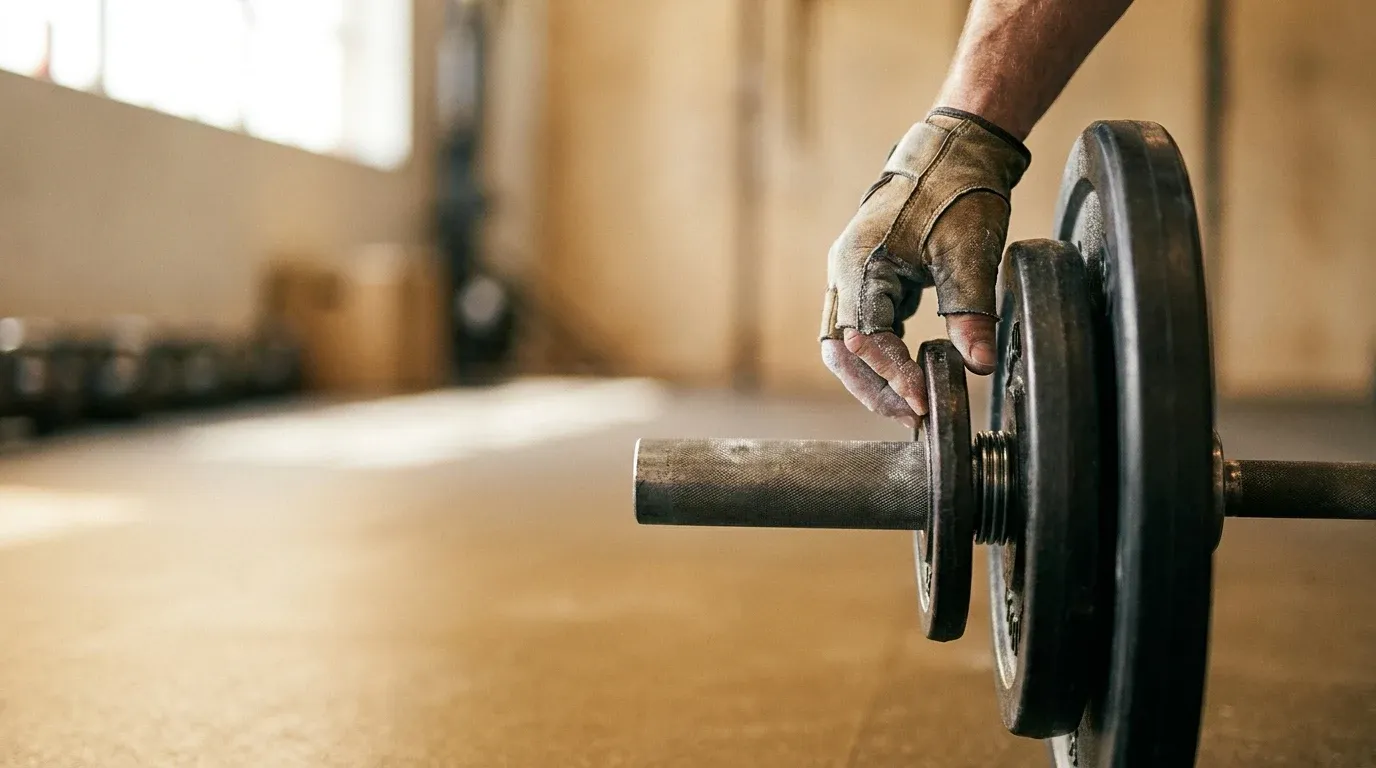
Every muscle you've ever built, every personal record you've ever set, happened because of one thing: your body adapted to a demand you placed on it. That's progressive overload. It's not a training style or a program. It's the fundamental mechanism behind every strength and hypertrophy gain ever recorded in a gym or a lab.
And yet most gym-goers either don't apply it consistently, or they apply it wrong and wonder why they've looked the same for two years.
What Progressive Overload Actually Means
Progressive overload means consistently increasing the demand placed on your muscles over time. Your body is extraordinarily good at adapting. The moment a stimulus stops being challenging, adaptation stops too. If you're lifting the same weight for the same reps every Monday for six months, you're not training. You're just exercising.
The demand can be increased in several ways, and weight on the bar is only one of them:
- Load: Adding more weight to the exercise.
- Reps: Doing more repetitions with the same weight.
- Sets: Adding an extra working set to your session.
- Density: Doing the same total work in less time.
- Range of motion: Moving through a fuller range with control.
- Tempo: Slowing the eccentric (lowering) phase to increase time under tension.
You don't need to increase all of these at once. Picking one variable and progressively improving it week over week is enough to keep adaptation happening. The mistake most people make is assuming overload only means adding weight, then stalling because they can't add weight every single session.
Why Beginners Plateau (and It's Not Genetics)
Here's an honest observation: most plateaus are self-inflicted. Genetics do set a ceiling, but almost no one is anywhere near that ceiling. The real reason most beginners stop progressing after a few months isn't their DNA. It's that they stop applying overload.
The first few weeks of training are almost automatically progressive. You're learning movement patterns, your nervous system is firing more efficiently, and almost any effort produces results. This is beginner's luck, and it doesn't last. Once that neurological adaptation settles, the only way forward is deliberate, structured overload.
Research consistently shows that untrained individuals can increase strength by 25 to 35 percent in the first eight to twelve weeks of resistance training. After that, progress slows dramatically unless programming accounts for it. Most commercial gym routines don't. They give you a fixed set and rep scheme and tell you to show up three times a week forever. That's not a plan. That's maintenance.
If you're unsure whether your current approach is actually structured for progression, it may be worth looking into how to pick a personal trainer for weight loss who can audit your program and build in proper overload from week one.
The Double Progression Method
Double progression is the most practical framework for intermediate lifters and a solid starting point for beginners. Here's how it works.
You pick a rep range for an exercise, say 8 to 12 reps. You work with a given weight until you can hit the top of that range with good form across all your working sets. Once you hit 12 reps cleanly, you add weight, typically 5 pounds for upper body exercises and 10 pounds for lower body. Then you work back up to 12 reps at that new weight.
The name comes from progressing two variables: reps first, then load. It's self-regulating and doesn't require complex math. It also prevents the ego-lifting trap of jumping weight before you've earned it. Your 8-rep max with 135 pounds becomes your 12-rep max, which becomes your 8-rep max with 140 pounds. That's a clear, measurable upward trend.
For compound lifts like squats and deadlifts, a slightly narrower rep range of 5 to 8 often works better because the load increments tend to be larger and the fatigue cost is higher.
RPE-Based Loading: Training by Feel (With Structure)
RPE stands for Rate of Perceived Exertion. It's a 1-to-10 scale where 10 means absolute maximum effort and 1 means barely trying. In strength training, RPE 8 means you finished your set with roughly two reps left in the tank. RPE 9 means one rep left. RPE 10 is a true max effort.
RPE-based loading is useful because it accounts for daily variability. Your nervous system, sleep quality, stress levels, and nutrition all affect how strong you feel on a given day. A percentage-based program that says "lift 80% of your max today" ignores the fact that 80% might feel like RPE 7 on a great day and RPE 9 after a bad week. Speaking of which, sleep quality matters more to performance than most people realize. Research covered in AI-driven sleep analysis is now finding health signals that doctors routinely miss, including patterns that directly affect recovery and strength output.
In practice, RPE training works like this: your program calls for 4 sets of 6 at RPE 8. You pick a weight that leaves you two reps short of failure on your last rep of each set. Week over week, if the same weight feels easier, that's a signal to increase load. The overload is built into the feedback loop.
This method suits intermediate to advanced lifters who have enough experience to accurately gauge exertion. Beginners often underestimate how hard they're working, which makes RPE less reliable at the start.
Weekly Volume Targets and Why They Matter
Volume, measured as total sets per muscle group per week, is one of the most well-supported variables in hypertrophy research. The current evidence suggests that most lifters see meaningful muscle growth with 10 to 20 working sets per muscle group per week, with beginners responding well to the lower end of that range.
Progressive overload can be applied directly to volume. If you're doing 10 sets of chest per week in month one, doing 12 sets in month two and 14 sets in month three is a form of overload. This is especially useful when you've stalled on load and can't add weight to the bar. Adding volume while maintaining intensity keeps the adaptation signal alive.
There's a ceiling, though. More is not always better. Exceeding your recovery capacity leads to accumulated fatigue, not more muscle. That's why recovery isn't optional. It's part of the progression system. Practices like quality sleep, stress management, and strategic deload weeks are how you absorb the volume you're applying. The 5 recovery habits that actually extend your healthspan are worth integrating as a non-negotiable part of your training week, not an afterthought.
How to Put It All Together
You don't need to use all three frameworks simultaneously. Here's a practical hierarchy based on experience level:
- Beginners (0 to 12 months): Use double progression exclusively. Keep rep ranges moderate (8 to 12), add reps before adding weight, and focus on mastering form. Volume should be on the lower end, around 10 sets per muscle per week.
- Intermediates (1 to 3 years): Combine double progression with volume progression. Introduce RPE tracking on your main compound lifts. Start planning your training in 4- to 6-week blocks with a deload week built in.
- Advanced lifters (3-plus years): RPE-based loading becomes essential as linear progression slows. Volume management matters more, and training blocks need to be periodized. Consider working with a coach who understands programming at this level. Deciding between online vs. in-person coaching depends on your access, budget, and how much accountability you need.
One more thing worth saying: overload doesn't mean grinding every session to failure. Chronic high-intensity training without structure increases injury risk and burns out the nervous system. If you're coming back from time off or managing an old injury, returning to the gym after injury requires a deliberate ramp-up strategy so you don't undo progress by pushing overload too aggressively too soon.
The Honest Truth About Long-Term Progress
Progressive overload is simple in theory and genuinely hard in practice. It requires tracking your work, showing up consistently, and resisting the urge to change your program every three weeks because you saw something new on social media.
The lifters who make the most impressive progress over years aren't the ones using the most sophisticated system. They're the ones who pick a solid framework, apply overload relentlessly within it, recover properly, and don't stop. That's it. That's the whole principle.
Your body will always adapt to what you demand of it. The question is whether you're demanding enough.