
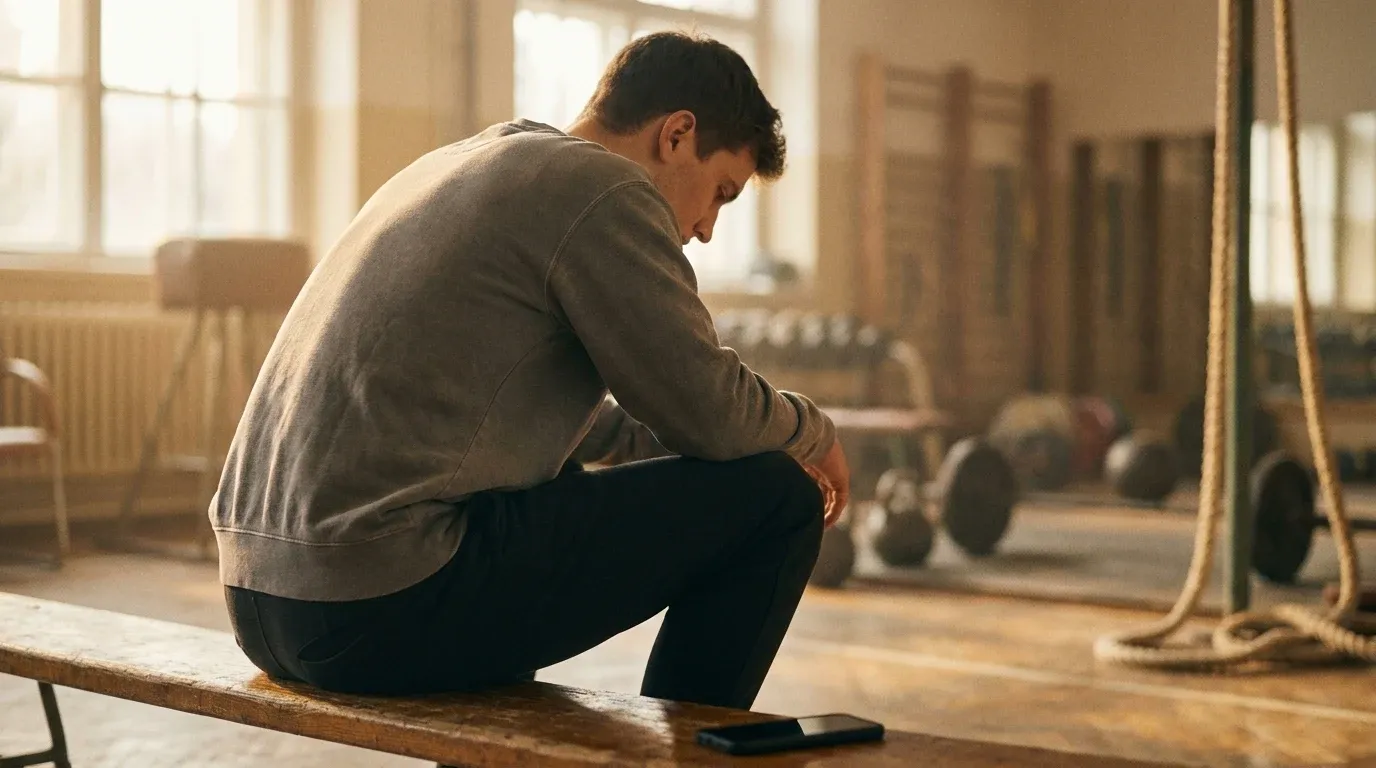
You open Instagram before your morning workout. Within thirty seconds, you've seen three shredded physiques, a transformation post with 80,000 likes, and an influencer selling a supplement that promises to change everything. You haven't even laced up your shoes yet, and you're already questioning whether your body is good enough.
This isn't a personal failing. It's a design problem. And researchers, clinicians, and sports psychologists are increasingly pointing to the same source of friction: fitness content on social media is doing real psychological damage to a growing number of people who lift.
The Evidence Is Getting Hard to Ignore
News reports and academic reviews published in recent years have drawn a consistent line between heavy social media use and poor body image, particularly among young people engaged in sport and fitness communities. One large-scale review found that exposure to idealized fitness imagery was significantly associated with increased body dissatisfaction in adolescents and young adults, regardless of their actual fitness level.
The problem isn't fitness content itself. It's the volume, the curation, and the gap between what's shown and what's real. Algorithms don't serve you average. They serve you exceptional, filtered, and frequently enhanced. When that becomes your baseline for normal, your own progress stops feeling like progress.
Research published in major psychology journals has linked high fitness-content consumption to elevated rates of anxiety, disordered eating behaviors, and compulsive exercise patterns. The gym, which for most people starts as a place of empowerment, can quietly become a place of inadequacy when the measuring stick comes from a feed designed to keep you scrolling. And as outlined in how endless scrolling hurts your memory and what exercise can do about it, that constant digital exposure isn't just affecting mood. It's affecting cognitive function too.
What Influencer Culture Is Actually Selling You
The fitness influencer economy is enormous. Top creators on platforms like TikTok, YouTube, and Instagram generate millions in annual revenue through brand deals, supplement partnerships, and program sales. The business model depends on aspiration. And aspiration, at scale, requires an image that most people cannot realistically achieve.
What's rarely disclosed is the infrastructure behind the content. Professional lighting, post-production editing, peak-week dehydration for photo shoots, anabolic steroid use, and selective posting windows all contribute to physiques that look achievable with enough dedication but are often the result of factors that have nothing to do with dedication at all.
A 2021 study found that a significant proportion of fitness influencers promoted behaviors consistent with disordered eating without labeling them as such. Extreme cuts, "clean eating" dogma, and supplement dependency are packaged as lifestyle choices. For someone who's already vulnerable to comparison, that content doesn't motivate. It erodes.
The comparison effect is particularly sharp in gym communities where identity is closely tied to physical performance and appearance. When your self-worth is indexed to your physique, your feed becomes a constant performance review. And it's one you're guaranteed to fail on most days.
Overtraining, Disordered Eating, and the Spiral Nobody Talks About
Fitness-related social media doesn't just affect how you feel about your body. It can directly influence how you train and eat, often in ways that are counterproductive or outright harmful.
Overtraining is one of the most underreported consequences. When you're comparing your progress to someone whose full-time job is their body, it's easy to conclude that you're simply not doing enough. More sessions, fewer rest days, longer cuts. The irony is that this approach typically delays progress and increases injury risk. Your body adapts during recovery, not during training.
Disordered eating patterns follow a similar logic. Extreme calorie restriction, obsessive macro tracking, and fear-based relationships with food are commonly modeled by popular fitness accounts. Before restructuring your diet based on what an influencer promotes, it's worth understanding what evidence-based nutrition actually looks like. Simple diet changes that actually move the needle are rarely the dramatic overhauls social media celebrates.
Sleep is another casualty. Anxiety about body image is correlated with disrupted sleep, and poor sleep directly impairs muscle recovery, hormonal regulation, and mood. The downstream effects of a psychologically damaging feed aren't just emotional. They show up in your performance data.
Curating a Feed That Works For You, Not Against You
The solution isn't to quit social media entirely, though a structured break is sometimes worth considering. The more sustainable approach is intentional curation. Your feed is an input. Like nutrition, what you consume shapes what you get out.
Here's a practical framework for auditing and improving your fitness content diet:
- Run a 72-hour audit. For three days, notice how you feel immediately after viewing each account. If a particular creator consistently leaves you feeling inadequate, that's information. Unfollow without guilt.
- Follow process over physique. Accounts that show training logs, form breakdowns, programming rationale, and honest progress tend to be more useful and less damaging than those built around physical appearance.
- Seek out transparency. Creators who disclose pharmaceutical use, discuss the realities of their lifestyle, or openly address the limitations of fitness photography are significantly rarer, but they exist. They're worth finding.
- Diversify body representation intentionally. Filling your feed with one body type as the standard for fitness is a distortion. High-performing athletes come in a wide range of shapes and sizes. Your feed should reflect that.
- Use mute and restrict functions aggressively. You don't have to unfollow friends or public figures to reduce their presence in your feed. Most platforms allow content filtering without the social friction of unfollowing.
- Set a time limit before you train. Scrolling fitness content immediately before a workout is a high-risk window for negative comparison. Give yourself a buffer. Listen to music or a podcast instead.
When Motivation Becomes Dependency
There's a version of social media fitness use that's genuinely helpful. Educational content, community accountability, exposure to new training methods. These are real benefits. The problem is when motivation requires a constant external feed to function.
If you find that you can't get to the gym without consuming fitness content first, or that your workout satisfaction is contingent on how your progress photos perform online, those patterns are worth examining. Intrinsic motivation, the kind that comes from how training makes you feel rather than how it makes you look to others, is consistently associated with better long-term adherence and psychological wellbeing.
If your relationship with the gym feels increasingly driven by anxiety rather than enjoyment, it may be time to work with a professional rather than a feed. Understanding the signs that you actually need a personal trainer is a useful starting point. A good coach provides structure, accountability, and feedback that no algorithm can replicate.
The Platform Problem You Can't Fully Opt Out Of
Individual curation helps, but it doesn't fix the underlying architecture. Social media platforms are algorithmically optimized for engagement, and high-engagement fitness content skews toward the extreme. The accounts with the most aspirational (and often least realistic) content typically reach the widest audiences. Moderation policies around fitness misinformation remain inconsistent across platforms.
This means that even a carefully curated feed will occasionally surface content that the algorithm believes you'll engage with, based on your viewing history. Engagement includes lingering on a post. It includes the three seconds you spent looking at a physique that made you feel bad. The algorithm reads that as interest and serves you more.
Being aware of this loop is itself protective. When you understand that your feed is a commercial product shaped by engagement metrics, not a reflection of health or reality, you start to consume it differently.
Building a Healthier Relationship With Fitness Online
The goal isn't to make social media your enemy. It's to treat it with the same critical awareness you'd apply to any other input that affects your wellbeing. Your training, your recovery, your nutrition, and your sleep all benefit from evidence-based thinking. Your media consumption deserves the same.
Recovery is a good entry point if you want to shift your content focus toward substance. Simple recovery habits that actually work are the kind of evidence-grounded content that moves the needle without weaponizing your self-image. Progress in fitness is gradual, often invisible week to week, and deeply personal. A feed that reflects that reality is one you can actually use.
You're not going to out-discipline an algorithm that's designed to surface content that provokes a response. But you can make deliberate choices about what you follow, when you scroll, and how you interpret what you see. That's not a minor adjustment. Over months and years, it shapes your relationship with your own body and your own progress. Choose the feed that supports the athlete you're actually trying to become.