
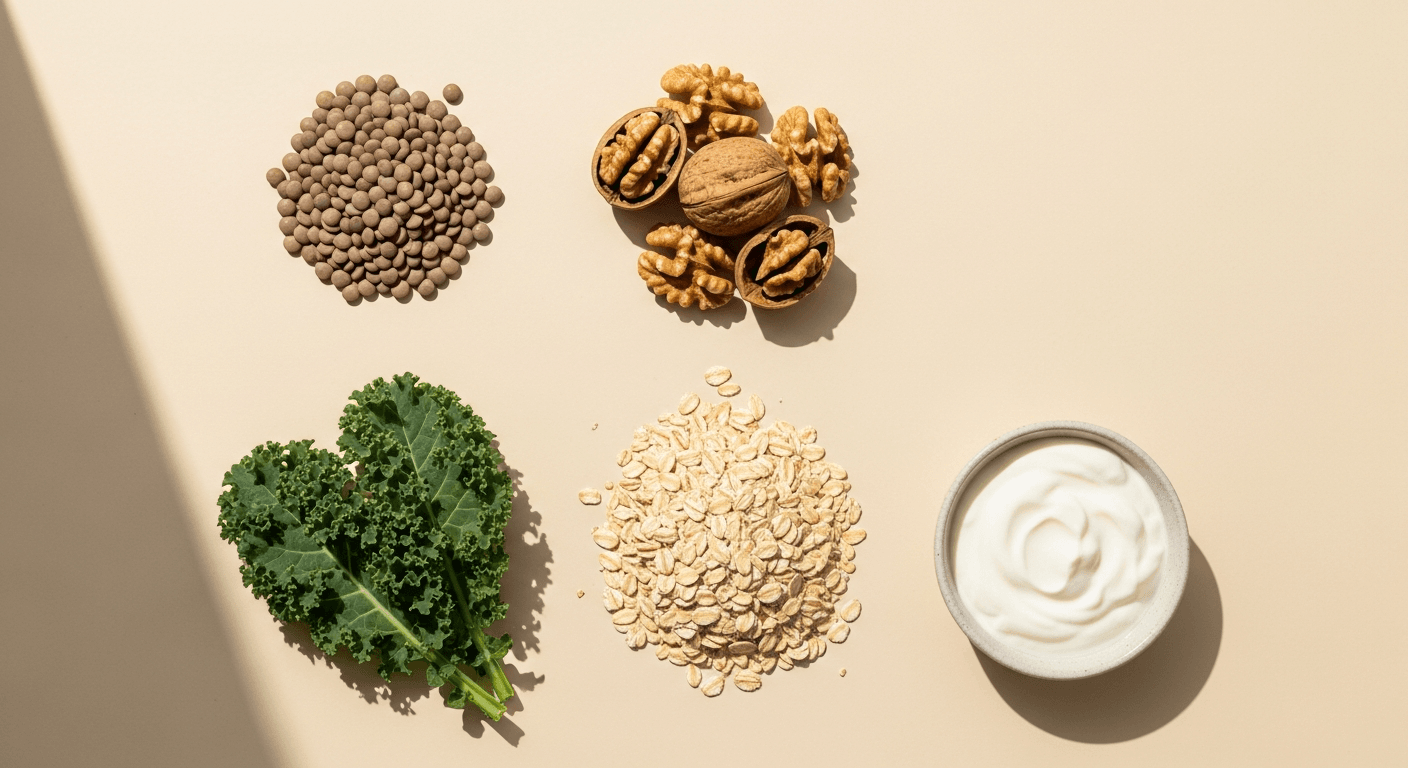
Most nutrition advice sets an impossible bar. Eliminate entire food groups, track every macro, meal-prep six days ahead. The result is a few weeks of rigid compliance followed by a full reset to old habits. New research suggests that framing was wrong from the start.
A growing body of evidence, including work from the University of Florida's Institute of Food and Agricultural Sciences (UF/IFAS), points to something more useful: a small number of targeted dietary shifts that are easy to sustain and produce measurable improvements in biomarkers, body composition, and long-term disease risk. No overhaul required.
Why Small Changes Outperform Big Ones
The mechanism isn't complicated. A change you maintain for six months beats a change you abandon after three weeks, regardless of how impressive the intervention looked on paper. Research on dietary adherence consistently shows that the size of the initial behavior change is a poor predictor of long-term outcomes. Sustainability is the variable that matters.
This is especially relevant for active adults who already invest time in structured training. If you're optimizing your sessions by reading guides like How Long Should Your Workout Actually Be?, but your daily diet still leans on ultra-processed convenience foods, you're leaving a meaningful portion of your potential results on the table.
The marginal gains available from basic nutrition improvements are real. They don't require a nutritionist, a specialized grocery list, or significant extra spending. They require consistency with a short list of high-leverage habits.
The Highest-Impact Changes, Ranked
Not all dietary changes carry equal weight. Based on the current evidence, here are the shifts that reliably produce the strongest results per unit of effort.
1. Swap Refined Grains for Whole Grains
This single substitution is among the most replicated findings in nutrition science. Replacing white bread, white rice, and refined pasta with whole-grain versions improves fasting glucose, reduces LDL cholesterol, and lowers markers of systemic inflammation. Studies tracking this swap over periods as short as six to eight weeks show statistically significant changes in metabolic markers.
The practical version of this isn't complicated. It's choosing oats over instant cereal, brown rice over white, and whole-grain bread over white sandwich bread. You're not removing anything from your plate. You're upgrading the version of something already there.
2. Add One Daily Serving of Legumes
Beans, lentils, chickpeas, and edamame consistently appear in the research as high-impact additions to any dietary pattern. A single daily serving (roughly half a cup cooked) is associated with improved glycemic control, reduced cardiovascular disease risk, and better satiety, which tends to reduce overall caloric intake without deliberate restriction.
The fiber and resistant starch in legumes also feed beneficial gut bacteria, a pathway that connects directly to immune function and inflammation. If you want a deeper look at how gut composition affects nutrient processing, Next-Gen Probiotics: How Your Gut Unlocks Plant Nutrients explains the current science clearly.
One serving isn't a major dietary commitment. Add black beans to eggs in the morning. Toss lentils into a salad at lunch. Stir chickpeas into a soup. The format doesn't matter. The frequency does.
3. Reduce Ultra-Processed Snacks
Ultra-processed foods now account for a significant portion of daily caloric intake across English-speaking markets. The problem isn't just calorie density. Research shows these products disrupt gut microbiome composition, elevate inflammatory markers, and interfere with the hormonal signals that regulate hunger. The effects accumulate over time in ways that are not visible on a day-to-day basis.
The evidence here is worth taking seriously. What Ultra-Processed Foods Actually Do to Your Gut breaks down the specific mechanisms, and the findings are more significant than most people expect.
The practical target isn't zero ultra-processed foods. That's the kind of absolutism that leads to abandonment. The target is reduction. Replacing one or two daily ultra-processed snacks with minimally processed alternatives, such as fruit, nuts, yogurt, or whole-grain crackers, is achievable and measurable.
4. Watch Your Sodium from Takeout
If you eat takeout regularly, you're likely consuming far more sodium than you realize. Studies examining labeled versus actual sodium content in restaurant and delivery meals have found systematic underreporting, sometimes by several hundred milligrams per meal. Over a week, that adds up to a meaningful cardiovascular load.
Research covered in Half of Takeaway Meals Have Way More Salt Than Listed is particularly relevant for active adults who assume their training offsets their dietary risks. It doesn't fully compensate for chronically elevated sodium intake, especially in terms of arterial stiffness and blood pressure over time.
You don't need to stop ordering out. Cooking one or two more meals at home per week gives you direct control over sodium levels and tends to reduce overall intake without any deliberate restriction.
5. Anchor One Meal Per Day as Whole Food
Rather than trying to clean up every meal simultaneously, commit to one meal per day that is built around whole, minimally processed ingredients. Breakfast is often the easiest entry point because it's the most habitual and the least socially influenced.
That one anchored meal becomes a foundation. Research on dietary patterns shows that people who eat at least one structured, nutrient-dense meal daily tend to make better food choices across the rest of the day. It creates a psychological reference point that affects subsequent decisions.
The Active Adult Blind Spot
People who train consistently tend to overestimate how much exercise compensates for dietary mediocrity. This is a documented bias. Training improves insulin sensitivity, cardiovascular output, and muscle mass. It does not neutralize the downstream effects of a diet high in ultra-processed foods, refined carbohydrates, and excess sodium.
The interaction goes in both directions. Nutrition affects recovery, training quality, and long-term adaptation. If you're already putting thought into your program structure, whether that's following evidence on How Many Lifting Sessions Do You Actually Need Per Week? or balancing modalities, the quality of your dietary inputs will either amplify or blunt those adaptations.
The UF/IFAS research frames this clearly: people who are otherwise health-conscious but rely on convenience foods are a distinct group with specific, addressable risk factors. They're not starting from zero. They're optimizing from a position of partial progress. The gap between where they are and where they could be is closeable with targeted, sustainable changes rather than total reinvention.
Personalization Still Matters
These high-impact changes apply broadly, but individual variation is real. Genetic factors, gut composition, and existing biomarkers all influence how your body responds to specific foods. If you've ever wondered why a dietary change that worked clearly for someone else did little for you, that's often the explanation.
Tools for understanding your individual response are improving rapidly. Blood Biomarkers Are Now Part of Personalized Nutrition covers how combining genetic data with blood markers is starting to make truly individualized dietary guidance practical and accessible for everyday people, not just clinical populations.
That said, the population-level recommendations above are robust enough to deliver results for most people before any personalization layer is needed. Start with the universals, then refine.
How to Start Without Overthinking It
The research supports a graduated approach. Pick one change from the list above and run it for three weeks before adding another. This sequencing matters. Stacking too many changes at once increases cognitive load and reduces adherence probability.
- Week 1 to 3: Replace your most frequent refined grain with a whole-grain version.
- Week 4 to 6: Add one serving of legumes daily, in whatever format fits your existing meals.
- Week 7 to 9: Identify your two most common ultra-processed snacks and replace them with minimally processed alternatives.
- Ongoing: Cook at least one extra meal at home per week to manage sodium from takeout.
Each change is independent. If one week goes sideways, the others don't collapse. That's by design. Resilience in a dietary pattern comes from its modularity, not its rigidity.
The Actual Standard to Aim For
Consistency over perfection isn't a motivational slogan. It's a practical description of how dietary patterns affect health outcomes over time. A diet that's 80 percent aligned with these principles, maintained for a year, produces better results than a diet that's 100 percent aligned for six weeks.
You don't need to eat perfectly. You need to eat better, more often, with a short list of high-leverage habits anchoring the pattern. The evidence is clear enough that the remaining variable is execution. That part is entirely within reach.