
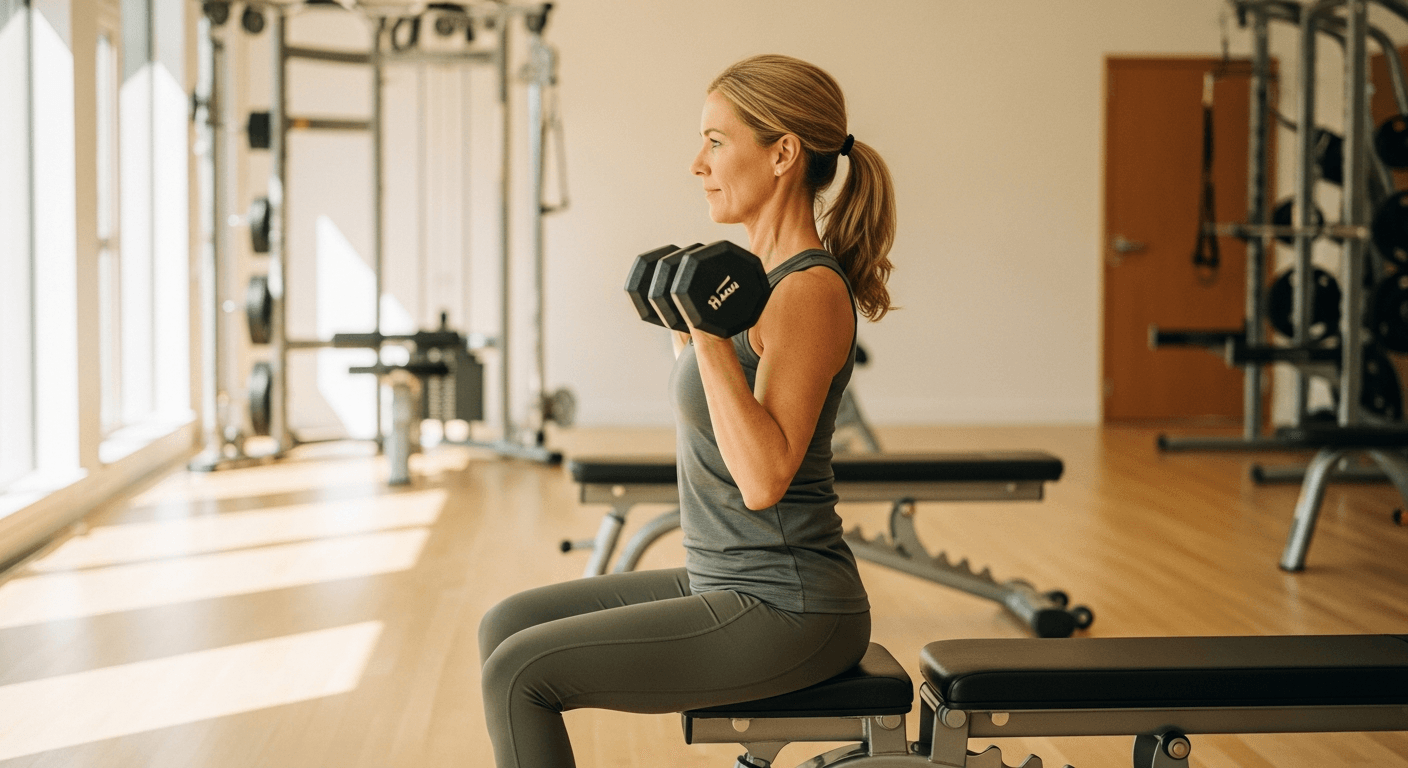
For the first time, strength training surpassed weight loss as the primary fitness goal in the United States. Life Time's 2026 Wellness Survey reveals that 82% of Americans say they're focusing more on overall health and wellbeing than in previous years. The cult of the body is fading. Longevity is taking its place.
What Life Time's 2026 Survey Found
- 82% of Americans focused more on overall health and wellbeing in 2026
- Strength training and longevity: the #1 fitness goal, ahead of weight loss
- Structural shift: exercise is no longer seen as an appearance tool but as a health tool
- Longevity science (BJSM studies, meta-analyses) has filtered into mainstream awareness
- Industry implication: content and product repositioning from aesthetics to function
Why This Shift Is Happening Now
This change didn't come from nowhere. Several factors prepared it over five years:
The democratization of science: Studies like the BJSM 30-year study (147,000 adults) got mainstream media coverage without precedent. The strength training-longevity link — 13-21% mortality reduction depending on activity level — is now in the collective consciousness.
Population aging: The most active generations on fitness social media (millennials, Gen X) have crossed 40. Their goals have naturally evolved: they're not trying to look like models anymore — they want to still be able to play with their kids at 60 and avoid nursing homes in old age.
Image fatigue: Scandals around filters, retouched bodies, and unrealistic standards have created cultural exhaustion with appearance-based fitness. Platforms themselves started regulating overly "transformation before/after" content.
What This Changes for the Industry
For fitness brands, coaches, and content creators, this shift creates both an opportunity and an obligation to reposition:
- The message that lands in 2026: "Build a body that lasts" rather than "Lose 10kg in 30 days"
- Content that performs: longevity studies, science-based strength protocols, recovery, active aging
- The client who converts: 35-55 year olds who want function, not form
For personal trainers, it's an invitation to enrich their positioning. Coaches who talk about lifelong performance, preserved bone density, and sarcopenia prevention are now speaking to the mainstream — not a niche.
What About Europe?
While Life Time's survey covers the US market, European trends follow a similar trajectory with a 12-24 month lag. In France, Google searches for "musculation après 50 ans" and "sport santé longévité" have grown at double digits over the past 12 months.
The French coaching market is progressively orienting toward health-longevity positioning — with coaches offering programs for active seniors, postnatal clients, and people who want to age well physically. This is no longer a marginal specialization — it's where the demand is heading.