
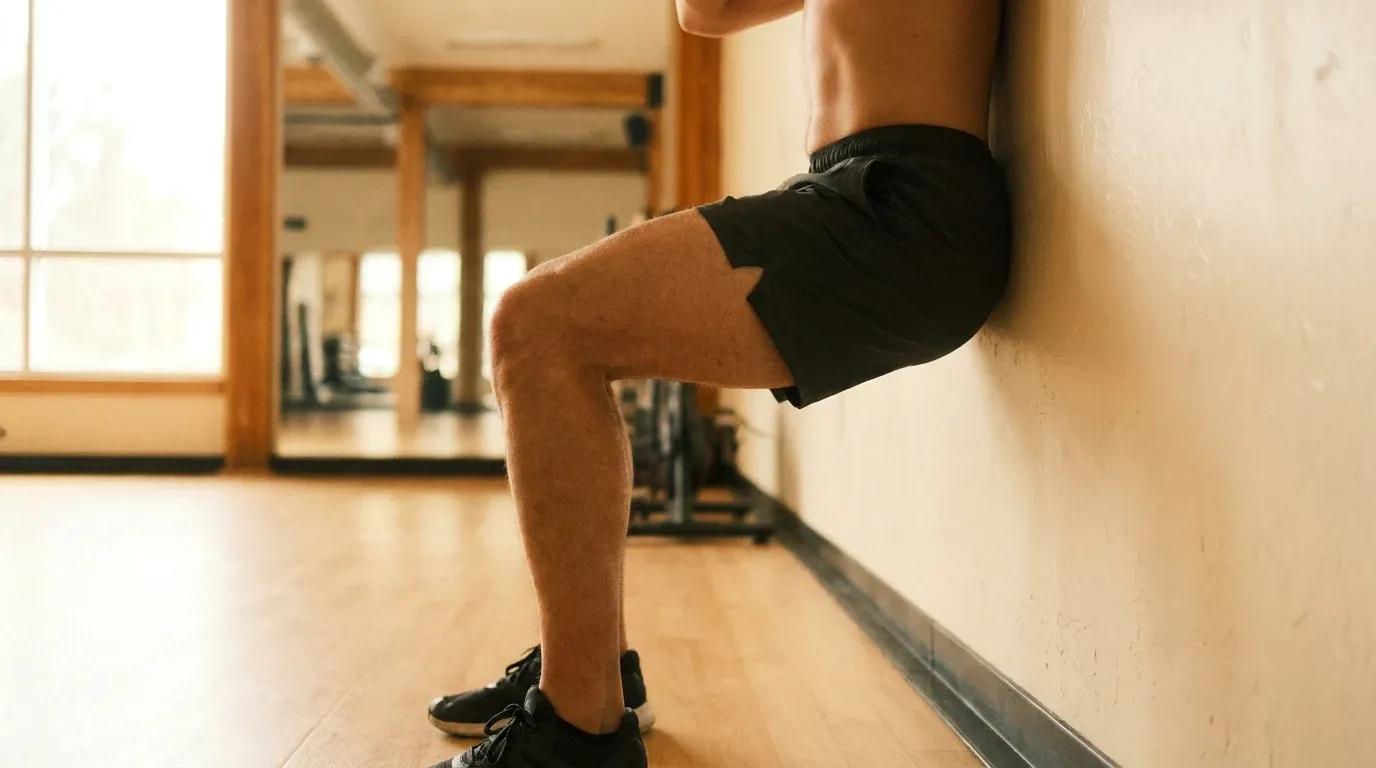
If you're already lifting weights, you probably think you've got your cardiovascular bases covered. And to a degree, you're right. But there's a specific type of exercise that targets blood pressure in a way that traditional strength training simply doesn't, and it takes about six minutes of your session to do it.
Isometric exercises, particularly wall squats, are increasingly backed by research as one of the most efficient tools available for reducing systolic blood pressure. The latest findings suggest that even one session per week can produce meaningful reductions. Two sessions push those numbers further. Three locks in the gains with more consistency and durability over time.
That's a compelling trade-off for anyone who's already in the gym and looking for a low-effort, high-return addition to their existing routine.
What the Research Actually Shows
A growing body of evidence, including a large meta-analysis published in the British Journal of Sports Medicine, has ranked isometric exercise as the most effective exercise modality for reducing blood pressure, outperforming aerobic training, dynamic resistance training, and high-intensity interval training in direct comparisons.
The specific numbers matter here. Isometric training protocols have been associated with reductions in systolic blood pressure averaging around 8 to 10 mmHg in people with elevated readings. That's a clinically significant drop. For context, some first-line antihypertensive medications produce reductions in that same range.
When frequency is broken down, one session per week still produces measurable benefit compared to no isometric training. Two sessions per week show a larger effect. Three sessions per week appear to be the sweet spot, producing the largest reductions in both systolic and diastolic pressure, with improvements that hold up better over time rather than fading between sessions.
This dose-response relationship is useful. It tells you that even a single weekly session is worth doing, but that adding a second or third session meaningfully compounds the benefit without requiring a full program overhaul.
Why Isometric Exercise Hits Blood Pressure Differently
To understand why a wall squat works differently from a barbell squat, you need to understand what's happening cardiovascularly during each type of effort.
In traditional dynamic resistance training, your muscles contract and lengthen rhythmically. Blood flow through the working muscle is alternately restricted and released. The cardiovascular system responds to that rhythm, and while there are real long-term benefits for heart health, the acute blood pressure response is largely driven by that pumping action.
In isometric exercise, you hold a fixed position under sustained muscular tension. There's no movement. Blood flow to the working muscle is compressed consistently throughout the hold, and the cardiovascular system responds by producing a sustained vasodilatory response after the effort ends. That post-exercise vasodilation, the widening of blood vessels following the hold, is thought to be the primary mechanism driving the blood pressure reduction.
Over repeated sessions, this effect appears to train the vascular system to maintain lower resting tone. Your blood vessels essentially get better at relaxing. That's a different physiological adaptation than what you get from lifting heavy, and it's why isometric training fills a gap that traditional strength work leaves open.
Managing cardiovascular stress is also worth thinking about holistically. Chronic psychological stress contributes significantly to elevated blood pressure, and mind-body approaches for stress have their own evidence base that complements physical training strategies.
Wall Squats: The Practical Details
The wall squat is the isometric exercise most consistently used in blood pressure research, partly because it's easy to standardize and partly because it's accessible to almost everyone.
Here's the standard protocol used across most studies:
- Position: Back flat against a wall, feet shoulder-width apart, knees bent to approximately 90 degrees, thighs parallel to the floor.
- Duration per set: Hold for two minutes.
- Rest between sets: Two minutes of passive rest.
- Sets per session: Four sets.
- Total active work time: Eight minutes. Total session time including rest: approximately 14 to 16 minutes.
If two minutes feels impossibly long at first, that's normal. You can build up from 30 to 45 seconds and work toward the full duration over a few weeks. The important thing is maintaining genuine muscular tension throughout the hold, not just leaning against the wall with minimal effort.
No equipment is required. No gym access is required. You can do this in your living room, in a hotel room, or tacked onto the end of a training session before you leave the gym. The barrier to entry is as low as it gets.
Who This Is Most Relevant For
This isn't a strategy aimed at sedentary people who've never trained. It's specifically useful for people who are already active, already lifting, and looking for a targeted cardiovascular health benefit that their current training isn't delivering as efficiently.
If you're in your 30s or 40s and you've noticed your blood pressure creeping into the elevated range despite consistent training, this matters. If you have a family history of hypertension and you want a proactive tool, this is worth taking seriously. If you're an athlete in a sport where cardiovascular efficiency matters and you want to optimize vascular health without adding aerobic volume, isometric training is a logical addition.
Sleep is another underrated variable in this picture. Good sleep actively protects cardiovascular health, and poor sleep consistently drives blood pressure up. If you're doing the wall squats but sleeping five to six hours a night, you're working against yourself.
Nutrition plays a role too. Excess sodium, insufficient potassium, and chronic low-grade inflammation all contribute to elevated blood pressure. Most people eating modern diets are under-consuming fiber, which is directly associated with better cardiovascular outcomes. Exercise and diet work together here, not in isolation.
How to Stack This Into an Existing Program
The simplest approach is to treat wall squats as a cooldown finisher. After your last working set, before you stretch or leave, run through four two-minute holds with two-minute rests between each. It adds roughly 15 minutes to your session, and you're done.
If you train three days a week, doing wall squats on each of those days puts you at the three-session threshold where research shows the strongest effects. If you only train twice a week, adding a brief standalone isometric session on a rest day, perhaps a 15-minute block at home, gets you to that third session without adding gym time.
Some people find it useful to pair the holds with intentional breathing work, slow nasal inhales and controlled exhales during the hold. This isn't a requirement, but it may enhance the parasympathetic response that follows the session and amplify the vasodilatory effect. It also makes the holds more mentally manageable.
Recovery between sessions doesn't need to be elaborate. The muscular demand of wall squats is real but contained. You're not creating significant tissue damage that requires extended repair. Hot water immersion after training has shown some recovery benefits, but for a wall squat protocol added onto regular training, standard sleep and nutrition practices are sufficient.
Realistic Expectations and Timelines
Blood pressure adaptations from isometric training don't happen overnight. Most studies showing significant reductions run for six to ten weeks of consistent training. Some measurable changes appear earlier, but the more robust reductions in resting blood pressure require sustained practice over that window.
The practical implication is that you're committing to a habit, not a quick fix. Six weeks of consistent twice-weekly wall squats is a realistic minimum to expect meaningful results. Eight to twelve weeks at three sessions per week is where the data looks most convincing.
If you're on medication for blood pressure, don't stop or adjust your dosage based on exercise changes without speaking to your doctor. Isometric training can complement pharmaceutical management, and in some cases people working with clinicians have been able to reduce medication over time as lifestyle interventions take hold, but that's a clinical conversation, not a unilateral decision.
What the research makes clear is that you don't have to choose between lifting and protecting your cardiovascular health. You can do both, and with six minutes of wall time, you can do it without sacrificing anything from the training you're already doing.
If you're also thinking about how your overall recovery stack supports long-term cardiovascular function, modern performance science has updated its view on what recovery actually requires, and blood pressure management is increasingly part of that conversation.