
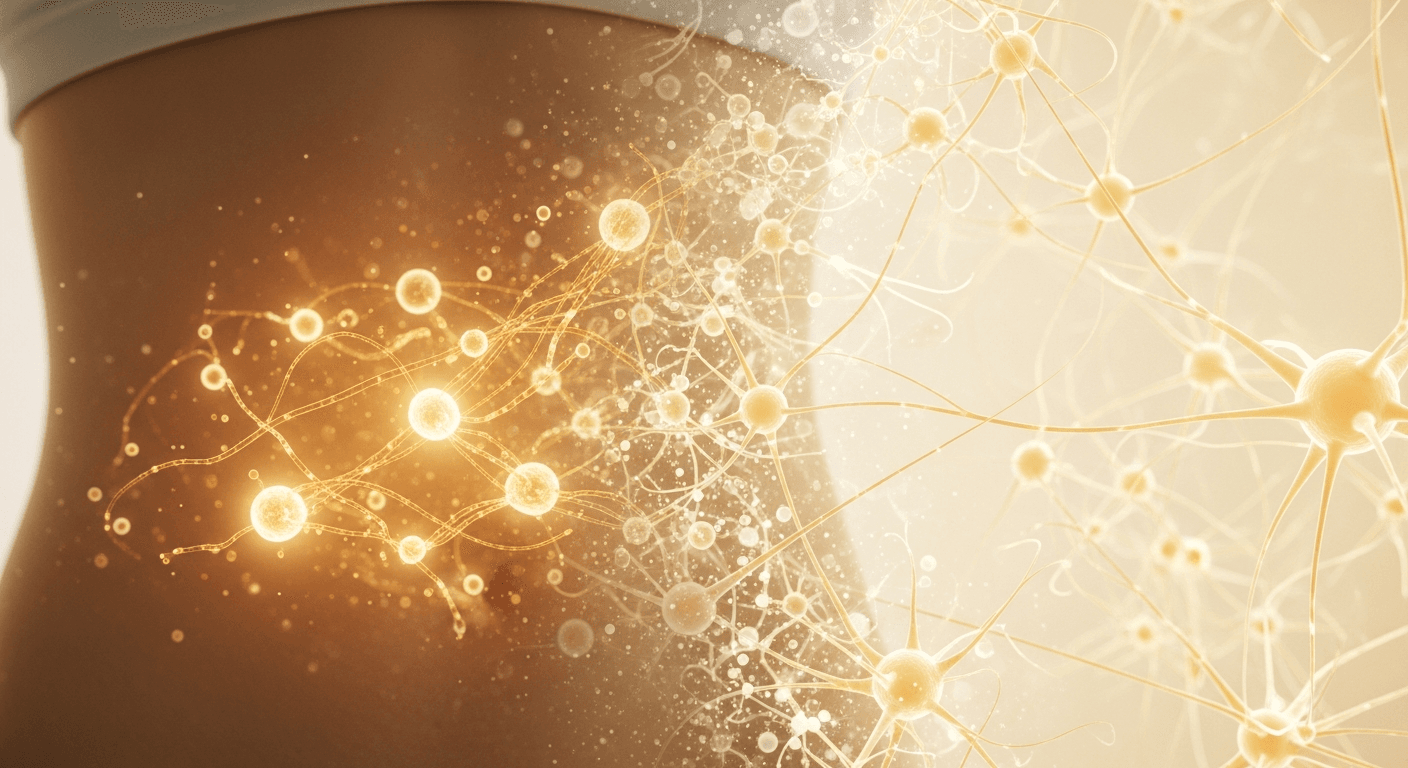
Most people think of weight loss as a math problem. Eat less, move more, wait for the scale to move. But a growing body of research is dismantling that equation, and a recent study on obese adults has made the case more clearly than ever: sustainable fat loss isn't just a calorie story. It's a full-system transformation that simultaneously reshapes your gut microbiome and the way your brain processes food, reward, and hunger.
That's not a metaphor. That's measurable biology. And understanding it changes how you should think about everything from your diet structure to your training approach.
What the Study Found
Researchers studying obese adults placed participants on a structured dietary intervention with characteristics of intermittent fasting. The protocol significantly reduced body fat and improved key metabolic markers including insulin sensitivity and inflammatory biomarkers. Standard results for a well-designed dietary study.
What made this research stand out was what happened underneath those numbers. Participants who achieved meaningful fat loss showed measurable shifts in their gut microbiome composition. Populations of beneficial bacteria expanded. Strains associated with inflammation and metabolic dysfunction declined. The gut, in short, reorganized itself.
At the same time, brain imaging data showed changes in how participants' neural circuits responded to food-related cues. Regions involved in reward processing and impulse control showed altered activation patterns. The brain wasn't just passively receiving a lighter body. It was actively recalibrating its relationship with food.
Critically, both sets of changes happened in parallel. The gut and brain didn't shift sequentially. They moved together, suggesting a bidirectional feedback loop that underlies lasting body composition change.
The Gut-Brain Axis Isn't a Wellness Buzzword
You've probably seen "gut health" referenced in every corner of the wellness industry at this point. The term has been stretched to cover everything from bloating remedies to mood supplements. But the gut-brain axis is a documented physiological system, and its role in weight regulation is increasingly hard to ignore.
Your gut produces roughly 90 percent of the body's serotonin. It communicates with the brain via the vagus nerve, sending continuous signals about energy status, satiety, and metabolic state. Specific bacterial species influence appetite hormones like GLP-1 and peptide YY, which are the same pathways targeted by the most prescribed weight loss medications currently on the market.
When your microbiome is dysbiotic, meaning populated by the wrong balance of bacteria, those signals get distorted. Hunger cues become unreliable. Inflammation rises. The brain's dopamine response to high-calorie food intensifies. You're not weak-willed. You're fighting a system that's been tuned in the wrong direction.
This is why dietary interventions that improve gut diversity tend to produce better long-term outcomes than pure caloric restriction. They're not just reducing input. They're fixing the signaling infrastructure.
Why Intermittent Fasting Affects Both Systems
The dietary structure used in the study aligns with intermittent fasting principles: defined eating windows, periods of metabolic rest, and reduced overall caloric load without the need for obsessive gram-by-gram tracking. This approach has accumulated significant research support over the past decade, and the dual gut-brain effect helps explain why.
During fasting periods, the gut gets a break from constant digestive demand. That rest period appears to support microbial diversity, allowing certain beneficial strains to proliferate when they'd otherwise be crowded out by continuous food processing. At the same time, fasting periods reduce insulin spikes and lower systemic inflammation, which directly influences the brain's sensitivity to hunger and reward signals.
The result is a dietary pattern that doesn't just create a caloric deficit. It creates the biological conditions for the gut and brain to reset together. That's a meaningful distinction if you've ever lost weight through aggressive restriction only to regain it within months as cravings came back stronger than before.
For a closer look at how dietary timing intersects with metabolic health, the research on protein and fiber as 2026's dominant nutrition pairing offers relevant context on what to prioritize in your eating windows.
Training Hard Won't Compensate for a Broken System
Here's where this research has direct implications for how you train. If your gut microbiome is dysbiotic and your brain's reward circuitry is dysregulated, high-intensity training alone won't produce the body composition results you're after. Not in the long run.
Exercise is essential. The cardiovascular and metabolic benefits of regular training are not in question. Research consistently shows that the right combination of training modalities protects heart health, preserves insulin sensitivity, and supports longevity. Whether you're weighing cardio against lifting for diabetes prevention or calibrating your weekly volume, those choices matter.
But training operates on top of a biological foundation. If that foundation, your gut composition, your hormonal signaling, your neural reward patterns, is working against you, exercise creates a ceiling on what's possible. You can burn calories and still not move fat stores meaningfully, because your hunger hormones compensate, your cravings intensify post-workout, and your body prioritizes recovery in ways that maintain rather than reduce fat mass.
The study's findings reinforce a principle that coaches and sports dietitians have known anecdotally for years: the people who make the most durable body composition changes are those who address diet and lifestyle comprehensively, not those who simply add more training hours.
What This Means for Your Daily Habits
Translating this research into practice doesn't require a clinical protocol. It requires a shift in how you frame your approach. Instead of asking "how do I burn more calories," ask "how do I create conditions where my gut and brain are working with me, not against me."
A few principles that align with the evidence:
- Prioritize dietary consistency over dietary perfection. Your microbiome responds to patterns over time. A diet that's 80 percent high-quality food, eaten consistently, does more for gut diversity than a perfect week followed by chaotic weekends.
- Include plenty of fiber from varied plant sources. Gut bacteria feed on fermentable fiber. Diversity of plant intake correlates directly with microbial diversity. This isn't complicated nutrition, but most people fall far short of it.
- Protect your sleep. Sleep deprivation disrupts gut permeability, elevates cortisol, and distorts the brain's reward response to food. Research continues to confirm that sleep is a core recovery variable, not an optional one. The relationship between sleep and moderate exercise as protectors of mental and metabolic health is increasingly well-documented.
- Use structured eating windows. You don't need a strict fasting protocol, but giving your digestive system consistent periods of rest each day supports microbial balance and reduces the chronic insulin elevation that blunts fat metabolism.
- Manage recovery as seriously as training. Overtraining without adequate recovery elevates systemic inflammation, which degrades gut barrier function over time. Rest and recovery have emerged as foundational wellness priorities in 2026, and this gut-brain research gives you a mechanistic reason why.
The Bigger Picture: Weight Loss as System Change
What this research ultimately argues is that weight loss, the kind that lasts, is not an isolated event. It's a coordinated biological reorganization. Your fat cells don't just shrink. Your bacterial populations shift. Your brain learns a new relationship with food. Your hormone signaling recalibrates. These changes reinforce each other, which is why the process can feel slow at first and then accelerate, and why disrupting one part of the system can stall all the others.
It also reframes what failure looks like. If you've tried caloric restriction repeatedly and struggled, the issue may not be discipline. It may be that the intervention addressed one variable without creating conditions for the others to shift. A deficit without fiber diversity doesn't move the microbiome. A microbiome that's dysbiotic keeps sending the wrong signals to a brain that keeps generating cravings you're white-knuckling through.
There's also a timing dimension worth noting. Research on fitness trajectories after 35 and the capacity for late-stage adaptation suggests the body retains significant plasticity well into midlife. The gut-brain system is no exception. Starting a comprehensive approach later doesn't disqualify you from achieving the kind of deep biological recalibration this study describes.
The calorie equation isn't wrong. It's just incomplete. Weight loss happens in the gut and the brain as much as it happens on the plate or in the gym. Build your approach around the full system, and the numbers will follow.