
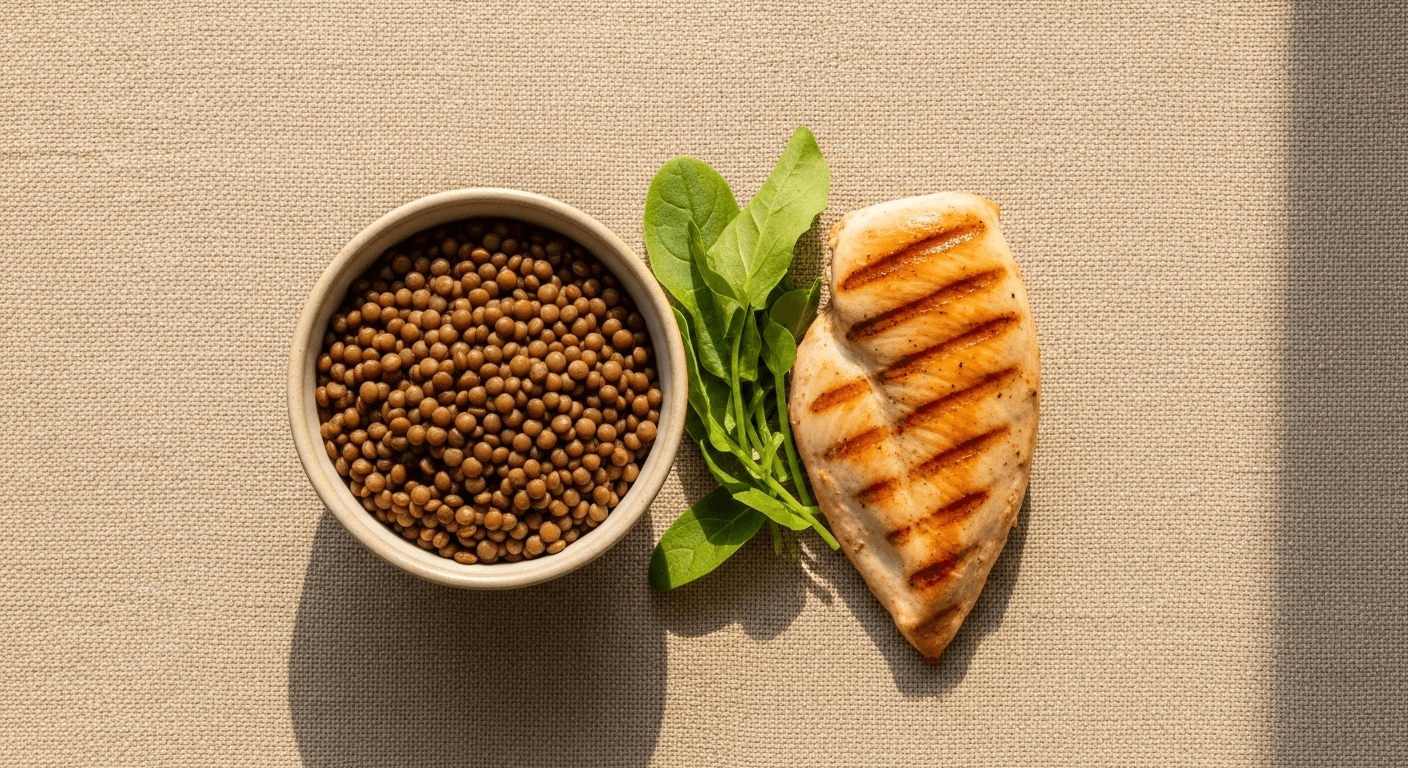
Every Tuesday, The Nutrition Lab breaks down the science of sports nutrition. This week: protein and fiber are cementing themselves as 2026's dominant nutritional duo — and it's not a coincidence. Here's the data and how to use it.
The Nutrition Lab — This Week
- Protein and fiber: the two most-cited nutritional priorities in 2026
- Synergy: a meal high in BOTH protein AND fiber produces 40% longer satiety than protein alone
- Most adults consume 15-17g of fiber/day — vs. 25-38g recommended
- Practical: 3 high-protein + high-fiber meal structures that work for athletes
Why this duo dominates 2026
The protein + fiber convergence at the top of nutritional priorities reflects several simultaneous shifts. On the protein side: GLP-1 medications, muscle longevity science, and the popularization of "everyone should eat more protein" drove protein product sales to records in 2025. On the fiber side: gut microbiome research exploded, and the link between microbial diversity, metabolic health, and immunity is now well-documented.
Both nutrients also share a key characteristic: satiety. A 2025 meta-analysis showed that a meal combining high protein (30g+) AND high fiber (8g+) extends satiety 40% longer than a high-protein meal alone, at equivalent calories. In practice: it reduces snacking between meals.
Protein: the basics
For active athletes, the target of 1.6 to 2.2g of protein per kilogram of body weight remains the ISSN-validated reference. No benefit beyond 2.2g/kg for most practitioners — the studies don't show incremental gains above that threshold.
Distribution throughout the day matters as much as total amount. Optimal: 4 meals or feedings each containing 20–40g of protein, spaced 3–4 hours apart. The post-workout window (0-2h) matters but isn't magic — total daily intake is the primary driver.
Fiber: the most neglected nutrient in sports nutrition
Dietary fiber is consistently under-consumed — even by people who pay attention to their nutrition. The global average is around 15-17g per day — half of the WHO recommendation (25g for women, 38g for men).
For athletes, fiber has a direct performance role: it regulates blood sugar (energy stability), feeds the gut microbiome (recovery and immunity), and slows carbohydrate digestion (sustained energy management). Best sources: legumes (beans, lentils), cruciferous vegetables (broccoli, cabbage), oats, whole fruits, chia and flax seeds.
Key takeaways
- Protein and fiber dominate 2026 nutrition — not as a trend but as scientifically validated priorities.
- The synergy is real: combining the two extends satiety 40% longer vs protein alone.
- Fiber target: 25-38g/day — most athletes are well short of this.
- Protein distribution: 4 feedings of 20-40g/day every 3-4h — distribution matters as much as total intake.