
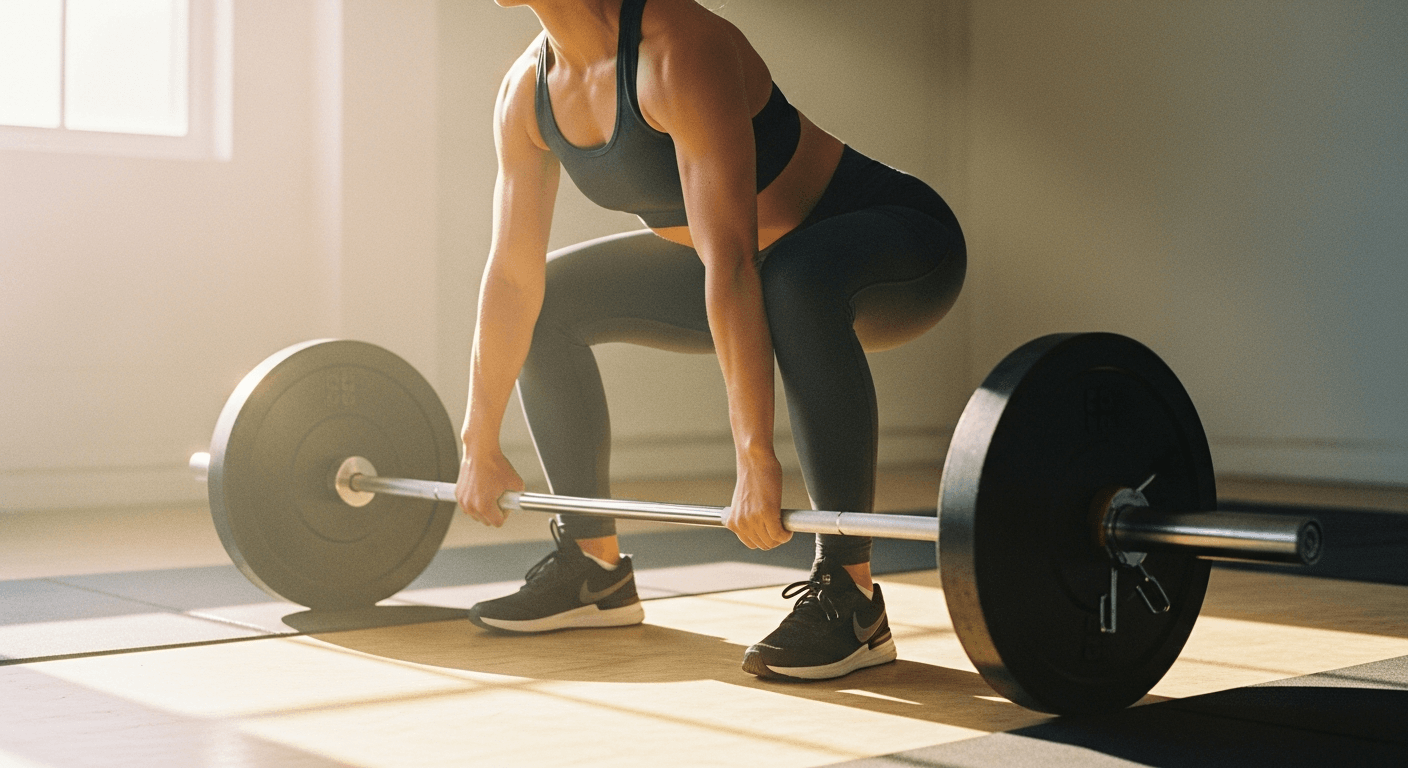
For decades, the fitness industry has quietly steered women toward treadmills, ellipticals, and group cardio classes while men claimed the squat racks and barbells. It was never an official policy. It didn't need to be. The message was baked into the marketing, the gym layouts, and the social anxiety of being the only woman in a sea of iron. And millions of women paid for it with suboptimal results and missed health benefits they didn't even know they were missing.
A large-scale study published in July 2026 makes the case more plainly than ever: weight training delivers significant cardiovascular benefits for women, and those benefits are substantial enough to rival what most people assume only sustained cardio can produce. The research analyzed data across tens of thousands of participants and found that women who engaged in regular resistance training showed measurable improvements in blood pressure, resting heart rate, and markers of arterial health. Not as a side effect. As a primary outcome.
This isn't a minor footnote. It's a reframing of what strength training actually is for women's health. And it's long overdue.
The Cardio Default Was Never the Full Picture
There's nothing wrong with cardio. Running, cycling, swimming. they're all valuable. But somewhere along the way, cardiovascular exercise became synonymous with the only legitimate form of exercise for women who wanted to stay healthy. Strength training got coded as optional, cosmetic, or outright intimidating.
The July 2026 findings disrupt that hierarchy directly. The cardiovascular system doesn't only respond to elevated heart rate over time. It also responds to the metabolic demand of lifting, the vascular stress and adaptation triggered by resistance work, and the hormonal signaling that follows a well-structured strength session. Women who lift aren't just building muscle. They're conditioning their hearts.
Research published before this latest study had already been pointing in this direction. A 2022 analysis in the British Journal of Sports Medicine found that just 30 to 60 minutes of resistance training per week was associated with a 17% reduction in cardiovascular disease risk. The 2026 study reinforces and expands that picture, with data that is specifically stratified by sex, showing that women may see proportionally greater cardiovascular gains from weight training than men do.
That's a headline worth repeating. Women may benefit more. And yet the weight room remains majority male in most commercial gyms around the world.
The Bulk Myth Is Still Doing Damage
Ask most women why they avoid lifting heavy, and the answer comes fast: they don't want to get bulky. This fear has outlived every attempt to correct it, and it continues to keep women away from one of the most effective tools available to them.
Here's the physiological reality. Women produce significantly lower levels of testosterone than men, roughly 15 to 20 times less on average. Testosterone is the primary hormonal driver of large-scale muscle hypertrophy. Without it in those concentrations, the kind of dramatic muscular size that most women fear simply doesn't happen through regular strength training. The professional bodybuilders and athletes whose physiques trigger this anxiety have typically trained for years at elite volumes, often with nutritional protocols and in some cases pharmacological support that has nothing to do with a three-day-a-week gym program.
What regular weight training actually does for most women is create a leaner, stronger, more functional body. It increases bone density, which matters enormously as women age and face higher osteoporosis risk. It improves insulin sensitivity. It boosts metabolism in ways that sustained cardio alone doesn't replicate. And according to the most recent cardiovascular research, it protects the heart.
The bulk myth isn't just inaccurate. It's actively harmful. It's redirecting women away from training that would serve them, based on a fear that has no physiological foundation for the vast majority of people who lift.
The Mental Load of Walking Into That Room
Even when women intellectually know the bulk myth is wrong, there's a separate barrier that doesn't get discussed enough: the social experience of the weight room itself.
Unsolicited advice from strangers. Being watched while you're still learning a movement. The unspoken sense that you're in someone else's territory. These aren't imaginary concerns. Studies on gym intimidation consistently show that women report higher levels of weight room anxiety than men, and that this anxiety directly correlates with avoidance behavior. You don't avoid the squat rack because you're not serious about fitness. You avoid it because the environment has made you feel unwelcome.
That's a real problem, and it deserves acknowledgment before it gets fixed. Telling women to simply "get over it" misses what's actually happening. The discomfort is a rational response to a space that wasn't designed with them in mind.
But here's what also tends to be true: the anxiety decreases sharply with exposure. Most women who commit to a few weeks in the weight room report that the fear diminishes significantly once they have a plan and understand the basics. The intimidation feeds on uncertainty. Remove the uncertainty, and the room gets smaller.
Where to Actually Start
If you've been doing cardio exclusively and want to add strength training, the entry point doesn't need to be complicated. You don't need a powerlifting program or a barbell on day one. Here's what actually works for most beginners:
- Start with compound movements. Squats, deadlifts, hip hinges, rows, and presses recruit multiple muscle groups at once and give you more return on each session. Learn these patterns before you worry about isolation work.
- Use a structured program. Random exercises strung together rarely produce consistent progress. A 3-day full-body program built around progressive overload. adding weight or reps over time. is far more effective than improvising. If you're not sure where to start, check the 11 signs you actually need a personal trainer to determine whether professional guidance makes sense for your situation.
- Learn before you load. Body weight and light loads are legitimate training tools. Nail your form before you add weight. Injury is the fastest way to end a new habit.
- Track your recovery. Strength training creates more systemic fatigue than most people expect at first. Sleep and recovery nutrition matter more than you might realize. Simple recovery habits that actually work can make the difference between progressing steadily and burning out in week three.
- Give it eight weeks. The physiological adaptations from strength training take time to become visible and measurable. Commit to a full program cycle before you evaluate whether it's working.
One more thing worth noting: if you're also navigating a busy schedule, poor sleep, or high stress, all of those variables affect your results in the weight room. Research shows that exercise actively fights cognitive decline linked to sedentary habits, which means the mental benefits of lifting extend well beyond mood. You're not just training your body. You're protecting your brain, too.
The Mindset Shift That Changes Everything
Most women who eventually fall in love with lifting describe a similar turning point: the moment they stopped training to look a certain way and started training to perform better.
Performance goals. adding five pounds to your deadlift, completing your first unassisted pull-up, pressing a weight overhead that felt impossible three months ago. create a fundamentally different relationship with your body than aesthetic goals do. Progress becomes concrete and measurable. Your body becomes capable rather than ornamental. That shift tends to be durable in a way that motivation built around appearance rarely is.
If you're not sure how to build a program around performance goals, or you're weighing whether to work with a coach, it's worth reading through the comparison of AI vs. human trainers in 2026 to understand what each option actually delivers. The support structure matters, especially early on when habits are still fragile.
The July 2026 cardiovascular data is a scientific milestone, but it's also a permission slip. For every woman who has been told, implicitly or explicitly, that the weight room isn't for her, the evidence now says otherwise with unusual clarity. Your heart benefits. Your bones benefit. Your metabolism benefits. Your mental health benefits.
The only thing that doesn't benefit is the myth. And it's past time to let that go.