
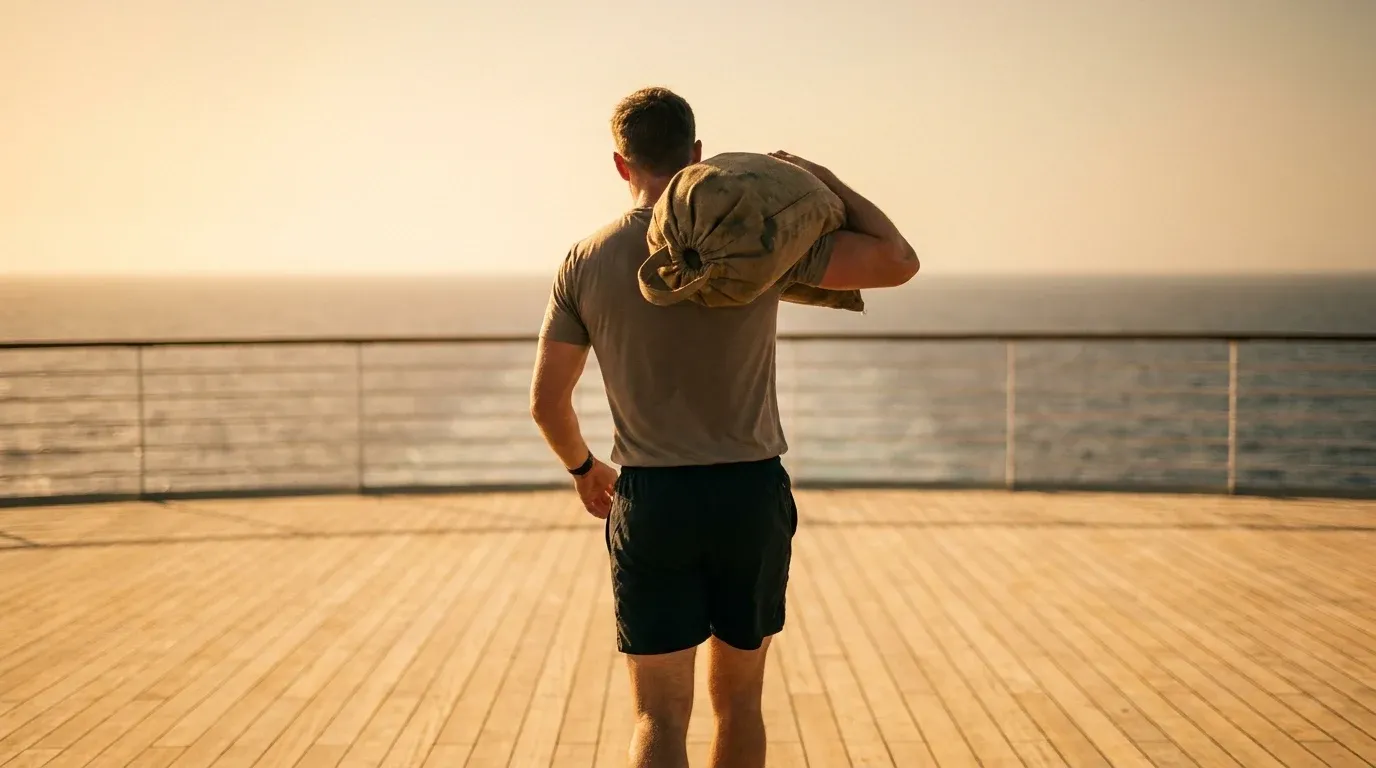
When HYROX announced its first-ever cruise event, the fitness internet lit up. A race format built on sleds, ski ergs, and wall balls. On a ship. At sea. The concept was either brilliant or absurd depending on who you asked. Now that participants have returned and started talking, the picture is more nuanced than the viral posts suggested.
This wasn't a floating social event with a few burpees thrown in. According to multiple participants, the cruise delivered approximately 14 hours of structured training across the voyage, spread over multiple days. If you're a competitive HYROX athlete trying to decide whether this format deserves a spot in your calendar, here's what you actually need to know.
What the Training Actually Looked Like
The programming wasn't a watered-down version of HYROX. Participants reported a schedule that combined HYROX-specific station work, functional fitness group sessions, and masterclasses led by coaches and athletes embedded throughout the event. Morning blocks were the heaviest training windows, typically running 90 minutes to two hours before the heat of the day.
Station work included the familiar HYROX movements: ski erg intervals, sled pushes and pulls adapted to the ship's available deck space, sandbag lunges, wall balls, and running circuits. Some sessions were structured as team formats, which changed the competitive dynamic but kept the intensity honest. Participants consistently described the effort level as genuinely demanding, not scaled down for a holiday crowd.
The masterclasses were arguably where the real training value lived. Small group settings with coaches covering race strategy, pacing, and movement efficiency gave athletes access to instruction that's hard to replicate in a standard race weekend format. If you've ever wondered how hard you should actually be pushing in structured sessions, this environment forced that conversation directly.
Evening programming shifted to social events, athlete Q&As, and recovery-focused sessions, keeping the days full but structurally balanced. The 14-hour training total across the voyage averaged out to roughly three to four hours of structured work per day, which puts it squarely in training camp territory rather than recreational fitness tourism.
The Recovery Problem Nobody Talked About Before Boarding
Here's where the cruise format runs into real friction. Training camps typically rely on recovery quality to justify their intensity. Sleep, cold therapy, nutrition control, and low-stimulation environments are the pillars. A cruise ship undermines several of them simultaneously.
Motion disruption is the most underestimated factor. Even mild sea conditions affect sleep architecture. Light sleepers reported waking frequently, particularly in smaller cabins on lower decks where engine noise compounded the motion. For athletes pushing hard in morning sessions, compressed or fragmented sleep is a genuine performance issue, not a minor inconvenience.
Cold therapy access was limited. Ice baths are a staple recovery tool for athletes training at this intensity, and most cruise ships don't offer anything close to a functional plunge setup. Participants largely improvised with cold showers, which provide some benefit but fall well short of the controlled cold exposure athletes are used to. Given that HYROX places significant cumulative stress on joints, particularly knees, hips, and shoulders, the absence of proper cold therapy across multiple training days is worth taking seriously.
Then there's the bar. It's open. It's there. And unlike a traditional training camp where alcohol is either unavailable or socially discouraged by the environment, a cruise ship is culturally built around drinking. Several participants noted that the social atmosphere made it easy to compromise recovery decisions that would have been automatic at home. This isn't a moral judgment. It's a physiology one. Alcohol disrupts sleep quality, blunts protein synthesis, and elevates cortisol at exactly the wrong time in a high-training-volume week.
The Practical Nutrition Picture
Cruise ship food is abundant, which sounds like a training camp benefit but creates its own complexity. Buffet-style eating makes it genuinely difficult to track protein intake or manage carbohydrate timing around sessions. Athletes who rely on specific fueling protocols had to adapt or let those protocols slide.
Caffeine use was high across the group, as it typically is in HYROX athlete populations. If you're stacking pre-workout supplements on top of multiple daily coffees across a week of heavy training, it's worth revisiting what the evidence says about optimal caffeine dosing for exercise performance. The convenience of an all-inclusive environment tends to push consumption upward without the usual friction that acts as a natural brake.
Protein availability was generally solid. Most participants found they could hit reasonable targets from ship dining, though precision was harder. For athletes who train with detailed nutritional structure, the cruise format requires either relaxed standards or significant pre-planning around supplements and snacks brought on board.
Who This Format Actually Works For
The honest answer is that the HYROX cruise isn't for everyone in the competitive field. But it's genuinely useful for a specific type of athlete.
If you're someone who trains consistently but struggles to access structured coaching or community outside of race weekends, this format delivers both in a compressed format. The immersive environment means you're surrounded by athletes who think and train the way you do, which has real motivational and educational value. The masterclass access alone would cost considerably more if you assembled the equivalent in individual coaching sessions.
It also works well for athletes who want a training camp experience without the monastic isolation that traditional camps often involve. A training camp in the mountains is effective. It's also austere. The cruise format lets you bring a partner or friend who isn't a HYROX athlete and still get legitimate training value from the week. The community appeal here is real, not just marketing.
For elite athletes chasing podium positions or attempting to qualify at the highest levels, the recovery limitations are probably too significant to justify the cruise as a primary training block. But as a secondary event, used for community, coaching exposure, and volume in a novel environment, it has a defensible place in a broader annual plan.
The Demand Signal Is Hard to Ignore
The cruise sold out quickly. That fact tells you something important about where HYROX is heading as a sport and a commercial ecosystem. Race weekends are no longer the only product. Athletes want more touchpoints with the sport they've built their training lives around, and experiential events fill that gap.
The growth trajectory of HYROX mirrors what happened with obstacle course racing and triathlon at their peaks: a core competitive format expanding into lifestyle, community, and experience products that extend the athlete relationship year-round. Events like these also drive media reach that a standard race weekend doesn't generate in the same way. The cruise was discussed in fitness communities globally for weeks before and after the event, reaching people who've never entered a HYROX race but are curious about the sport.
For the brand, that's as valuable as the ticket revenue. For the athletes on board, it means events like this will keep coming, and the format will likely improve with iteration. The first version of anything in endurance and functional fitness is rarely the best version.
Should You Book the Next One
If you're a recreational to competitive HYROX athlete who values community, coaching access, and training variety, the cruise format is worth serious consideration. The 14 hours of structured training is real volume, the coaching quality appears to be high, and the experience delivers something a race weekend doesn't: time to actually absorb instruction and train alongside people who are equally invested in the sport.
Go in with realistic expectations about recovery. Plan your alcohol intake the same way you'd plan your carbohydrate strategy. Bring earplugs. Pack your own supplements if nutrition precision matters to you. And don't treat it as a replacement for a dedicated training block if you're chasing serious race results.
Treat it as what it actually is: a high-quality, high-community training experience that happens to take place on water. For a lot of HYROX athletes, that's more than enough reason to book.