
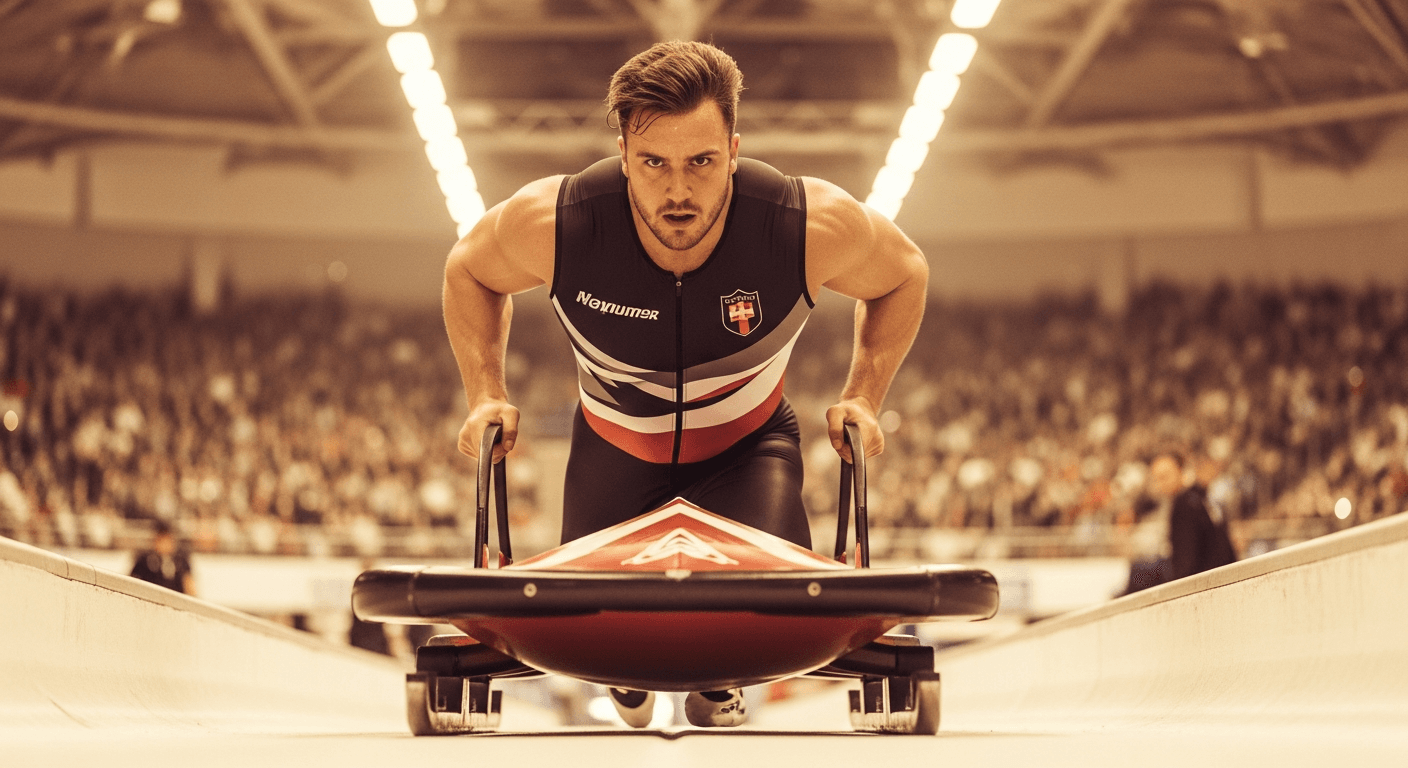
The 2026 HYROX World Championships are heading to Stockholm's Strawberry Arena for the first time, running June 18–21. If you've qualified or you're deep in the chase, this is the guide you need. Not the preview. The operational reality: how the venue works, what the field looks like, and what you're up against when you step on that floor.
Why Stockholm, Why Now
Strawberry Arena is one of Scandinavia's most versatile indoor venues, with a capacity that scales comfortably for championship-level events. For HYROX, which has grown from a niche functional fitness circuit into a global racing series with hundreds of thousands of registered athletes, the choice signals a deliberate push into the Nordic market while keeping production values at the highest level.
The arena's layout suits the HYROX format well. The 8-station circuit demands significant floor space and clear spectator sightlines, both of which Strawberry Arena delivers. Expect a noise environment that rivals any major indoor athletic event you've attended. If you haven't raced at championship scale before, the crowd density alone will affect your pacing instincts.
Four days of competition across June 18–21 means wave structures will be staggered across divisions: Open, Pro, and doubles formats. Elite heats typically anchor the final day, with earlier waves filling Thursday and Friday. Check your start confirmation carefully. Many athletes misread their wave assignment and show up warm when they should be in activation.
Qualification Pathways: What Actually Gets You There
HYROX World Championship qualification operates through a tiered system. The clearest route is through Major finishes. The HYROX circuit designates certain races as Majors each season, and top finishers in those events earn direct qualification slots. Finishing in the top positions in your division at a Major is the most straightforward path, and it's the one the elite field almost universally uses.
Beyond Majors, wildcard allocations exist for athletes who accumulate strong results across the broader race calendar without necessarily landing a podium at a single Major. These are allocated based on points standings and regional quotas. If you're currently on the bubble, you need to understand exactly where you sit in the rankings before the qualification window closes.
The HYROX 2026 Calendar: Every Race Left This Season breaks down which remaining races still carry qualification weight and the specific cutoff dates you need to track. Don't assume you know. Confirm it.
For athletes who raced São Paulo, that Major was a pivotal one for points accumulation. The results shifted several ranking positions heading into the second half of the season. You can review the full breakdown in the HYROX São Paulo 2026: Results and Race Highlights coverage if you need to reconcile where your competitors stand.
The Men's Field: Three Names You'll Be Racing Against
The men's Pro division arrives in Stockholm with genuine depth at the front. Three names define the conversation heading into June.
Alexander Roncevic has built a reputation for consistent station efficiency. His row and ski erg splits are among the strongest on the circuit, and he rarely loses time through transitions. At championship pace, that composure under fatigue becomes decisive.
Tim Wenisch is the athlete most likely to push the early pace into dangerous territory. His aggressive front-half strategy has worked at the Major level, but championship fields don't compress the way regional races do. If he goes out hard in Stockholm, the question is whether anyone goes with him or waits.
Hidde Weersma brings a running base that gives him a structural advantage on the 1km loops between stations. At total-race distances, the runners who can hold form on kilometer eight and nine tend to close better than pure strength athletes. Weersma's ability to sustain running economy late is his primary weapon.
None of these three have a clean weakness that the others can simply exploit. That's what makes the men's final worth watching closely.
Joanna Wietrzyk and the Women's Favorite Question
There isn't much of a question. Joanna Wietrzyk arrives in Stockholm having swept all four Majors this season and holding a world record of 54:25. That combination of volume consistency and peak performance is unusual even by the standards of dominant seasons in individual sports.
Her 54:25 record represents a level of station-to-station efficiency that most Pro women aren't structured to match across an entire race. The interesting tactical question isn't whether she wins. It's whether anyone forces her into a pace she hasn't chosen herself, and what happens to her splits under that pressure.
The women's field in Stockholm will include athletes capable of running with her through the first several stations. The race typically opens on the SkiErg, and Wietrzyk's ability to set a controlled but damaging early pace there tends to fragment the field before the running loops compound fatigue. Watch for challengers who can stay within striking distance through the wall ball and burpee broad jump stations.
Venue Logistics: What to Expect as a Competing Athlete
Strawberry Arena sits in Solna, directly accessible from central Stockholm via public transit. For athletes traveling internationally, the T-bana (Stockholm metro) connects the city center to the Solna area efficiently. Don't rely on ride-share during peak competition hours. The surrounding road infrastructure around major venues during events is predictably congested.
Athlete check-in and bag drop procedures at championship HYROX events operate on tight windows. Arrive earlier than you think you need to. The gear check line at peak times is not where you want to be doing mental preparation. Build in a minimum of 90 minutes between arrival and your wave start.
Warm-up space at championship events is more limited per athlete than at regional races. The shared warm-up areas fill quickly in the 45-minute window before major waves. If your activation protocol requires equipment, plan a bodyweight-based alternative. Bands, light dynamic work, and movement prep are more practical in that environment than barbell work or machine-based warm-up.
The noise level during Pro heats is significant. Veteran championship athletes often describe the Worlds atmosphere as meaningfully different from any other HYROX event. If this is your first championship, treat the sensory environment as a variable you need to account for, not just background context.
Pacing Strategy at Championship Level
Championship racing changes pacing dynamics in one specific way: the field depth is compressed. In a regional event, you might gap the next competitor by a wide margin early and manage your effort from there. In Stockholm, the Pro field won't give you that psychological buffer. Every station exit will have athletes within reach.
The temptation is to race others rather than your plan. Resist it. The athletes who perform closest to their training benchmarks at Worlds are almost always the ones who entered with a station-by-station target and held to it despite external pressure. If you haven't built a structured pacing framework yet, the HYROX Station Pacing: How to Race Smarter, Not Harder framework is worth reviewing before you finalize your race plan.
The sandbag lunge and farmer's carry stations tend to be where championship races fracture. Grip fatigue and postural breakdown under load, compounded by accumulated running volume, separate athletes who paced conservatively from those who didn't. Build your target splits around what you can hold at kilometer six, not what you can produce at kilometer one.
Race Week Preparation
Travel to Stockholm from North America involves navigating meaningful time zone adjustment. Most athletes flying from the US East Coast are dealing with a six-hour differential. Arriving at least four days before your race start gives your circadian rhythm enough time to partially adapt. Prioritizing sleep over additional training sessions in that window is almost always the right call.
Nutrition during race week often gets disrupted by travel, unfamiliar food environments, and event-week anxiety. The core principle is consistency. Eat what your body recognizes, in timing patterns close to your training schedule. Race-morning fueling in particular should replicate what you've practiced, not experiment with local options you haven't tested.
June in Stockholm means long daylight hours. Sunset won't arrive until close to 10pm. For athletes sensitive to light exposure around sleep, bring a quality sleep mask and consider blackout curtains in your accommodation. This isn't a minor variable during race week.
What This Championship Means for the Season
Stockholm 2026 lands at a moment when HYROX is structurally larger than it's ever been. The athlete volume at qualifying races this season has increased substantially, which means the Pro fields in Stockholm will include individuals who trained specifically for this event across a full calendar year. The standard is higher than previous editions.
For elite athletes, a World Championship result carries ranking and sponsorship implications that extend well beyond the event itself. For age-group and Open competitors, Stockholm represents a different kind of benchmark: proof that the training block worked at the scale that actually tests it.
Either way, you've earned the start. Race the plan you built, not the race you imagine once the SkiErg begins.