
Anti-Inflammatory Eating for Athletes: What the Science Actually Says
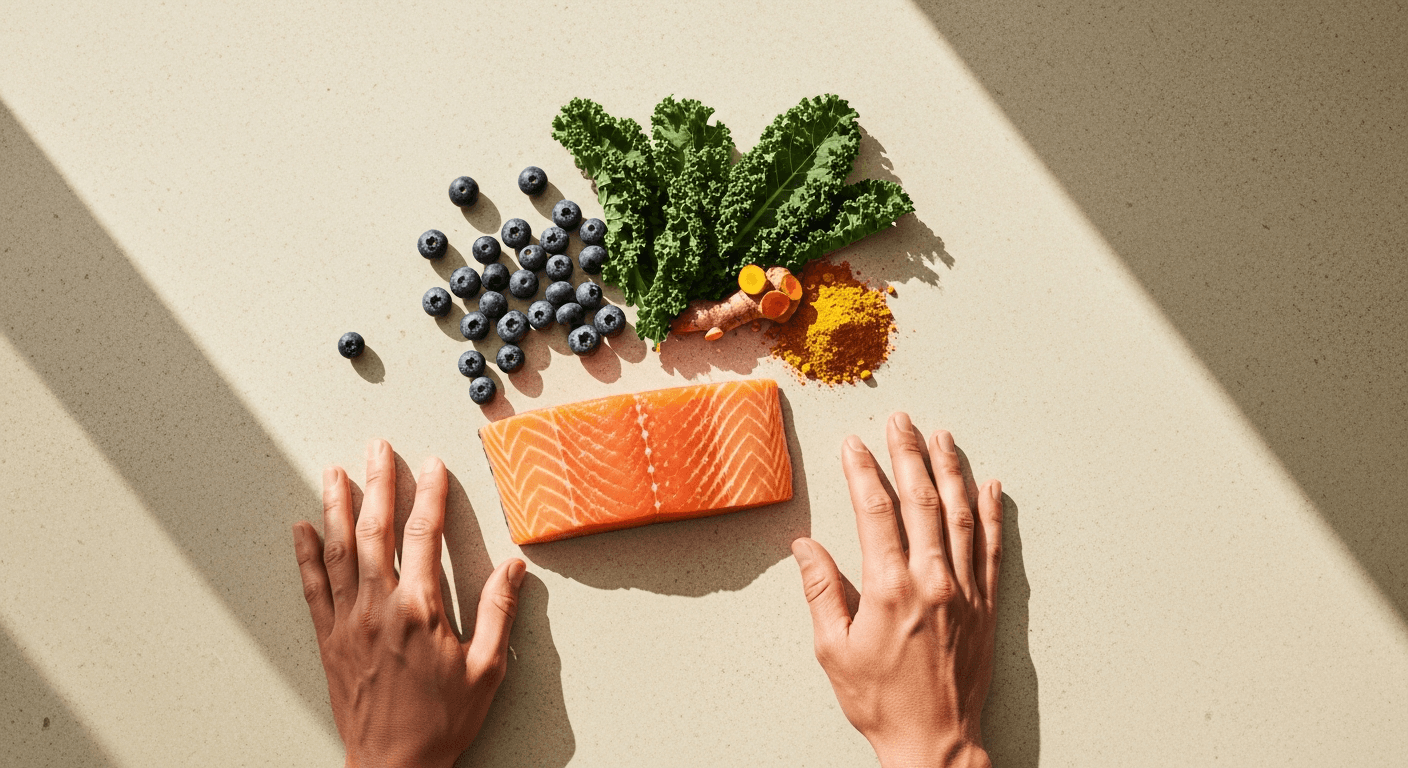
Anti-inflammatory diets are everywhere in sports nutrition right now. But most of what you'll find online is the same recycled list of turmeric, blueberries, and salmon with no real explanation of why those foods matter, when to eat them, or what happens in your body when you don't. Here's what the research actually supports.
Why Inflammation Is a Real Problem for Active People
Exercise produces inflammation. That's not a flaw in the system. Short-term, acute inflammation is essential for muscle repair and adaptation after hard training. The problem is when that acute response tips into chronic low-grade inflammation, a state where your immune system stays persistently activated at a subclinical level.
Chronic low-grade inflammation is associated with impaired muscle protein synthesis, slower glycogen replenishment, and blunted anabolic signaling. In plain terms, it makes recovery harder and training adaptations weaker. Research consistently links elevated inflammatory markers like C-reactive protein (CRP) and interleukin-6 (IL-6) to reduced performance gains over time, even in otherwise healthy, active adults.
For recreational athletes who train four to six days a week, the cumulative inflammatory load can be significant, especially when diet, sleep, and stress are poorly managed. This is where dietary strategy stops being optional and becomes genuinely useful. If you want to understand how to use your own biomarkers to guide these decisions, Personalized Nutrition: How to Actually Use Your Blood Work breaks down how to interpret the numbers that actually matter.
The Mediterranean Pattern: Still the Gold Standard
Of all the dietary frameworks studied for their anti-inflammatory effects, the Mediterranean pattern has the most consistent, well-replicated evidence base. That's not marketing. It's the result of decades of epidemiological research and a growing number of controlled intervention trials.
The pattern is characterized by high intake of vegetables, legumes, whole grains, olive oil, nuts, and fish, moderate consumption of poultry and dairy, and low intake of red meat and ultra-processed foods. What makes it relevant for athletes specifically is its direct association with reduced exercise-induced oxidative stress. Studies in endurance athletes have shown that adherence to a Mediterranean-style diet correlates with lower post-exercise CRP and lower lipid peroxidation markers, both indicators of how well your body clears the cellular debris that hard training creates.
It's also worth noting that the Mediterranean pattern isn't a strict protocol. It's a flexible framework that can be adapted to different caloric needs, training phases, and food preferences. That flexibility makes it far more sustainable than any elimination-based approach.
The Three Dietary Components with the Strongest Evidence
Rather than listing every food with supposed anti-inflammatory properties, it's more useful to focus on the mechanisms that actually have research behind them. Three dietary components stand out.
Omega-3 fatty acids. EPA and DHA, found in fatty fish and algae-based supplements, directly modulate the production of pro-inflammatory eicosanoids and cytokines. Multiple randomized controlled trials in athletes have shown that omega-3 supplementation reduces muscle soreness, lowers CRP, and in some cases preserves muscle mass during periods of high training load. The effective doses in most studies range from 2 to 4 grams of combined EPA and DHA per day, which is difficult to achieve from diet alone without consistent fatty fish intake several times per week.
Polyphenols. These plant-based compounds, found in berries, dark chocolate, green tea, olive oil, and colorful vegetables, work primarily by neutralizing reactive oxygen species and modulating NF-kB, a key signaling pathway in the inflammatory response. Quercetin, resveratrol, and curcumin have been studied individually in athletic contexts, with mixed but generally positive results. The broader point is that dietary variety and a high plant food intake delivers a synergistic mix of polyphenols that no single supplement can replicate.
Dietary fiber. Fiber's anti-inflammatory role is mediated largely through the gut microbiome. Fermentation of fiber by gut bacteria produces short-chain fatty acids (SCFAs) like butyrate, which have direct anti-inflammatory effects on intestinal epithelial cells and systemic immune signaling. Athletes with higher fiber intakes consistently show more favorable inflammatory profiles. This is one reason why whole food carbohydrate sources like oats, sweet potatoes, and legumes outperform processed carbohydrate sources even when total carbohydrate content is matched.
Timing Matters More Than Most People Realize
Here's a nuance that rarely makes it into standard nutrition content: when you consume anti-inflammatory foods relative to training may be as important as what you consume.
The post-workout window is where things get complicated. Some degree of exercise-induced inflammation is necessary. It signals muscle remodeling, activates satellite cells, and drives the adaptations you're training for in the first place. Aggressively suppressing it immediately after exercise, which is why high-dose antioxidant supplementation post-workout is increasingly questioned, may actually blunt training gains.
The practical approach supported by current evidence is to prioritize anti-inflammatory foods in the hours and days around training rather than immediately post-workout in high doses. A meal rich in polyphenols and omega-3s two to three hours after exercise, alongside adequate protein and carbohydrates, appears to support recovery without interfering with the inflammatory signaling that drives adaptation. Immediately post-workout, protein and carbohydrates take priority. The anti-inflammatory strategy works best as a consistent dietary pattern, not a single acute intervention.
Recovery extends well beyond what you eat. Poor sleep, for instance, significantly elevates inflammatory markers on its own. If you're optimizing your diet but neglecting sleep quality, you're leaving a major variable unaddressed. 5 Simple Recovery Habits That Actually Work covers how to build a more complete approach to managing training stress.
The Ultra-Processed Food Problem Is Bigger Than Calories
One of the most significant findings in recent nutrition research is that ultra-processed food consumption raises inflammatory markers independently of total calorie intake, macronutrient composition, and even body weight. This challenges the widespread assumption that if you're hitting your protein targets and eating at maintenance calories, the rest of your diet is secondary.
Ultra-processed foods, defined by the NOVA classification system as products that contain ingredients not typically used in home cooking (emulsifiers, artificial colorings, hydrolyzed proteins, modified starches), appear to disrupt gut barrier integrity, alter microbiome composition, and promote systemic inflammation through multiple mechanisms. Studies using dietary recall data matched for calories and macros have found that higher NOVA-4 food intake independently predicts elevated CRP and IL-6 levels.
For athletes, this means that food quality is not just a wellness abstraction. It's a recovery variable. A diet that hits the right numbers on a tracking app but relies heavily on protein bars, packaged snacks, and fast food will likely carry a higher inflammatory burden than a whole-food diet with the same macronutrient profile.
If you're not sure where your current diet stands, Simple Diet Changes That Actually Move the Needle offers a practical framework for identifying the highest-leverage adjustments without overhauling everything at once.
What About Supplements?
The supplement market around anti-inflammation is enormous, and the quality is highly variable. Omega-3 fish oil, curcumin with piperine, tart cherry extract, and vitamin D are among the most studied options with at least some evidence of benefit in athletic populations.
The challenge is that supplement products are not held to the same regulatory standards as pharmaceuticals, and label accuracy is a real concern. Potency, bioavailability, and purity vary significantly between brands. Before spending money on anti-inflammatory supplements, it's worth understanding what you're actually getting. Can You Actually Trust What's on Your Supplement Label? is a useful starting point for navigating those decisions.
Supplements are also not a substitute for dietary pattern. The evidence base for whole-diet approaches is substantially stronger than for any individual supplement, and the cumulative effect of a high-quality diet across weeks and months outperforms any acute supplementation protocol.
Building an Anti-Inflammatory Diet That Actually Works for Training
The practical takeaway isn't a meal plan. It's a set of consistent behaviors that compound over time.
- Prioritize variety in plant foods. Aim for at least five to seven different vegetables and fruits daily. Color diversity correlates with polyphenol diversity.
- Include fatty fish two to three times per week. Salmon, sardines, mackerel, and herring are the most practical sources of EPA and DHA at meaningful doses.
- Use extra virgin olive oil as your primary cooking fat. It delivers both oleocanthal, a natural COX inhibitor, and oleic acid with well-documented anti-inflammatory properties.
- Build meals around whole food carbohydrate sources. Oats, legumes, sweet potatoes, and whole grains provide the fiber that supports a healthy gut inflammatory response.
- Reduce ultra-processed food intake systematically. You don't need to eliminate it entirely, but progressively replacing packaged, heavily processed items with minimally processed alternatives will lower your baseline inflammatory load.
- Don't over-supplement immediately post-workout. Let the acute inflammatory response run its course. Use whole foods with protein and carbohydrates as your immediate recovery priority.
Anti-inflammatory eating isn't a separate diet to adopt alongside your training plan. It's what a high-quality, whole-food diet looks like when you understand the underlying mechanisms. The science doesn't point to superfoods or protocols. It points to consistent patterns, food quality, and the cumulative effect of daily choices over months and years.