
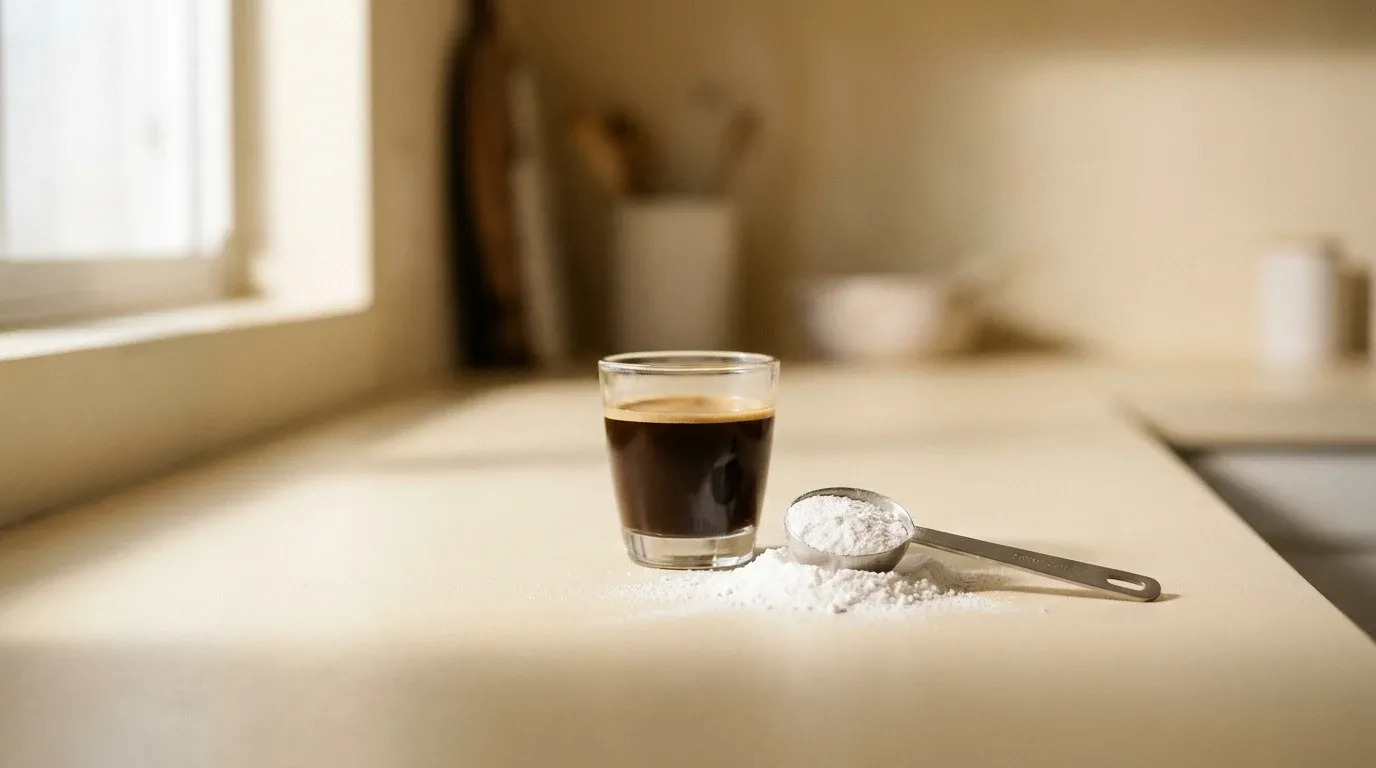
Caffeine is the most widely studied ergogenic aid in sports science. It works, the research is clear, and it's legal at every level of competition. But a wave of cardiac arrest cases linked to high-dose energy drink consumption has forced a necessary conversation: there's a significant gap between using caffeine strategically and using it recklessly. That gap has real consequences.
This guide cuts through the noise. Here's what the evidence actually says about caffeine, athletic performance, and the dose where benefit becomes risk.
The Evidence-Based Performance Range
Decades of research point to a consistent performance window: 3 to 6 milligrams of caffeine per kilogram of bodyweight. For a 70 kg (154 lb) athlete, that's roughly 210 to 420 mg per session. Within this range, caffeine reliably reduces perceived exertion, improves endurance output, sharpens reaction time, and delays fatigue onset.
The problem is that popular energy drinks routinely push consumers past this range before they've finished a single can. A standard 16 oz energy drink often contains 160 to 300 mg of caffeine. Stack two of those with a pre-workout supplement and a coffee, and a 70 kg athlete can easily hit 700 to 900 mg in a morning. That's not a performance edge. That's a stress response.
Beyond 6 mg/kg, the performance benefits plateau or reverse. Anxiety, impaired fine motor control, gastrointestinal distress, and elevated heart rate become the dominant effects. More is not more.
Cardiac Risk Is Dose-Dependent. Exercise Makes It Worse.
Caffeine stimulates the central nervous system and raises heart rate, blood pressure, and cardiac output. In moderate doses, this is precisely why it helps performance. At high doses, the same mechanisms become a liability.
Recent data linking energy drink consumption to cardiac events, including cardiac arrest in otherwise healthy young athletes, has prompted closer scrutiny of dose thresholds. The emerging picture is that risk is not simply a function of how much caffeine you consume. It's amplified by context.
Three compounding factors deserve attention:
- Dehydration. Even mild dehydration increases blood viscosity and elevates the cardiovascular strain of exercise. Pairing high-caffeine intake with training in heat is a particularly high-risk combination.
- Exercise-induced heart rate elevation. Your resting heart rate and your heart rate at 80% VO2 max are very different baselines. Caffeine's stimulant effects layer onto an already-elevated cardiac workload during hard sessions.
- Additional stimulants. Many energy drinks combine caffeine with taurine, guarana, and other compounds. The interaction effects are poorly studied, and regulatory bodies have flagged this as a significant data gap.
If you have an underlying arrhythmia, hypertension, or undiagnosed structural heart condition, high-dose caffeine during exercise isn't just inadvisable. It's genuinely dangerous. Good sleep protects your brain when your heart is at risk, and the same principle applies to stimulant load: cumulative cardiovascular stress compounds over time.
Tolerance Builds Fast. That's the Real Trap.
Here's where habitual caffeine users run into trouble. Tolerance to caffeine's ergogenic effects develops within 4 to 10 days of consistent daily use. The adenosine receptors that caffeine blocks upregulate in response to chronic exposure, meaning the same dose produces a diminished effect.
The result is a dose-escalation cycle that's almost self-reinforcing. You drink two cups of coffee and feel nothing. You add a pre-workout. You add an energy drink. Each escalation restores a fraction of the original benefit while pushing you further up the dose curve, closer to the range where cardiovascular and anxiogenic side effects dominate.
This is not entirely unlike the reward-system dynamics seen with other highly processed stimulant products. Research on how ultra-processed foods rewire the brain's reward system shows a parallel pattern: repeated exposure shifts baseline sensitivity and drives consumption upward. With caffeine, the mechanism is different, but the behavioral arc is similar.
The practical implication: if you're using caffeine daily, you're not getting the performance benefit you think you're getting. You're managing withdrawal.
Timing: The 45-to-60-Minute Window
Assuming you're in the evidence-based dose range, timing your intake correctly is what separates a useful tool from a wasted one. Caffeine reaches peak plasma concentration approximately 45 to 60 minutes after ingestion in most people, though genetic variation in the CYP1A2 enzyme means some individuals metabolize it significantly faster or slower.
For most athletes, the practical protocol looks like this:
- Calculate your dose based on bodyweight (3 to 6 mg/kg).
- Choose a reliable, measurable source. Caffeine capsules and anhydrous powder allow precision. Coffee does not. A "medium" coffee can range from 80 to 200 mg depending on the brew method and bean.
- Consume 45 to 60 minutes before the start of your event or key training session.
- Avoid taking caffeine within 6 hours of your intended sleep time, since its half-life is 5 to 6 hours on average. Sleep disruption undermines the recovery you're training to achieve.
Sport specificity also matters here. For endurance events lasting over 90 minutes, some research supports a split-dose approach: a moderate dose pre-race with a smaller top-up during the event, particularly in the form of caffeinated gels. For strength training and short-duration power sports, a single pre-session dose is generally sufficient.
Sport-Specific Dose Guidance
Not every sport calls for the same caffeine strategy. Here's how the evidence breaks down:
- Endurance sports (marathon, triathlon, cycling): 3 to 6 mg/kg pre-event. Consider 25 to 50 mg top-ups via gel during events longer than two hours.
- Team sports (soccer, rugby, basketball): 3 to 4 mg/kg pre-game. Focus is on sustained attention and repeated sprint capacity rather than raw endurance.
- Strength and power sports (weightlifting, sprinting): 3 to 5 mg/kg. Research shows improvements in peak power output and reaction time at these doses.
- Racket sports and precision activities (tennis, golf): Lower end of the range (2 to 3 mg/kg). High doses impair fine motor control, which is counterproductive.
Nutrition context matters too. Caffeine on an empty stomach increases absorption speed but also intensifies gastrointestinal side effects. Consuming it alongside a moderate carbohydrate meal, without high fiber content, is a reasonable middle ground for most athletes. If you're thinking carefully about race-week fueling, it's worth reading about how to adjust your nutrition for winter base training, where caloric and micronutrient demands shift considerably.
Cycling Off: The Strategic Reset Before a Key Race
This is the most underused tool in caffeine periodization, and it's also the most evidence-supported. If you consume caffeine daily, your adenosine receptors are upregulated and your sensitivity to caffeine's effects is blunted. A 7 to 10 day abstinence period before a target race allows receptor downregulation and sensitivity to reset.
When you reintroduce caffeine on race day, the ergogenic effect is substantially stronger than it would be with continued daily use. Studies have shown performance differences of 2 to 4 percent between habitual users who withdrew and those who didn't. At competitive levels, that margin is meaningful.
The washout period is uncomfortable. Expect headaches, fatigue, and irritability in the first 2 to 4 days. These are withdrawal symptoms, not signs that something is wrong. They pass. Planning your washout so it coincides with a low-intensity taper period makes this significantly more manageable.
Recovery during this window also matters. What modern performance science says about recovery consistently points to the same fundamentals: sleep quality, adequate protein, and stress management. These are worth optimizing during your caffeine washout, not just on training days.
Practical Checklist: Using Caffeine Safely and Effectively
- Know your dose. Calculate based on bodyweight. Don't estimate based on how you feel.
- Use measurable sources. Caffeine capsules beat coffee for precision. If you use coffee, use the same method each time and get to know its output.
- Don't stack stimulants. Pre-workout plus energy drink plus coffee is not a performance stack. It's an overdose risk.
- Hydrate properly. Caffeine has a mild diuretic effect and amplifies dehydration risk during exercise. Match your fluid intake to conditions and session length.
- Respect the sleep cutoff. Six hours before bed is a hard limit if sleep quality matters to you. And it should, because chronic sleep disruption has measurable effects on nearly every health marker.
- Plan your washout. Build the 7 to 10 day abstinence period into your race prep calendar. It's not optional if you want race-day caffeine to work at full potency.
- Get a cardiac clearance if you have risk factors. This is non-negotiable. If you have hypertension, known arrhythmia, or a family history of sudden cardiac events, speak to a physician before using caffeine as a performance tool.
The Bottom Line
Caffeine works. The evidence is robust, the mechanism is understood, and when used correctly it offers real, measurable performance gains across nearly every sport. But the gap between "used correctly" and "used as most people actually use it" is wider than most athletes assume.
The 3 to 6 mg/kg range is not a suggestion. It's the boundary between benefit and risk. Energy drinks frequently push you past it before you've made a conscious choice. Tolerance erodes the benefit faster than most people expect. And the cardiac risk data emerging from high-dose, high-exertion scenarios is serious enough to take at face value.
Use caffeine the way sports scientists designed it to be used: calculated, timed, periodized, and grounded in your actual bodyweight. It's a performance tool, not a beverage category.